
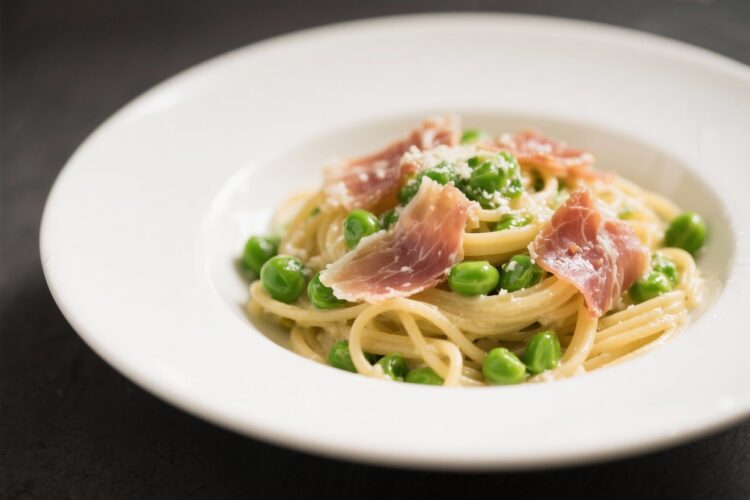
This pasta is the kind of meal you make when you want something comforting but not heavy. Sweet peas, salty ribbons of prosciutto, and a silky sauce come together in minutes. It tastes like spring, but it works any time of year with frozen peas.
The flavors are clean and balanced, and the whole dish feels a little special without being fussy. If you love simple Italian-inspired cooking, this one belongs in your rotation.
What Makes This Recipe So Good
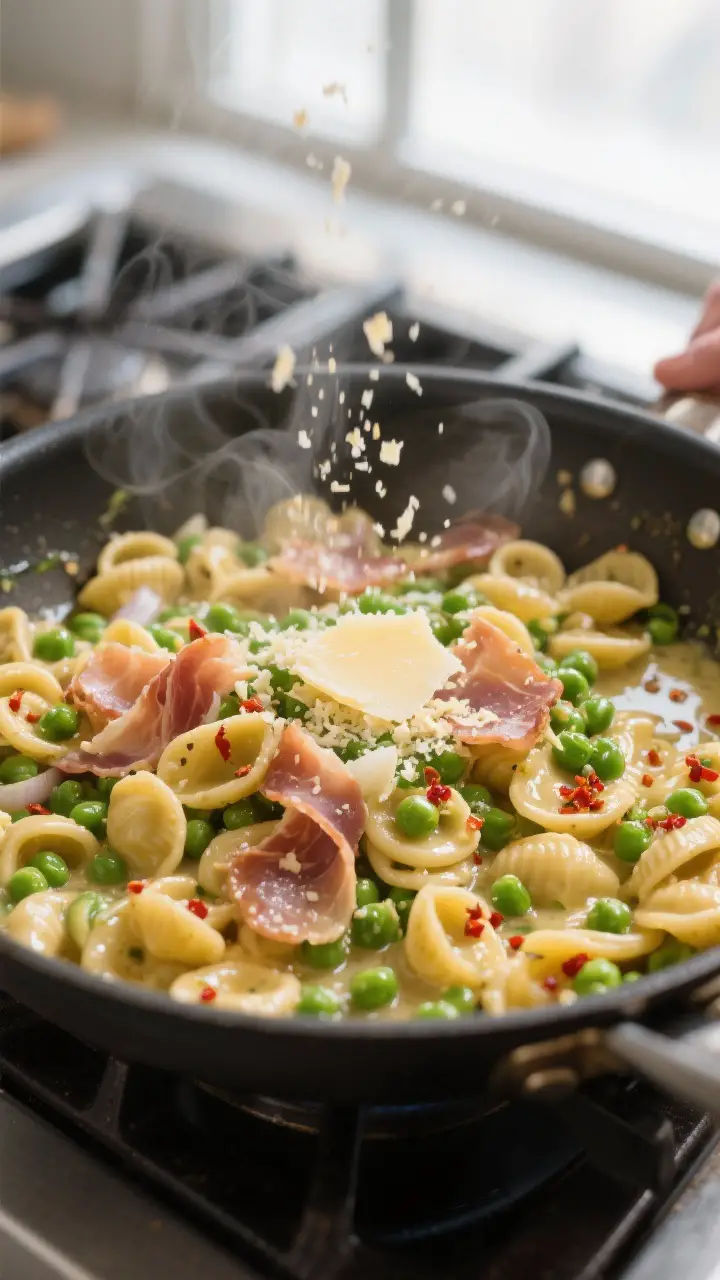
- Sweet and salty balance: Fresh peas bring a pop of sweetness that pairs beautifully with the savory, delicate prosciutto.
- Quick cooking time: You can get this on the table in about 25 minutes, perfect for busy nights.
- Simple ingredients, big flavor: A short ingredient list lets each element shine, especially the peas, lemon, and Parmesan.
- Light but satisfying: The sauce is creamy without being heavy, thanks to pasta water and a touch of butter.
- Flexible and forgiving: Works with fresh or frozen peas, different pasta shapes, and easy swaps for dairy or herbs.
Ingredients
- 12 ounces short pasta (orecchiette, penne, or farfalle)
- 1 cup fresh peas, shelled (or 1 heaping cup frozen peas, no need to thaw)
- 4 ounces prosciutto, thinly sliced and cut into strips
- 2 tablespoons unsalted butter
- 2 tablespoons extra-virgin olive oil
- 3 cloves garlic, thinly sliced
- 1 small shallot, finely chopped (optional but nice)
- 1/2 cup dry white wine or low-sodium chicken broth
- 1/2 cup finely grated Parmesan cheese, plus more for serving
- Zest of 1 lemon, plus 1–2 teaspoons fresh lemon juice
- 1/4–1/2 teaspoon crushed red pepper flakes (to taste)
- 1/3 cup chopped fresh mint or parsley (mint is classic with peas)
- Kosher salt and freshly ground black pepper
Step-by-Step Instructions
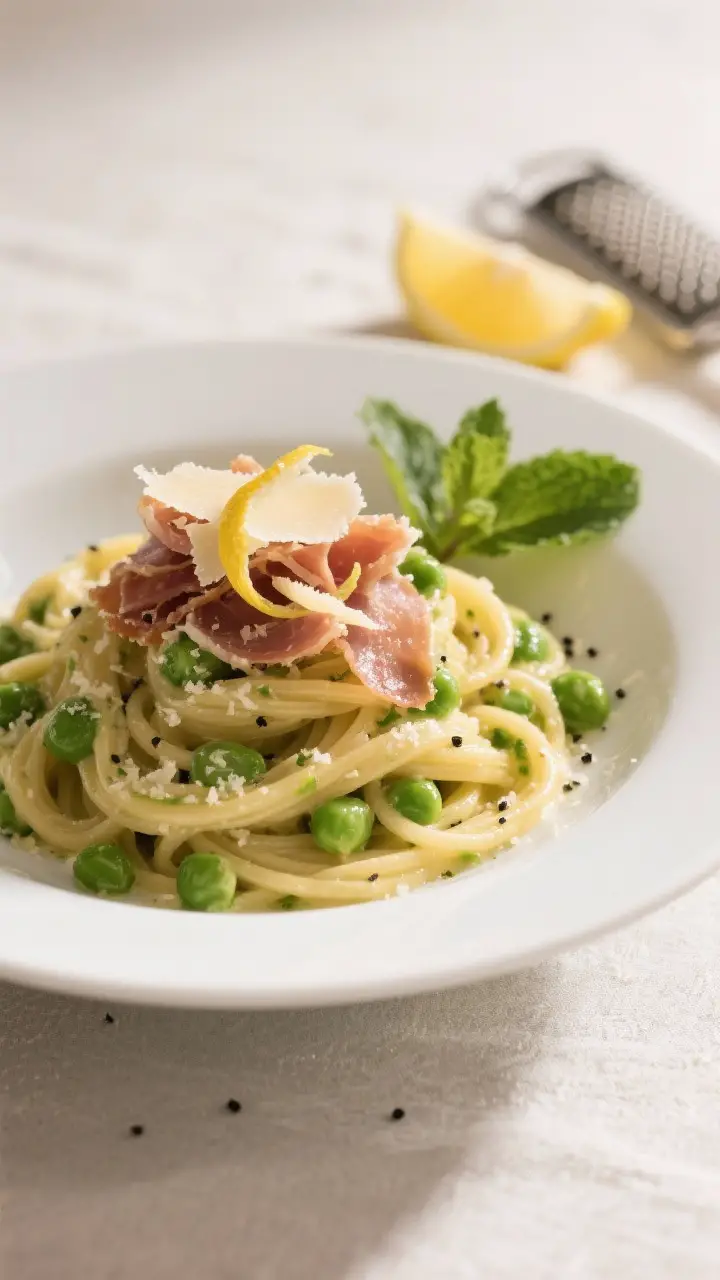
- Boil the pasta: Bring a large pot of salted water to a rolling boil. Add the pasta and cook until just shy of al dente. Reserve 1 to 1 1/2 cups of pasta water, then drain.
- Blanch the peas (if fresh): During the last 2 minutes of pasta cooking, add fresh peas to the pot.
Scoop them out with a slotted spoon and set aside. If using frozen peas, skip this and add them directly to the sauce later.
- Crisp the prosciutto: In a large skillet over medium heat, warm 1 tablespoon olive oil. Add prosciutto strips and cook 1–2 minutes until lightly golden and just crisp at the edges.
Transfer to a plate. Don’t overdo it; you want tender-crisp, not brittle.
- Build the aromatics: In the same skillet, add remaining olive oil and butter. Stir in shallot and a pinch of salt.
Cook 2–3 minutes until softened. Add garlic and red pepper flakes, cook 30–60 seconds until fragrant.
- Deglaze the pan: Pour in the white wine or broth. Simmer 1–2 minutes, scraping up any browned bits, until slightly reduced.
- Add peas: If using frozen peas, stir them in now and cook 2 minutes until warm and bright.
If you blanched fresh peas earlier, add them here just to heat through.
- Create the sauce: Add the drained pasta to the skillet along with 3/4 cup hot pasta water. Toss over medium heat for 1–2 minutes to emulsify. Sprinkle in Parmesan gradually, tossing constantly.
Add more pasta water as needed to form a glossy, silky sauce that clings to the pasta.
- Finish with brightness: Add lemon zest and 1 teaspoon lemon juice. Taste and add more lemon if you like. Season with salt and plenty of black pepper.
- Return the prosciutto: Fold in the prosciutto, reserving a small handful for garnish if you want contrast.
Toss gently to combine.
- Herbs and serve: Remove from heat and stir in mint or parsley. Plate and top with extra Parmesan and the reserved prosciutto. Serve immediately.
How to Store
- Refrigerate: Store leftovers in an airtight container for up to 3 days.
- Reheat gently: Warm in a skillet over low heat with a splash of water or broth to loosen the sauce.
Avoid microwaving on high, which can toughen prosciutto and make the sauce oily.
- Not ideal for freezing: The texture of peas and the emulsified sauce don’t hold up well after freezing.
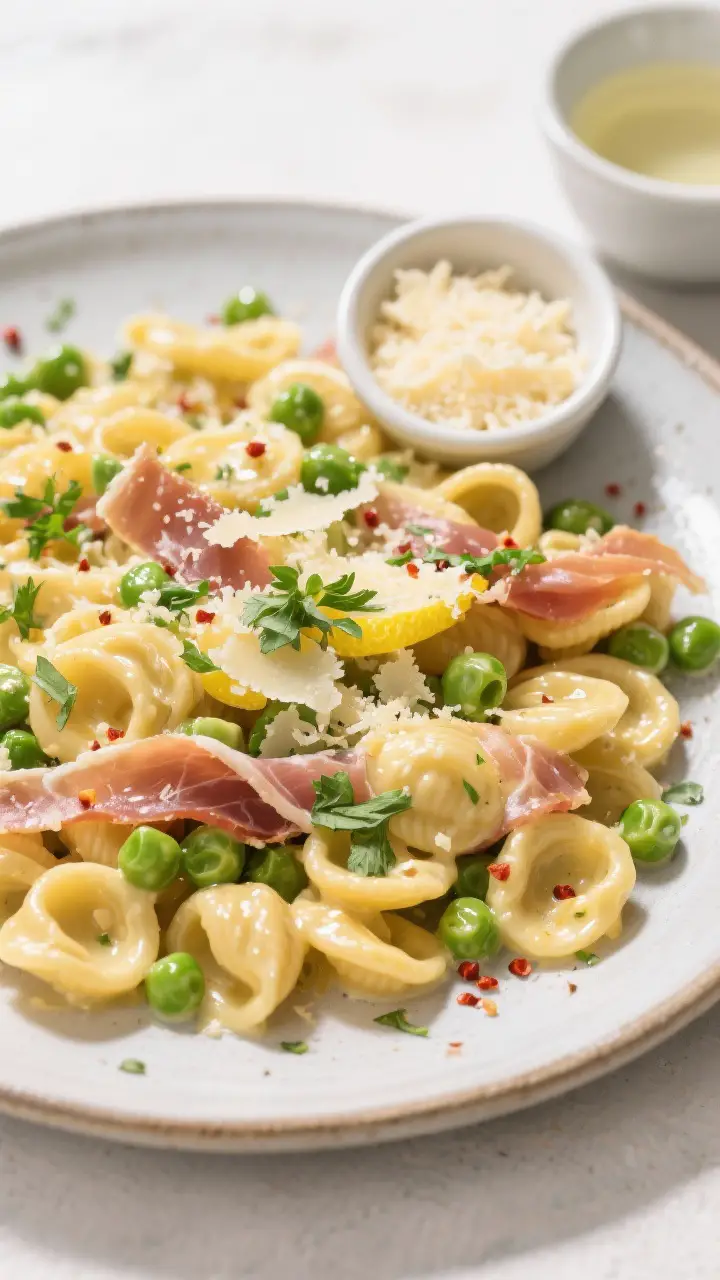
Benefits of This Recipe
- Fast and accessible: Everything cooks in one pot and one skillet with supermarket staples.
- Seasonal or year-round: Fresh peas are fantastic in spring, but frozen peas work beautifully any time.
- Balanced nutrition: You get protein from prosciutto, fiber and vitamins from peas, and slow-release carbs from pasta.
- Kid-friendly flavors: The sweetness of peas and mild, cheesy sauce appeal to a wide range of palates.
- Restaurant feel at home: The glossy, lemony sauce and tender prosciutto feel special without extra effort.
Pitfalls to Watch Out For
- Skipping pasta water: It’s crucial for a smooth, emulsified sauce. Always save more than you think you’ll need.
- Overcooking peas: Peas go from bright and sweet to dull and mushy fast. Add them near the end and heat just until tender.
- Too much heat with cheese: Parmesan can clump if added over high heat.
Lower the heat and add gradually while tossing.
- Over-crisping prosciutto: It should be lightly crisp at the edges but still pliable. Overcooking makes it tough and salty.
- Under-seasoning: Taste as you go. Peas need salt to pop, and a little lemon lifts everything.
Alternatives
- Pasta shapes: Try spaghetti, bucatini, or fusilli.
Short shapes catch peas nicely, but long pasta works if that’s what you have.
- Protein swaps: Use crisped pancetta or bacon for a smokier profile. For a lighter version, add grilled shrimp or flaked poached salmon at the end.
- Vegetarian: Skip prosciutto and add sautéed mushrooms or asparagus tips. A handful of toasted pine nuts adds richness.
- Dairy-free: Use a dairy-free Parmesan-style cheese and replace butter with more olive oil.
Add a spoonful of miso for depth.
- Herb variations: Mint is classic with peas, but basil, chives, or tarragon each bring a different twist.
- Creamier sauce: Stir in 1/4 cup heavy cream or mascarpone after the pasta water for extra silkiness.
- Citrus swap: Use Meyer lemon for gentler acidity or add a few drops of white wine vinegar if you’re out of lemons.
FAQ
Can I use only frozen peas?
Yes. Frozen peas are picked and frozen at peak freshness, so they’re sweet and tender. Add them straight from the freezer to the pan and cook just until warmed through.
What’s the best pasta shape for this recipe?
Short shapes like orecchiette, penne, and farfalle hold peas well and catch the sauce.
That said, spaghetti or linguine still tastes great if that’s what you have.
Do I need the white wine?
No. You can use chicken or vegetable broth instead. The wine adds subtle acidity and complexity, but lemon juice picks up the brightness either way.
How do I keep the sauce from getting greasy?
Emulsify with hot, starchy pasta water and add cheese over low heat while tossing constantly.
If it looks oily, add a splash more pasta water and keep tossing until glossy.
Can I make this ahead?
This pasta is best right after cooking. If you need to get ahead, prep ingredients (slice prosciutto, chop shallot, zest lemon) and cook to order. Leftovers reheat fine with a splash of water.
Is there a gluten-free option?
Yes.
Use your favorite gluten-free pasta and watch the cook time closely. Reserve plenty of pasta water; some gluten-free pastas release less starch, so you may need a touch more cheese to help the sauce come together.
What cheese works besides Parmesan?
Pecorino Romano offers a saltier, sharper bite. Grana Padano is a milder stand-in.
Adjust salt to taste since these cheeses vary in salinity.
Wrapping Up
Fresh Pea and Prosciutto Pasta is simple, bright, and packed with flavor. It comes together fast, uses everyday ingredients, and still feels like something you’d order at a cozy trattoria. With a handful of smart techniques—saving pasta water, adding cheese gently, and finishing with lemon—you’ll get a silky, restaurant-quality sauce every time.
Keep peas and prosciutto on hand, and you’ve got an easy win for any weeknight.
Printable Recipe Card
Want just the essential recipe details without scrolling through the article? Get our printable recipe card with just the ingredients and instructions.