
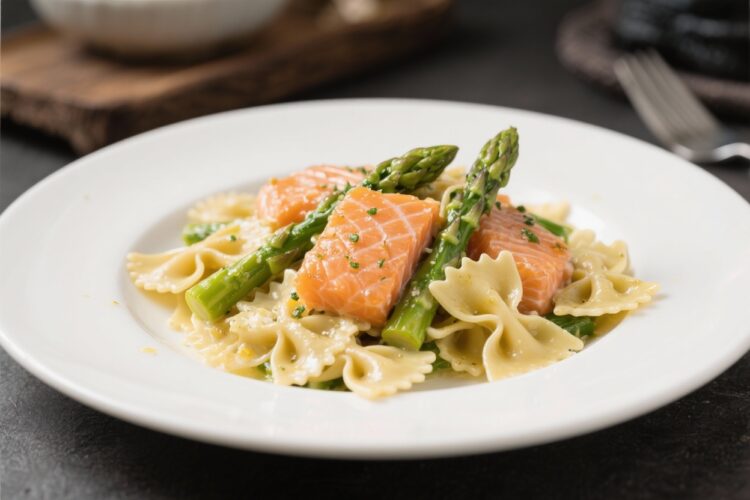
This is the kind of weeknight pasta that feels special without asking much of you. Farfalle, those cheerful bow-tie noodles, catch a creamy lemon sauce in every fold. Tender salmon flakes throughout, while crisp-tender asparagus adds freshness and color.
It’s balanced, satisfying, and on the table in about 30 minutes. If you want restaurant-quality flavor with simple steps, this is your new go-to.
Why This Recipe Works
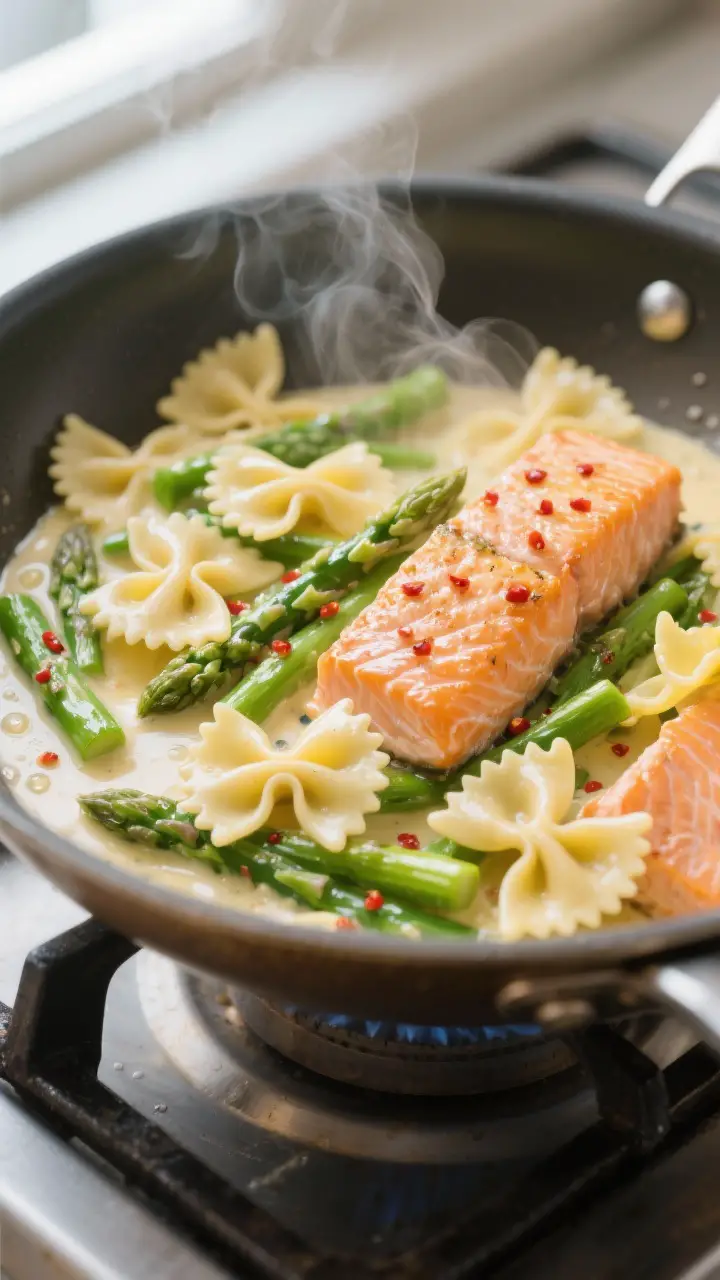
Balanced flavors: Rich salmon and a light cream-lemon sauce pair perfectly with bright asparagus and fresh herbs. No single element overwhelms the dish.
Smart timing: The pasta, asparagus, and salmon cook in a coordinated flow, so nothing overcooks and the meal comes together fast.
Texture variety: Farfalle holds onto sauce beautifully, asparagus stays crisp, and salmon flakes tenderly for a satisfying bite in every forkful.
Pan sauce efficiency: Pasta water emulsifies with butter and cream, creating a silky coating without needing a heavy, complicated sauce.
Ingredients
- 12 oz (340 g) farfalle pasta
- 1 lb (450 g) salmon fillet, skin removed, pin bones removed
- 1 bunch asparagus (about 12 oz/340 g), woody ends snapped off, cut into 1–2 inch pieces
- 2 tbsp olive oil
- 2 tbsp unsalted butter
- 3 cloves garlic, minced
- 1 cup heavy cream (or half-and-half for lighter)
- 1/2 cup dry white wine (optional; substitute broth if preferred)
- 1/2 cup grated Parmesan cheese, plus more for serving
- 1 lemon: zest and 1–2 tbsp juice
- 1/4–1/2 cup reserved pasta water (as needed)
- 2 tbsp chopped fresh dill or parsley
- Salt and freshly ground black pepper
- Red pepper flakes (optional, for a little heat)
Step-by-Step Instructions
- Boil the pasta: Bring a large pot of salted water to a boil.
Add the farfalle and cook until just shy of al dente, usually 1 minute less than package directions. Reserve at least 1/2 cup of pasta water before draining.
- Prep the salmon: Pat the salmon dry and season both sides with salt and pepper. Cut into 2-inch pieces for quicker, even cooking.
- Sear the salmon: In a large skillet, heat olive oil over medium-high.
Add salmon pieces and sear 1–2 minutes per side, until lightly golden and just cooked through. Transfer to a plate; the fish will finish gently in the sauce. Avoid overcooking.
- Sauté the asparagus: In the same skillet, reduce heat to medium.
Add butter and asparagus with a pinch of salt. Cook 3–4 minutes, stirring, until bright green and crisp-tender.
- Add aromatics: Stir in the minced garlic and cook 30 seconds until fragrant. Do not let it brown.
- Deglaze and simmer: Pour in the white wine (or broth), scraping up browned bits.
Simmer 1–2 minutes to reduce slightly.
- Make the sauce: Add the cream and bring to a gentle simmer. Stir in lemon zest, a pinch of red pepper flakes if using, and 1/4 cup Parmesan. Season with salt and pepper.
The sauce should be silky and lightly thickened.
- Combine with pasta: Add the drained farfalle to the skillet. Toss to coat, loosening with reserved pasta water a splash at a time until the sauce clings nicely.
- Fold in salmon and herbs: Gently add the salmon back to the pan, flaking large pieces slightly. Sprinkle in dill or parsley and a squeeze of lemon juice to brighten.
Taste and adjust salt, pepper, and lemon.
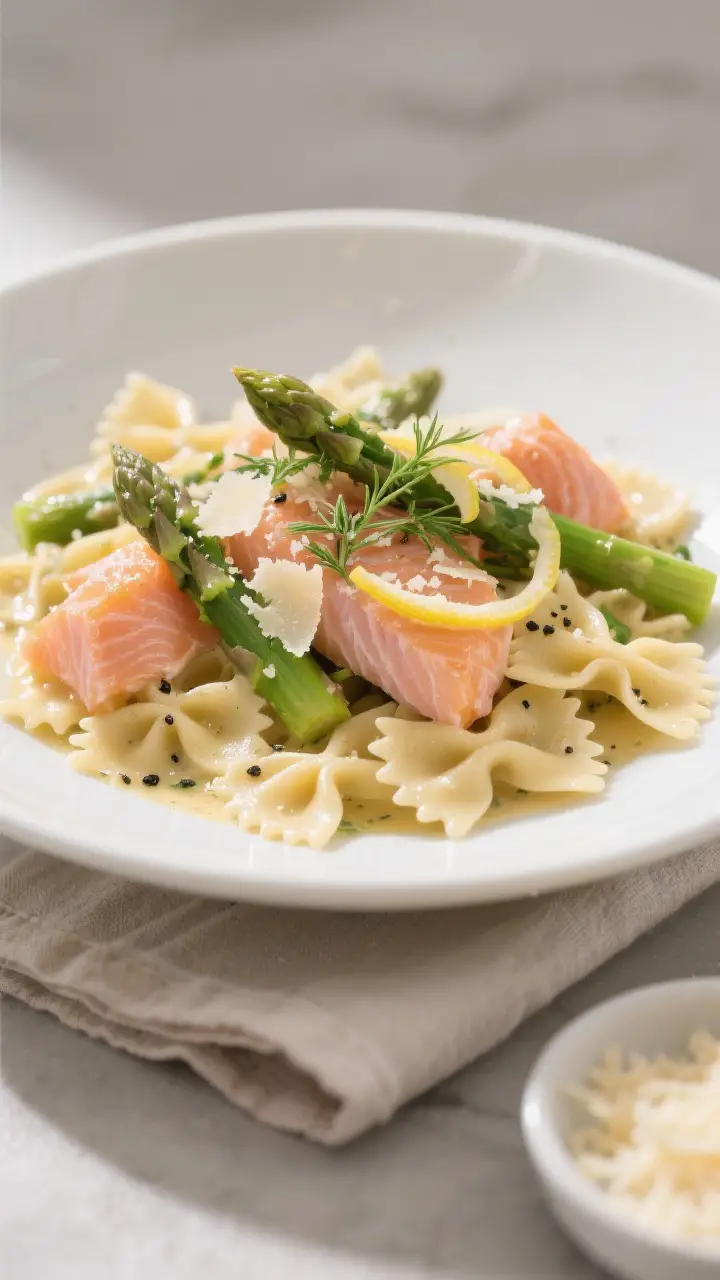
- Serve: Plate with extra Parmesan and freshly ground black pepper. Serve immediately while hot and glossy.
Storage Instructions
Refrigeration: Store leftovers in an airtight container for up to 2 days. Salmon dries out past that point.
Reheating: Warm gently in a skillet over low heat with a splash of water, cream, or broth to loosen the sauce.
Stir occasionally and remove from heat as soon as it’s hot to avoid overcooking the salmon.
Freezing: Not recommended. Cream sauces and asparagus lose texture, and salmon becomes mealy when frozen and thawed.
Benefits of This Recipe
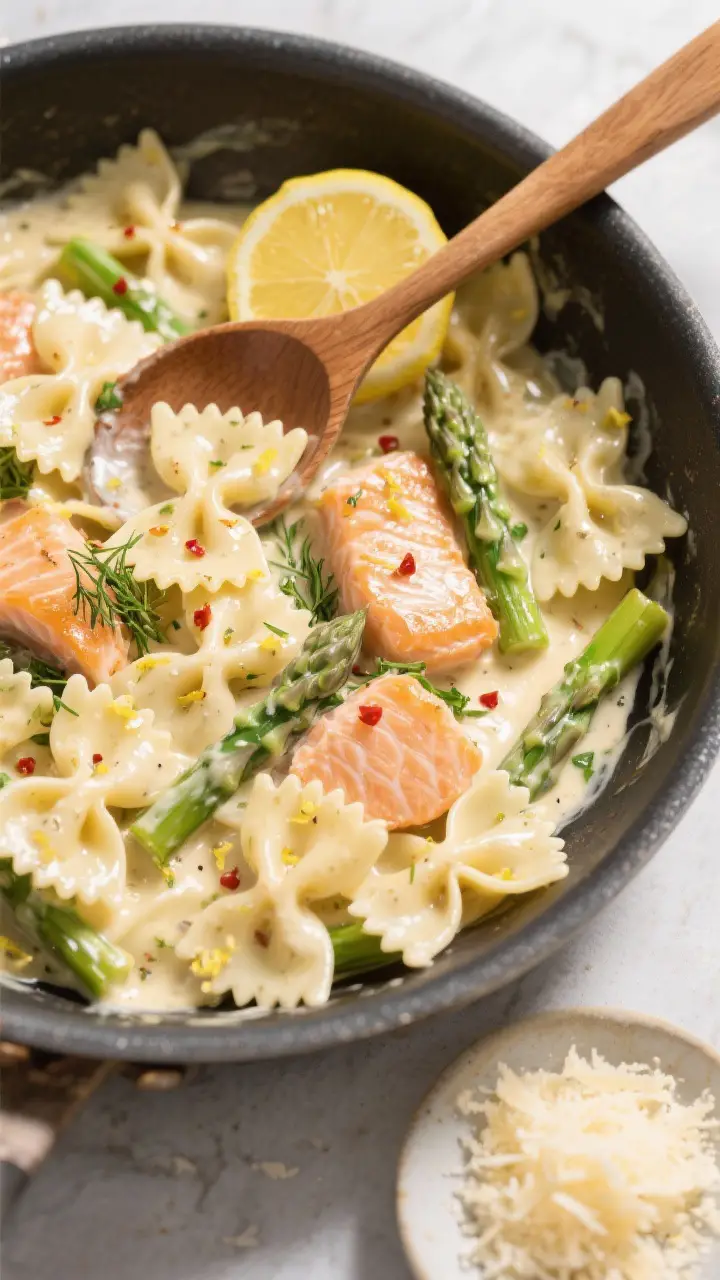
- Quick and satisfying: A 30-minute meal that feels special enough for guests but simple enough for a Tuesday.
- Nutrient-dense: Salmon brings omega-3s and protein; asparagus adds fiber, vitamins, and freshness.
- Flexible: Easy to adapt with different herbs, citrus, or add-ins like peas or spinach.
- Family-friendly flavors: Creamy, lemony, and not too heavy—crowd-pleasing without being bland.
Common Mistakes to Avoid
- Overcooking the salmon: It should be just opaque and flaky. Pull it early; it will finish in the sauce.
- Skipping pasta water: Starchy water helps the sauce cling and keeps it silky rather than thick or gloopy.
- Boiling the sauce hard: Keep a gentle simmer to prevent the cream from breaking and to preserve the salmon’s tenderness.
- Neglecting seasoning: Taste at each step.
Lemon, salt, and pepper make the flavors pop.
- Overcooking asparagus: Aim for crisp-tender with a little snap for freshness and color.
Alternatives
- Protein swaps: Use smoked salmon for a briny twist (add at the end, no searing), canned salmon (drained and flaked), or shrimp (sear 1–2 minutes per side).
- Veggie variations: Try peas, broccolini, spinach, or zucchini. Add delicate greens at the end to keep them vibrant.
- Dairy adjustments: Use half-and-half for lighter, or mascarpone for extra silkiness. For a dairy-free spin, try coconut cream with extra lemon and herbs.
- Pasta options: Penne, fusilli, or orecchiette also catch sauce well.
Gluten-free farfalle works too; cook to firm-tender.
- Flavor boosts: Capers, a spoon of Dijon, or a sprinkle of lemony breadcrumbs add punch and texture.
FAQ
Can I use leftover cooked salmon?
Yes. Flake it and fold it in at the end just to warm through. This keeps it tender and prevents it from drying out.
What if I don’t want to cook with wine?
Use chicken or vegetable broth instead.
Add a little extra lemon juice for brightness to replace the acidity of wine.
How do I know when the asparagus is done?
Look for a bright green color and slight resistance when pierced with a fork. It should be tender but still have a light snap.
Can I make this without cream?
Yes. Use a mix of broth and a knob of butter, then emulsify with pasta water and Parmesan.
The result is lighter but still silky.
How can I make it spicier?
Add more red pepper flakes when you sauté the garlic, or finish with a drizzle of chili oil at the table.
What’s the best pan for this recipe?
A large skillet or sauté pan with high sides works best. You want enough room to toss the pasta in the sauce without spilling.
Can I make it ahead?
You can prep components in advance: trim asparagus, zest the lemon, and grate cheese. Cook the pasta and sauce just before serving for best texture.
Final Thoughts
Farfalle with salmon and asparagus is simple, bright, and satisfying—proof that a handful of good ingredients can make a standout meal.
With quick timing, a silky sauce, and just the right touch of lemon, it hits all the notes you want on a busy night. Keep this one in your rotation, and feel free to riff with herbs, veggies, or a pinch of heat. It’s the kind of pasta that tastes like you fussed, even when you didn’t.
Printable Recipe Card
Want just the essential recipe details without scrolling through the article? Get our printable recipe card with just the ingredients and instructions.