
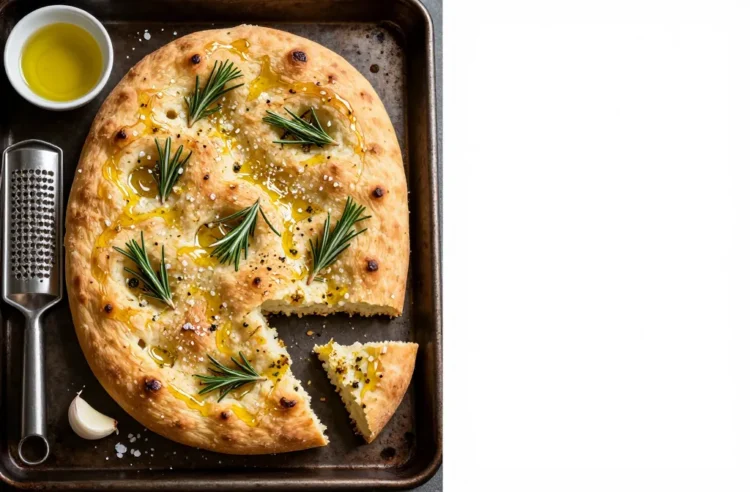
You know that bakery smell that makes you swear you’re buying “just one” thing and then you leave with a bag the size of your head? That’s focaccia energy. Lucky for your budget (and your kitchen ego), you can make a garlic parmesan version at home that tastes like a pro did it. It’s simple, forgiving, and extremely snackable. Let’s bake bread that impresses your friends and your future self.
Why Focaccia Hits Different
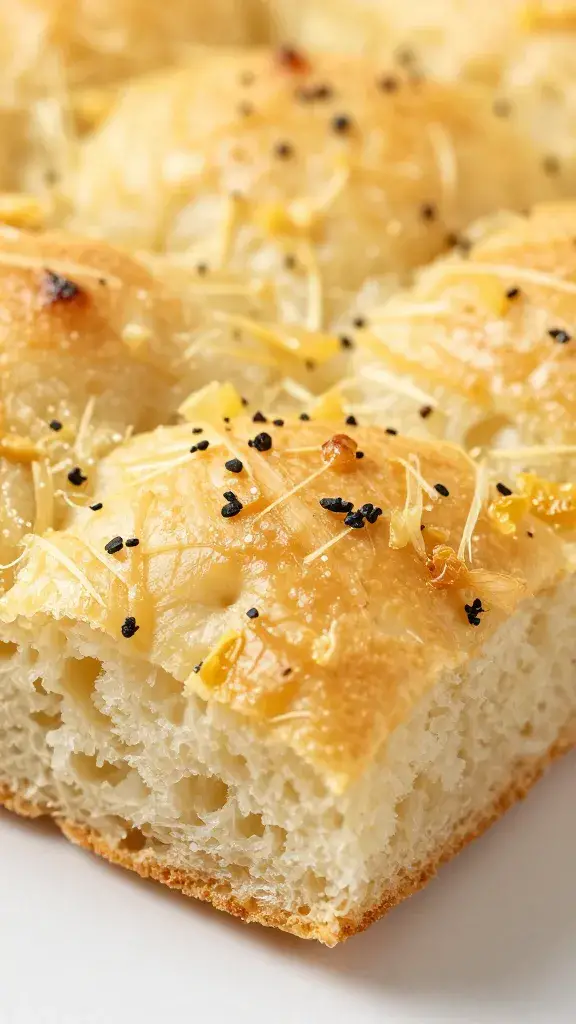
Focaccia gives you everything: crisp edges, fluffy middle, and pools of garlicky oil that crunch when you bite. It doesn’t ask for complicated shaping or perfect braids. You just press dimples with your fingers and let olive oil do half the work. Low effort, high reward—my favorite combo.
The Flavor Blueprint: Garlic + Parmesan + Olive Oil
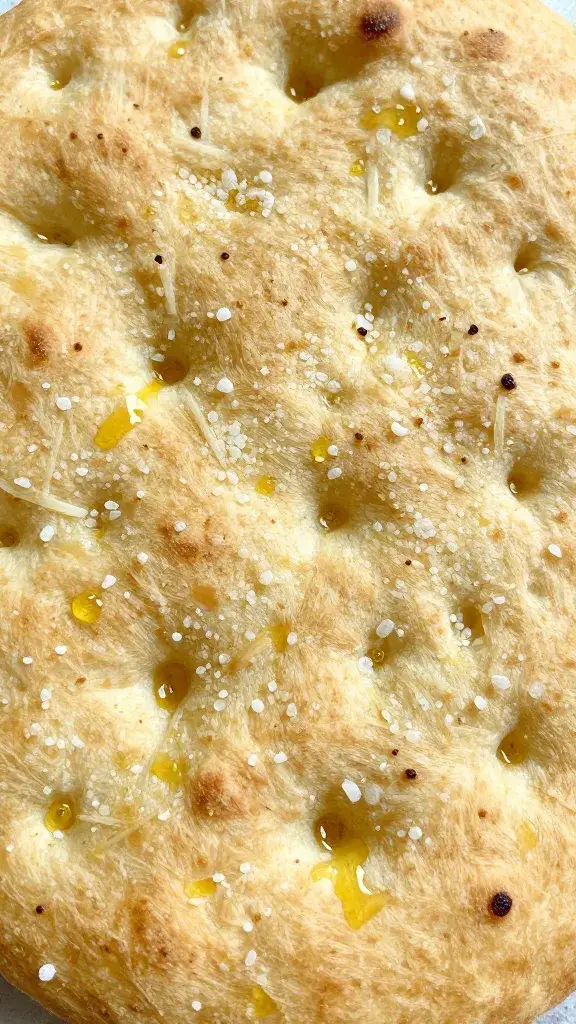
Garlic and parmesan act like the dynamic duo here. Garlic brings the aroma; parmesan brings salty, nutty depth. Olive oil moisturizes the dough and builds a golden crust that’s basically a personality trait.
- Garlic: Fresh cloves only. We’ll bloom them gently in oil to tone down any harsh bite.
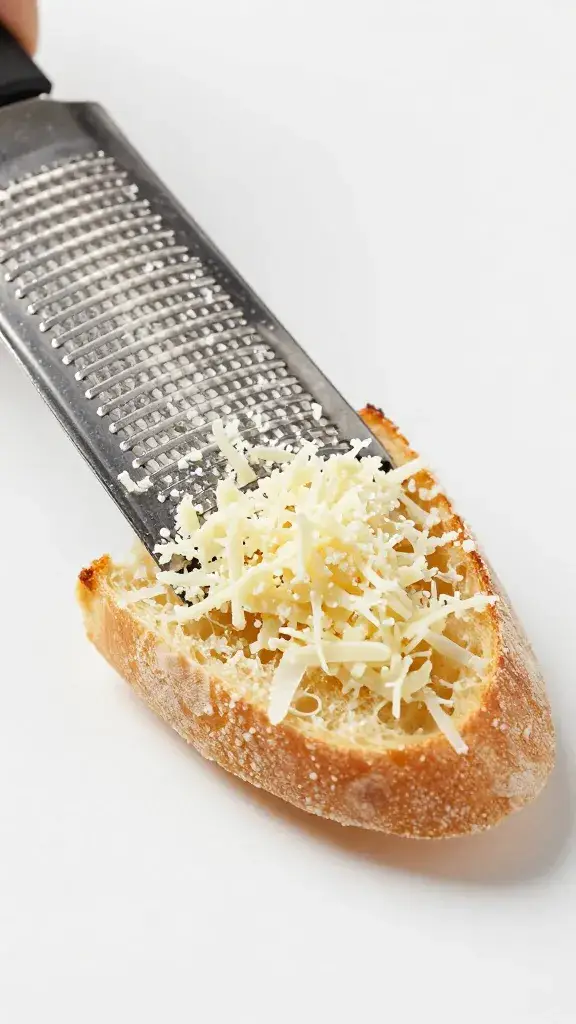
- Parmesan: Real Parmigiano-Reggiano if you can swing it. Grate it yourself for best melt and flavor.
- Olive Oil: A good extra-virgin. You’ll taste it, so choose one you actually like.
- Herbs: Rosemary plays beautifully with garlic. Fresh beats dried, but use what you have.
- Salt: Flaky for topping, fine for dough. Don’t skimp—bread needs salt to shine.
Optional but Awesome Add-Ins
- Crushed red pepper flakes for a kiss of heat
- Lemon zest in the oil for a bright note
- Black pepper and a whisper of smoked paprika for depth
Ingredients and Gear (Keep It Simple)
For the dough:
- 4 cups (500 g) bread flour or all-purpose flour
- 1 3/4 cups (415 ml) warm water (around 100–105°F)
- 2 tsp instant yeast (or 2 1/4 tsp active dry, bloomed)
- 2 tsp fine sea salt
- 2 tbsp olive oil (plus more for the pan)
For the topping:
- 1/3 cup olive oil
- 4–5 cloves garlic, thinly sliced
- 1/2–3/4 cup freshly grated parmesan
- 1–2 tsp fresh rosemary, chopped
- Flaky salt, to finish
Gear:
- 9×13-inch pan (metal preferred) or a half-sheet pan for thinner focaccia
- Mixing bowl, spatula, and your amazing hands
- Small skillet or saucepan
Step-by-Step: From Flour to Focaccia
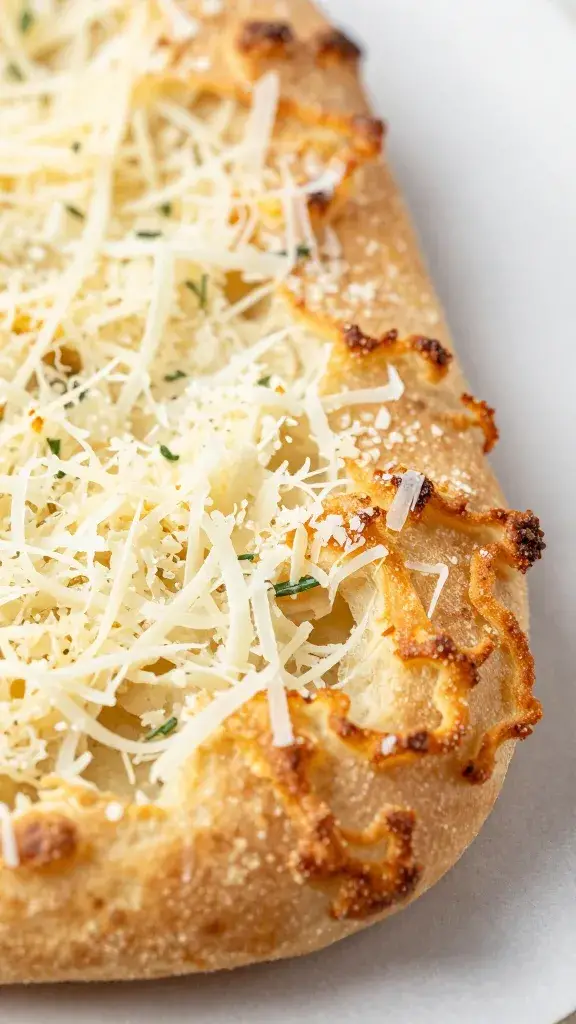
You can do this with a stand mixer, but honestly, a bowl and a spoon work great. The dough should feel sticky and lively. If it feels like modeling clay, you added too much flour—FYI, tacky is good.
- Mix the dough: In a large bowl, combine flour, yeast, and salt. Add warm water and 2 tbsp olive oil. Stir until shaggy and no dry spots remain. The dough will be sticky—perfect.
- Short rest: Cover and let it sit for 10 minutes. This hydrates the flour and makes the dough easier to handle. Lazy gluten development? Yes please.
- Coil folds (optional but clutch): With damp hands, stretch and fold the dough from each side toward the center 2–3 times. Do this twice over 30 minutes. It builds strength without kneading like a gym bro.
- First rise: Cover and let the dough rise until doubled, about 1–1.5 hours depending on your kitchen temp.
- Pan and oil: Generously oil your pan—like, don’t be shy. Add 2–3 tbsp olive oil, spread it around, then plop in the dough. Turn it to coat.
- Pan rise: Let the dough relax 20–30 minutes, then gently stretch it to the corners. If it springs back, wait 10 more minutes and try again. No wrestling.
- Final proof: Cover and let it puff for 30–45 minutes. It should look bouncy and airy.
Make the Garlic Oil While You Wait
Add 1/3 cup olive oil and sliced garlic to a small skillet. Warm on low until the garlic just barely sizzles and turns fragrant, 2–3 minutes. Do not brown it. You’re infusing the oil, not making garlic chips. Stir in chopped rosemary and a pinch of red pepper if you like. Cool slightly.
Dimpling, Topping, and Baking
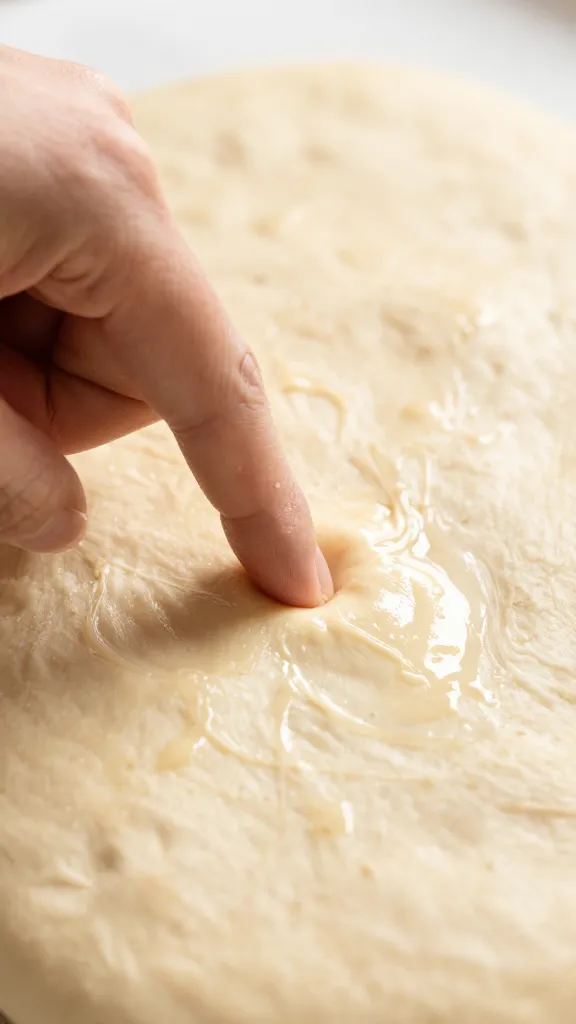
This is the fun part where you get to poke bread like bubble wrap. Wash your hands, oil your fingers, and go to town.
- Preheat: Heat your oven to 450°F (232°C). Place a rack in the lower-middle position for a crisp bottom.
- Dimple: Press your fingers straight down into the dough to create deep dimples all over. Don’t flatten it completely—just give it texture.
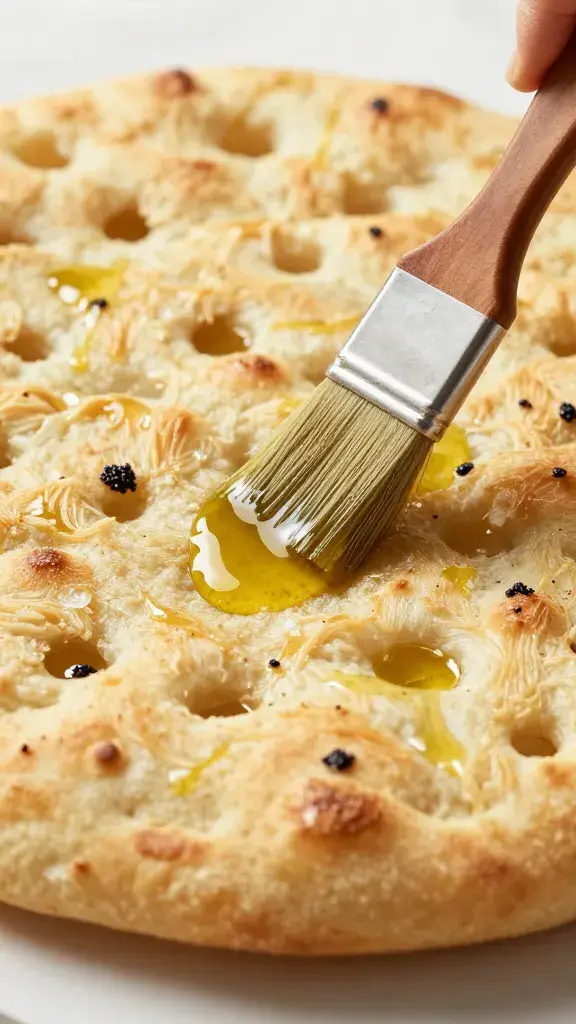
- Dress it up: Spoon the garlic-rosemary oil evenly over the top, letting it pool in the dimples. Scatter on most of the parmesan. Sprinkle flaky salt.
- Bake: 20–25 minutes until golden on top and deeply browned at the edges. If using a sheet pan (thinner dough), start checking at 15–18 minutes.
- Finish: While hot, add the remaining parmesan for a melty but not scorched layer. If you like extra sheen, brush on a touch more olive oil. Let cool 10–15 minutes before slicing so the crumb sets. Try not to burn your mouth. We both know you’ll try a corner anyway.
Texture and Flavor Tweaks (Because You’re the Boss)
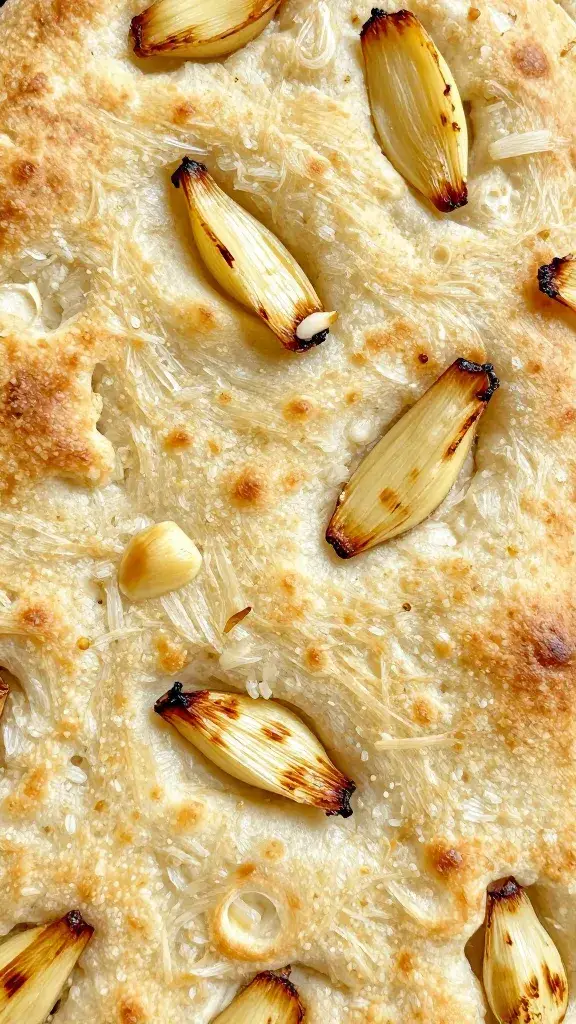
Bread loves customization. Here’s how to dial it in based on your mood or pantry.
For Extra Airy Focaccia
- Use bread flour for higher protein and better structure.
- Increase hydration slightly: add 1–2 tbsp water if your dough feels stiff.
- Cold proof overnight in the fridge, tightly covered. Then bring to room temp, dimple, and bake. Flavor and bubbles go wild, IMO.
For Crisper Edges
- Generously oil the pan, especially the corners and sides.
- Bake on a preheated baking steel or an inverted sheet pan to boost bottom browning.
- Finish the last 2–3 minutes with the pan on a lower rack.
Garlic Level: Medium to Vampires-Beware
- Mild: Use 3 cloves and bloom gently.
- Medium: 4–5 cloves, as written.
- Bold: 6–7 cloves and add a pinch of granulated garlic to the dough. You’re calling the shots, Dracula.
Serving Ideas That Make It a Meal
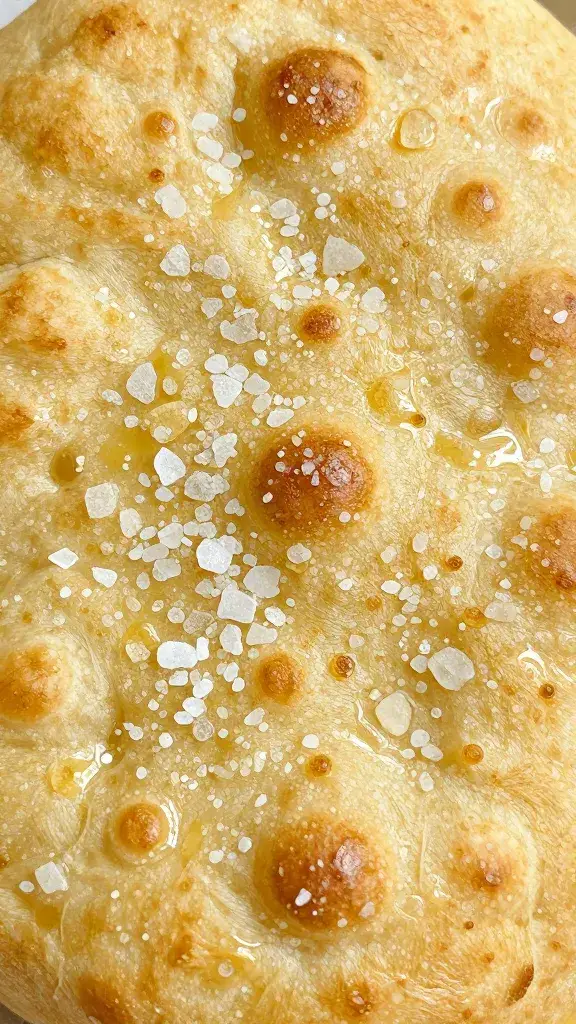
You can absolutely inhale this straight off the cutting board. But if you want to pretend it’s part of a plan, try these.
- Dip and dunk: Serve with olive oil, balsamic, and cracked pepper. Simple and perfect.
- Soup’s BFF: Tomato soup, minestrone, or a creamy potato-leek. Carb synergy.
- Fancy sandwich territory: Split horizontally and stuff with roasted veggies, arugula, mozzarella, and a swipe of pesto.
- Brunch move: Top warm slices with soft-scrambled eggs, parmesan, and chives. Slightly extra, completely worth it.
Make-Ahead, Storing, and Reheating
Focaccia stays great for a day or two and reheats like a champ. You don’t need sorcery—just a hot oven and a little patience.
Make-Ahead Dough
Mix the dough and stick it in the fridge for 12–24 hours after the first 30-minute rest. It develops flavor, gets more extensible, and makes your future self feel like a genius. Let it warm up for 45–60 minutes before dimpling and baking.
Storage
- Room temp: Wrap loosely in foil or keep in a paper bag for up to 2 days.
- Freeze: Cut into slabs, wrap well, and freeze up to 2 months.
Reheating
- Oven: 375°F for 6–8 minutes (frozen: 10–12). Restores crispness without drying out.
- Air fryer: 350°F for 3–5 minutes. Surprisingly great, IMO.
- Avoid the microwave unless you like chewy sadness.
FAQ
Can I use active dry yeast instead of instant?
Yes. Bloom 2 1/4 tsp active dry yeast in the warm water with a pinch of sugar for 5–10 minutes until foamy, then proceed. If it doesn’t foam, your yeast ghosted you—try a fresh packet.
What if my dough feels too sticky?
Sticky means hydrated, which makes airy bread. Oil your hands rather than adding flour. If it’s still soup-level wet, sprinkle in 1–2 tbsp flour and fold it in. Stop once it holds together in a cohesive mass.
Do I need a stand mixer?
Nope. A spoon, a bowl, and a couple of folds give you excellent structure. Focaccia doesn’t care about perfect gluten strands. It cares about resting, oil, and heat.
Can I swap parmesan for another cheese?
Sure. Pecorino Romano adds punchy saltiness. Asiago works, too. Avoid super-wet cheeses on top before baking—they can pool and make soggy patches. Add mozz post-bake if you want melty vibes.
Why didn’t my focaccia brown well?
Your oven might run cool or your pan might be light-colored. Preheat longer, use a darker metal pan, or move the rack down a notch. A bit more olive oil also encourages browning. Worst case, broil for 1–2 minutes—but watch it like a hawk.
Can I make it gluten-free?
Use a high-quality 1:1 gluten-free flour blend designed for yeasted doughs. Increase the olive oil by 1 tbsp and don’t expect the same rise. Still delicious, just a different texture—more tender, less chewy.
Conclusion
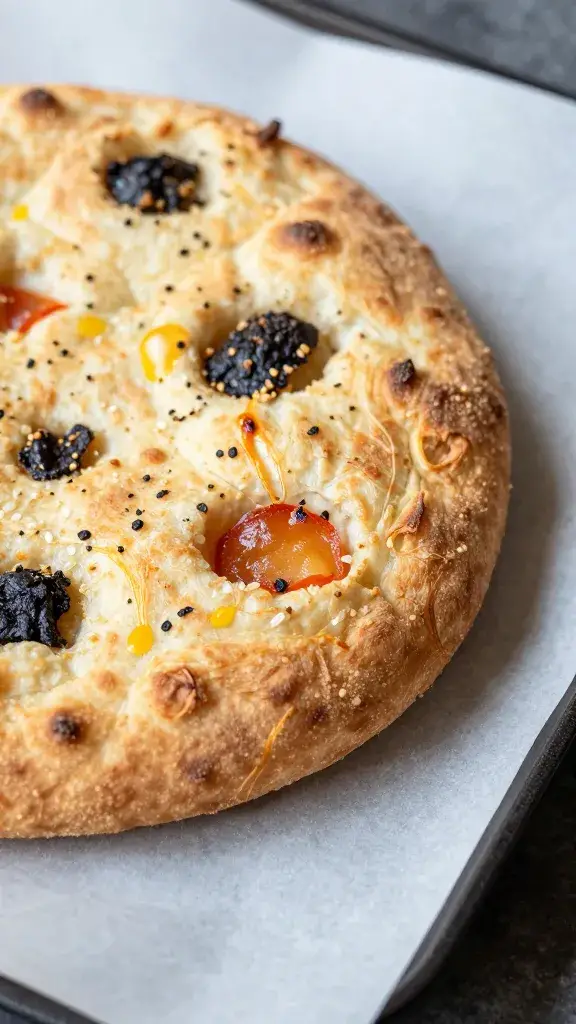
Garlic parmesan focaccia takes simple pantry ingredients and turns them into a showstopper with very little drama. You mix, you wait, you poke, you bake, you brag. The crust shatters, the middle pillows, the garlic sings, and the parmesan ties it all together. Honestly? It’s the kind of bread that makes you wonder why you ever settled for store-bought.