
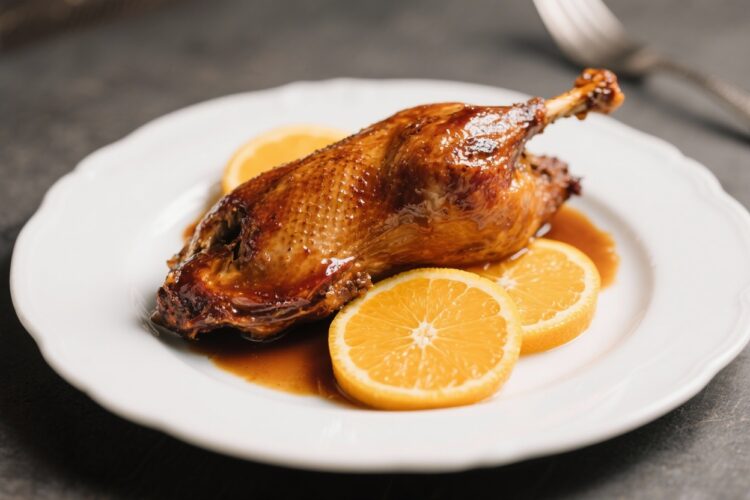
Few dishes feel as special as Duck à l’Orange. It’s rich and celebratory, yet balanced with bright citrus and a glossy, sweet-sour glaze. The skin turns shatteringly crisp, the meat stays tender, and the sauce tastes like sunshine.
If you’ve never roasted a duck, this is a welcoming first step. The process is simple once you know the rhythm: render fat slowly, finish hot for crisp skin, and whisk a quick pan sauce that sings with orange and a hint of bitterness.
What Makes This Recipe So Good
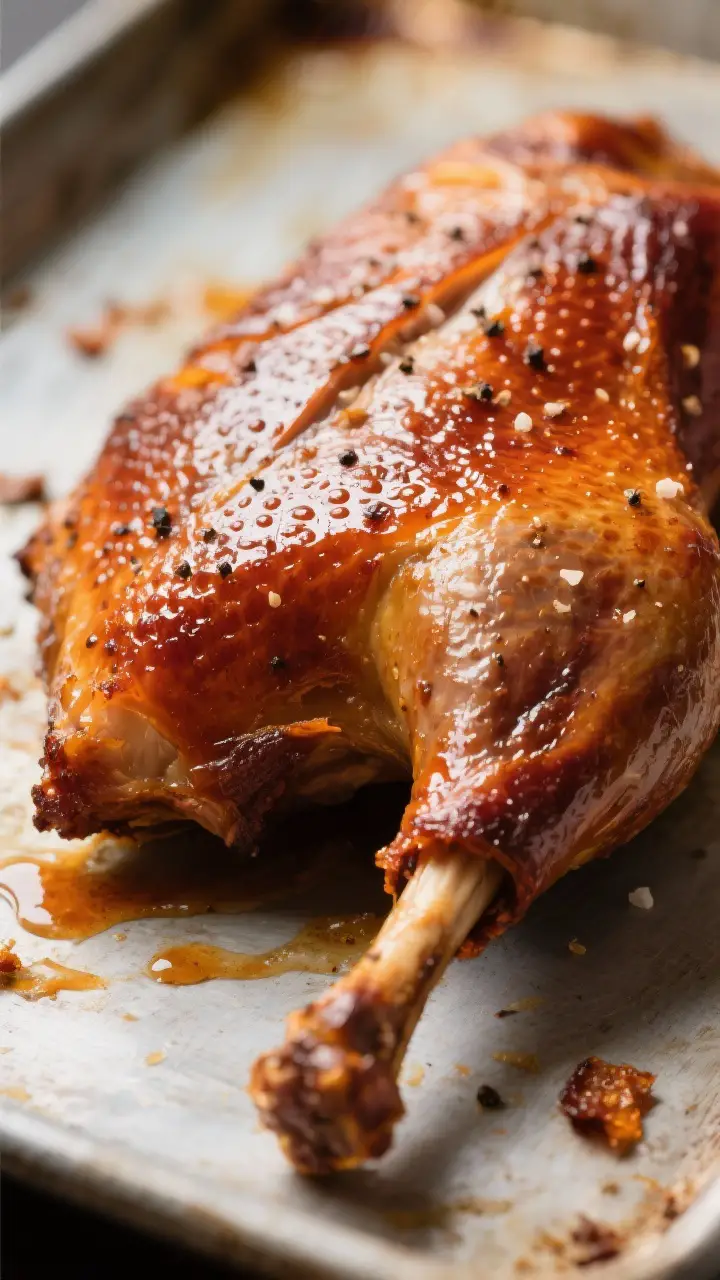
- Perfect balance of flavors: Rich duck meets fresh orange, a touch of sweetness, and gentle bitterness from marmalade or zest.
- Crisp skin, juicy meat: Slow rendering and a high-heat finish deliver the textural contrast you want from roast duck.
- Restaurant-quality sauce at home: The glaze is simple, bright, and full of character, made right in the roasting pan.
- Great for gatherings: A whole duck looks impressive and feeds 3–4 people with style.
- Useful leftovers: You get flavorful meat, an elegant sauce, and plenty of duck fat for future cooking.
Shopping List
- Whole duck (5–6 pounds), giblets removed
- Oranges (3–4), for zest, juice, and garnish
- Orange marmalade (about 1/3 cup)
- Chicken or duck stock (1 cup)
- Dry white wine or dry vermouth (1/2 cup)
- Apple cider vinegar or white wine vinegar (1–2 tablespoons)
- Sugar or honey (1–2 tablespoons, optional, to taste)
- Unsalted butter (2 tablespoons)
- Salt (kosher preferred)
- Freshly ground black pepper
- Garlic (2 cloves, optional)
- Fresh thyme or rosemary (a few sprigs, optional)
- Cornstarch (1 teaspoon, optional, for thickening)
Step-by-Step Instructions
- Prep the duck: Pat the duck very dry, inside and out. Trim excess fat around the cavity.
Use a sharp skewer to prick the skin all over, especially the fattier areas on the breast and thighs. Avoid piercing the meat.
- Season generously: Salt the duck all over and inside the cavity. Add pepper to taste.
For aromatic depth, tuck in a few orange peels, a smashed garlic clove, and a sprig of thyme.
- Set up the oven: Preheat to 300°F (150°C). Place a rack on a rimmed roasting pan so rendered fat can drip away. Set the duck breast-side up on the rack.
- Slow render, then flip: Roast for 60 minutes.
Carefully remove the pan and spoon off excess fat into a heatproof jar. Flip the duck breast-side down and roast another 45–60 minutes. Keep pricking the skin if you see tight, unrendered areas.
- Finish for crisp skin: Increase heat to 425°F (220°C).
Flip the duck breast-side up. Roast 15–25 minutes until the skin is deep golden and crisp. The leg joints should move easily, and juices should run clear.
- Rest the duck: Transfer to a cutting board and rest 15 minutes.
This helps juices settle and the skin stay crisp.
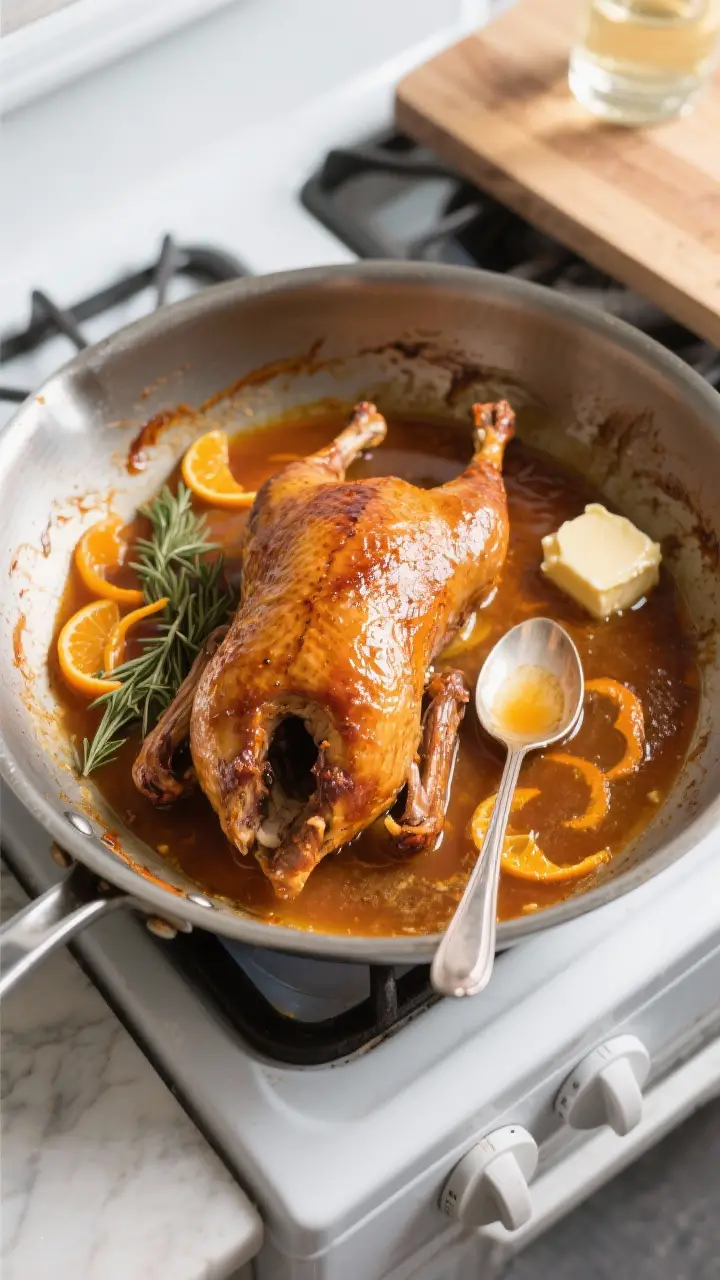
- Make the orange glaze base: While the duck rests, pour off most of the fat from the pan, leaving about 1 tablespoon and the browned bits. Place the pan over medium heat. Add white wine and scrape up the fond.
Let it reduce by half.
- Build the sauce: Add stock, 1/2 cup fresh orange juice, 1–2 teaspoons orange zest, and 1–2 tablespoons vinegar. Whisk in orange marmalade. Simmer until slightly syrupy.
Taste, then adjust with a pinch of salt and a touch of sugar or honey if you want more sweetness.
- Finish the glaze: Whisk in cold butter to give the sauce shine and body. If you prefer thicker, stir 1 teaspoon cornstarch into 1 tablespoon water, then whisk into the simmering sauce for 30 seconds.
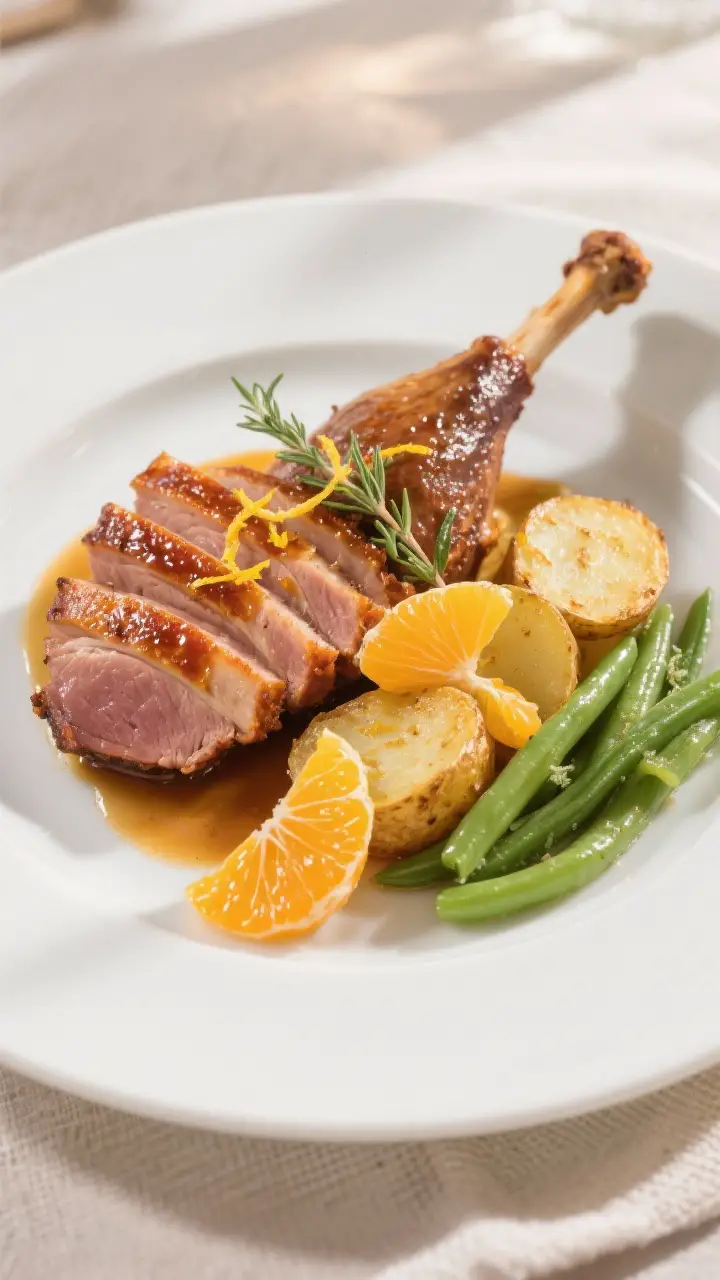
- Carve and serve: Carve the duck into breasts, legs, and thighs. Spoon glaze over the meat and serve extra on the side.
Garnish with fresh orange segments or thin slices for a bright, fresh note.
Keeping It Fresh
- Storage: Refrigerate leftover duck and sauce separately in airtight containers for up to 3 days.
- Reheating: For crisp skin, reheat duck pieces on a rack in a 375°F (190°C) oven for 10–12 minutes. Warm the sauce gently on the stovetop.
- Freezing: Cooked duck meat freezes well for up to 2 months. Freeze sauce separately.
Thaw overnight in the fridge.
- Duck fat: Strain and save rendered duck fat in a jar in the fridge for 3 months. It’s excellent for roasting potatoes and vegetables.
Health Benefits
- Rich in protein and iron: Duck provides high-quality protein and essential minerals that support energy and muscle health.
- Healthy fats in moderation: Duck is higher in fat than chicken, but much of it renders out. The remaining fat adds satiety and flavor.
- Vitamin C from citrus: Orange juice and zest deliver vitamin C and antioxidants that help support immune function.
- Balanced approach: Pairing duck with a salad of bitter greens or roasted vegetables keeps the meal satisfying without feeling heavy.
Pitfalls to Watch Out For
- Rubbery skin: Not rendering enough fat or skipping the high-heat finish can leave the skin chewy.
Keep pricking and finish hot.
- Bland sauce: Taste and adjust. You want a lively balance of sweet, sour, and bitter. Add a splash more vinegar or a pinch of sugar as needed.
- Overcooking: Duck can dry out if roasted too long at high heat.
Do the slow render first, then finish quickly for crispness.
- Grease overload: Always pour off excess fat from the pan before making the sauce. Save it for cooking; don’t leave it in the sauce.
- Too much bitterness: Marmalade varies. If yours is very bitter, reduce the zest or add a touch more honey.
Alternatives
- Spiced version: Add a cinnamon stick, a star anise, and a few peppercorns to the sauce for a warm, aromatic twist.
- Orange and Grand Marnier: Replace part of the wine with Grand Marnier or Cointreau for deeper orange notes and a hint of sweetness.
- Pomegranate glaze: Swap half the orange juice for pomegranate juice and finish with fresh seeds for color and tang.
- Boneless duck breasts: Pan-sear skin-on breasts until crisp, finish in the oven, and make the same sauce in the skillet.
Faster, great for two.
- Citrus swap: Try blood oranges or mandarins for a slightly sweeter, floral profile.
FAQ
How do I know when the duck is done?
The skin should be deep golden and crisp, and the leg should wiggle easily at the joint. Juices should run clear. If you use a thermometer, the thickest part of the thigh should register around 170°F (77°C).
Do I need to truss the duck?
Trussing is optional.
Leaving the duck untrussed allows more air to circulate and can help render fat more evenly. If you prefer a tighter shape, loosely tie the legs.
Can I make the sauce ahead?
Yes. Make the sauce up to a day in advance and reheat gently.
Whisk in a little extra butter or a splash of stock to refresh the texture before serving.
What should I serve with Duck à l’Orange?
Crisp potatoes roasted in duck fat, sautéed green beans, roasted carrots, or a peppery salad with arugula and fennel all pair well. Polenta or wild rice also works nicely.
Is there a way to reduce the richness?
Serve smaller portions and load the plate with bright sides. Increase the vinegar slightly in the sauce to add lift, and garnish with fresh orange segments for a clean finish.
Can I use store-bought duck stock?
Absolutely.
If you can’t find duck stock, good-quality low-sodium chicken stock is a fine substitute. Adjust salt to taste.
Final Thoughts
Duck à l’Orange is classic for a reason. It marries crisp skin and tender meat with a sauce that’s sweet, tangy, and fragrant.
Once you understand the slow-render-then-crisp method, the rest is easy. Serve it when you want dinner to feel a little luxurious, without getting fussy. The result is timeless, bright, and deeply satisfying.