
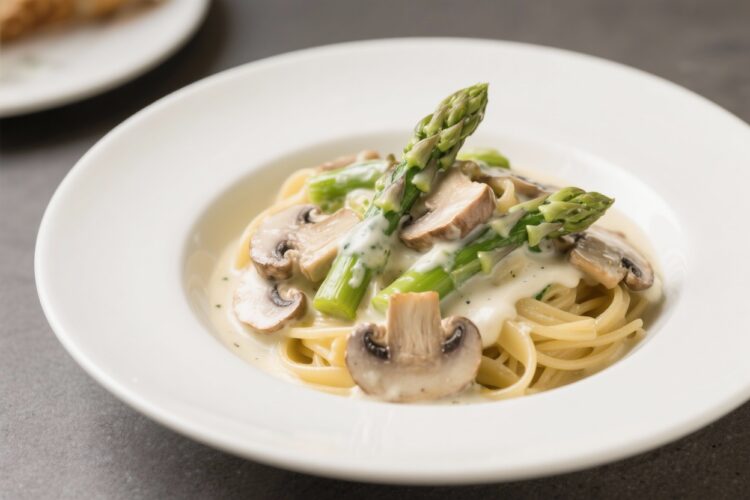
This creamy asparagus and mushroom pasta is the kind of meal you make when you want something cozy but still fresh and bright. Tender asparagus and earthy mushrooms get a quick sauté, then meet a silky, garlicky cream sauce that clings to every strand of pasta. It’s simple enough for a weeknight but feels special enough for company.
You don’t need fancy techniques—just a few good ingredients and 30 minutes. If you like meals that are balanced, satisfying, and comforting without being heavy, this one hits the mark.
Why This Recipe Works
The magic here is balance. Asparagus brings a gentle snap and grassy sweetness, mushrooms add umami and depth, and cream smooths everything out.
A touch of lemon wakes up the sauce so it never tastes flat, while Parmesan brings salty richness. Cooking the vegetables first builds flavor in the pan, which infuses the sauce. Tossing the pasta directly in the skillet lets the sauce thicken and cling, giving you a restaurant-style finish at home.
Shopping List
- Pasta: Fettuccine, linguine, or spaghetti (12 ounces)
- Asparagus: 1 bunch, trimmed and cut into 1–2-inch pieces
- Mushrooms: 8–10 ounces cremini or button, sliced
- Shallot or Onion: 1 small, finely chopped
- Garlic: 3–4 cloves, minced
- Butter: 2 tablespoons
- Olive Oil: 1–2 tablespoons
- Heavy Cream: 1 cup (or half-and-half for lighter)
- Parmesan Cheese: 3/4 cup, freshly grated, plus more for serving
- Lemon: 1, for zest and juice
- Vegetable or Chicken Broth: 1/2 cup (optional, for loosening the sauce)
- Fresh Herbs: Parsley or chives, chopped
- Red Pepper Flakes: A pinch (optional)
- Salt and Black Pepper: To taste
Instructions
- Boil the pasta. Bring a large pot of salted water to a boil.
Add your pasta and cook until just shy of al dente. Reserve 1 cup of pasta water before draining.
- Prep the produce. Trim the woody ends from the asparagus and cut into 1–2-inch pieces. Slice mushrooms, mince garlic, and chop the shallot.
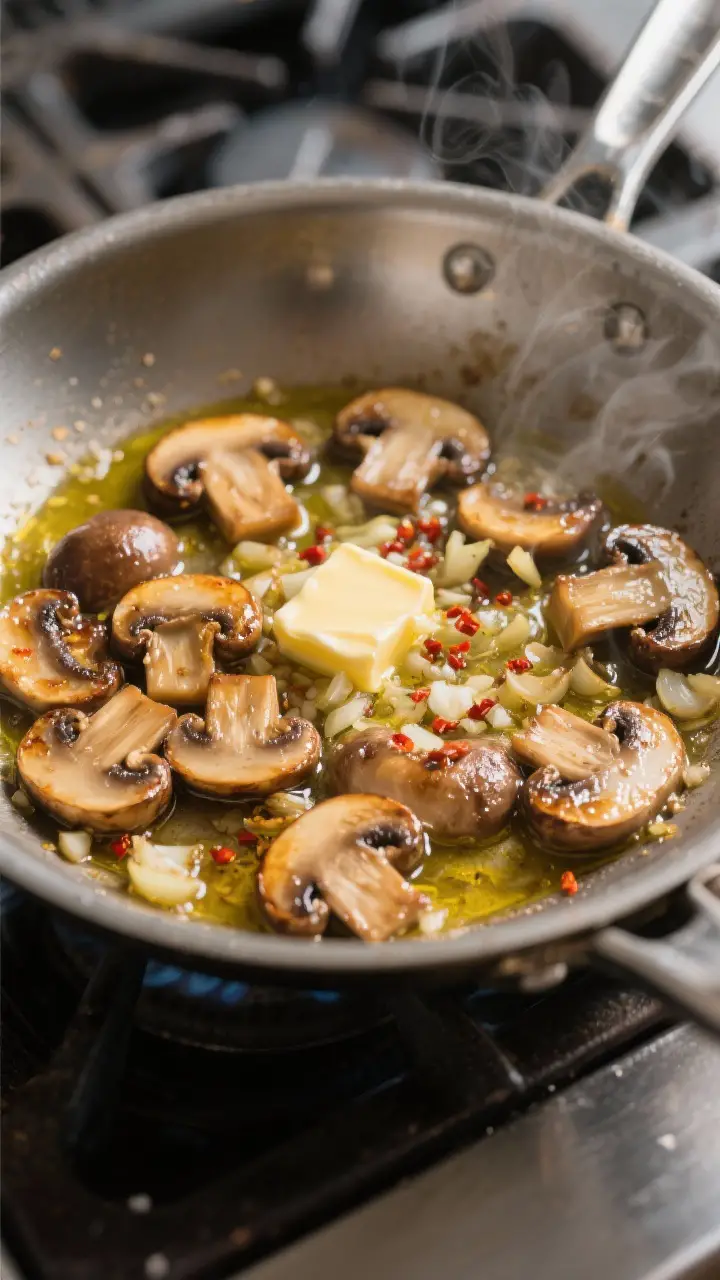
- Sauté the mushrooms. Heat a large skillet over medium-high. Add olive oil and mushrooms with a pinch of salt.
Cook without stirring for 2–3 minutes to brown, then stir and cook until golden and their moisture evaporates, about 5–7 minutes.
- Add aromatics. Reduce heat to medium. Add butter, shallot, and garlic. Cook 1–2 minutes until fragrant.
If using red pepper flakes, add them now.
- Cook the asparagus. Stir in the asparagus and a splash of broth or water. Cover for 2 minutes to steam, then uncover and cook another 2–3 minutes until crisp-tender. The asparagus should be bright green with a little bite.
- Build the sauce. Pour in the cream and bring to a gentle simmer.
Add a small splash of pasta water to loosen if needed. Stir in half the Parmesan until melted and smooth. Season with salt and black pepper.
- Finish with lemon. Add lemon zest and a squeeze of juice.
Start with half the lemon, then taste. You want a subtle lift, not a lemony sauce.
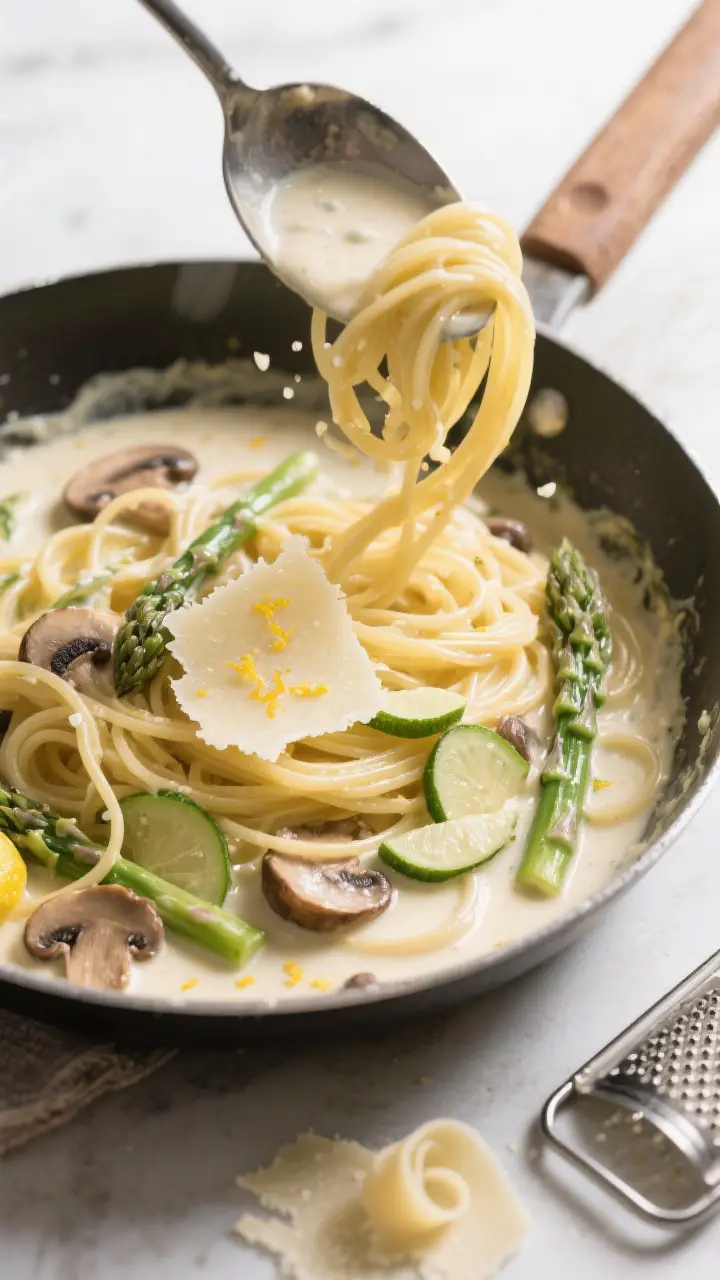
- Toss with pasta. Add the drained pasta directly to the skillet. Toss, adding reserved pasta water a little at a time until the sauce coats the noodles and looks glossy.
Stir in remaining Parmesan.
- Taste and adjust. Add more salt, pepper, or lemon if needed. If the sauce thickens too much, loosen with another splash of pasta water or broth.
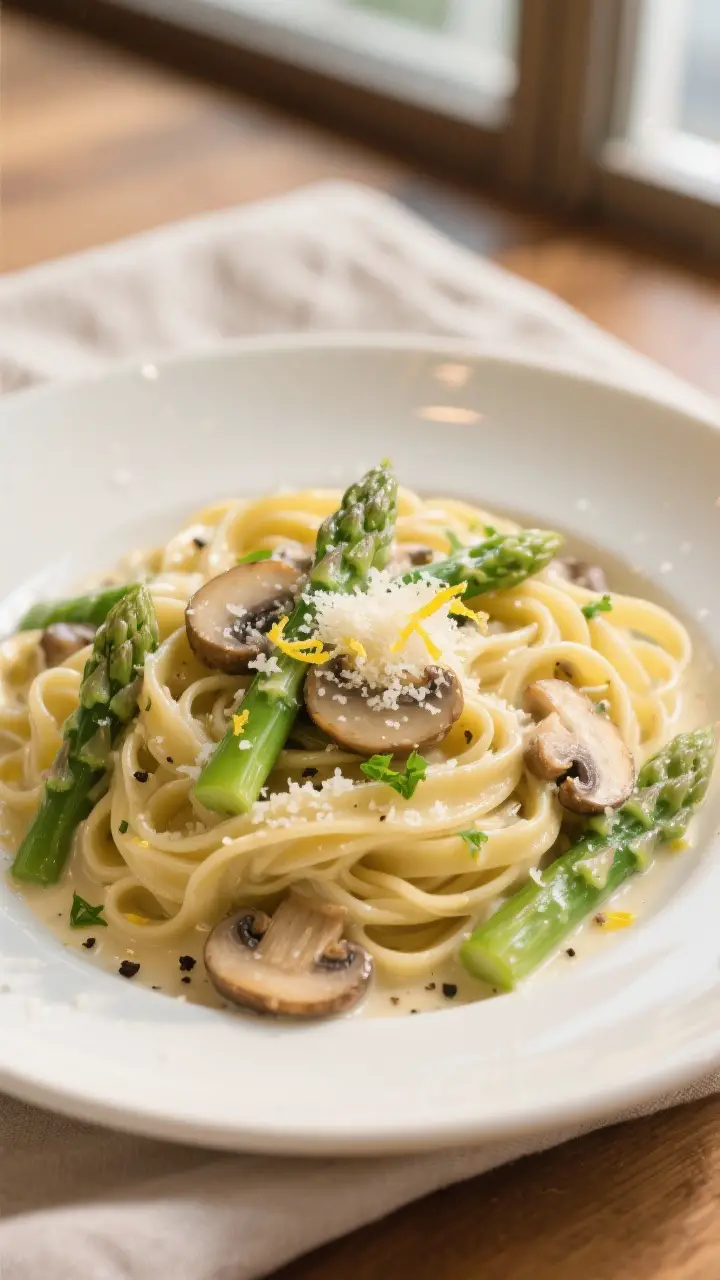
- Serve. Top with chopped herbs and extra Parmesan. Drizzle with a bit of olive oil if you like.
Keeping It Fresh
Leftovers keep well for 2–3 days in the fridge.
Store in an airtight container. Reheat gently over low heat with a splash of water, broth, or milk to revive the sauce. For the best texture, avoid boiling the pasta when reheating—slow and low is key.
If you plan to make ahead, slightly undercook the pasta and asparagus so they don’t soften too much later.
Why This is Good for You
You’re getting fiber and vitamins from the asparagus—especially vitamin K, folate, and antioxidants. Mushrooms bring B vitamins and a savory punch that helps you use less salt. Parmesan adds protein and calcium, and because it’s flavorful, a moderate amount goes a long way.
While there’s cream in the sauce, the portion size and the generous veggies help keep things balanced. You can also lighten it with half-and-half or a mix of milk and broth without losing the creamy feel.
Pitfalls to Watch Out For
- Soggy asparagus: Overcooking turns it mushy and dull. Cook just until crisp-tender and bright green.
- Watery mushrooms: Crowding the pan steams them.
Give them room and start on high heat to brown properly.
- Flat sauce: Without acidity, cream sauces can taste heavy. Lemon zest and a squeeze of juice bring it to life.
- Gritty cheese: Pre-grated Parmesan can clump. Use freshly grated and add it off a hard boil.
- Gluey pasta: Don’t skip the pasta water.
Its starch helps the sauce cling and stay silky.
Alternatives
- Lighter dairy: Swap heavy cream for half-and-half, or use 1/2 cup cream plus 1/2 cup milk/broth. Simmer gently to avoid curdling.
- Different veggies: Try peas, broccoli florets, or spinach. Add peas right at the end, broccoli with the asparagus, and spinach off the heat to wilt.
- Protein boosts: Add sautéed chicken, seared shrimp, or crispy pancetta.
Fold in at the end so they stay tender.
- Vegan option: Use olive oil and a splash of dairy-free creamer or cashew cream. Replace Parmesan with nutritional yeast or a vegan Parmesan.
- Gluten-free: Choose a sturdy gluten-free pasta and watch the cook time closely. Reserve pasta water as usual; it still helps emulsify the sauce.
- Herb swaps: Basil or tarragon give lovely spring notes.
Add delicate herbs at the end to keep them fresh.
- Mushroom variety: Mix in shiitake or oyster mushrooms for deeper flavor and texture.
FAQ
Can I make this without cream?
Yes. Use half-and-half or a mix of milk and broth, and thicken the sauce by simmering a bit longer. A tablespoon of cream cheese can also add body.
Keep the heat gentle to prevent curdling.
How do I keep the sauce from separating?
Maintain a gentle simmer, not a rolling boil. Add cheese off direct high heat, and whisk until smooth. If it looks too thick or tight, loosen with warm pasta water a splash at a time.
What pasta shape works best?
Long shapes like fettuccine and linguine work beautifully, but short shapes like rigatoni or penne also hold the sauce well.
Choose what you enjoy, and cook to just al dente.
Can I use frozen asparagus?
You can. Add it straight from the freezer to the skillet and cook briefly until heated and bright. It will be a bit softer than fresh but still tasty.
How do I make it more lemony?
Add extra zest and another small squeeze of juice at the end.
Taste as you go so the lemon enhances rather than overwhelms the cream and Parmesan.
Is Parmesan essential?
It adds a lot of savory depth, but you can reduce it or swap with Pecorino Romano for a sharper edge. For dairy-free, try a vegan Parmesan or a sprinkle of nutritional yeast.
What wine pairs well?
A crisp Pinot Grigio, Sauvignon Blanc, or a lightly oaked Chardonnay complements the cream and vegetables without overpowering them.
Wrapping Up
This creamy asparagus and mushroom pasta delivers comfort and freshness in one bowl. It’s quick to make, uses everyday ingredients, and adapts to what you have on hand.
With a few smart steps—browning mushrooms, keeping asparagus crisp, and brightening with lemon—you get a silky, restaurant-quality result at home. Keep this one in your weeknight rotation, and dress it up with herbs or a protein when you want to make it feel special.
Printable Recipe Card
Want just the essential recipe details without scrolling through the article? Get our printable recipe card with just the ingredients and instructions.