
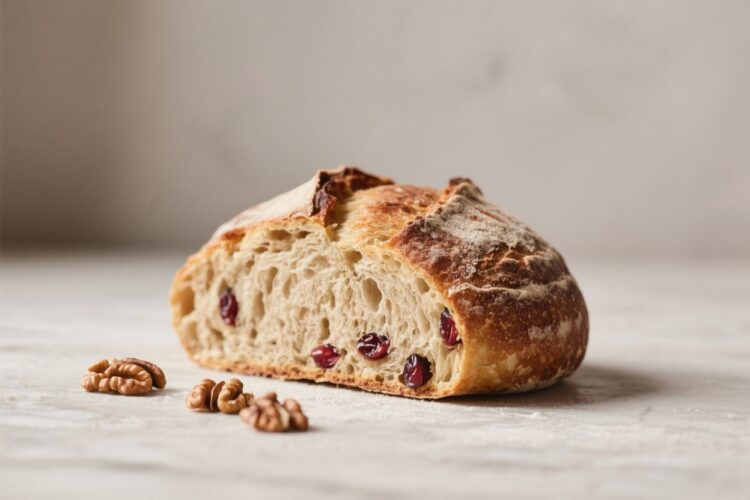
There’s something comforting about a loaf that’s equal parts rustic and celebratory. This cranberry walnut sourdough brings soft tang, gentle sweetness, and a satisfying crunch to every slice. It’s the kind of bread that feels right at home on a cheese board, alongside soup, or toasted with butter and honey.
If you’ve got an active starter and a couple of hours to spare, you can turn simple ingredients into a bakery-worthy loaf. Let’s make a bread that tastes as good as it looks.
What Makes This Special
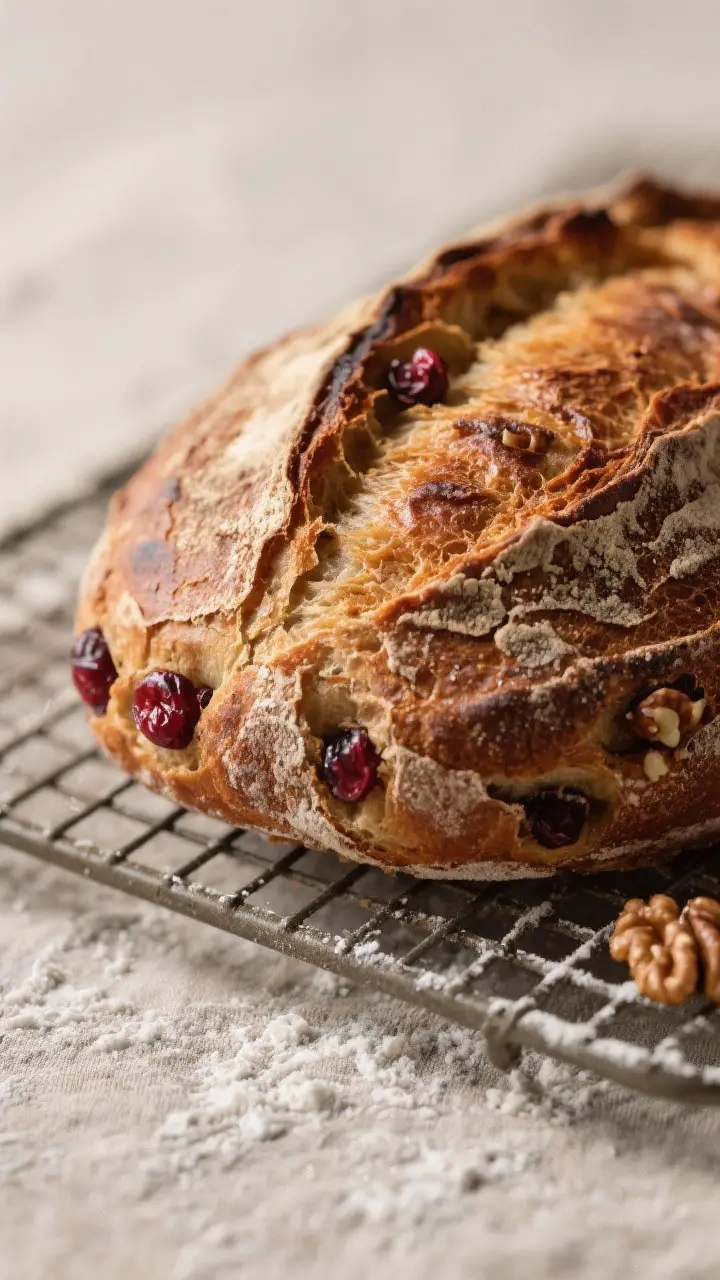
This loaf blends the classic tang of sourdough with the bright, tart bite of dried cranberries and the warm nuttiness of toasted walnuts. The contrast in texture—chewy crumb, crunchy nuts, and bursts of fruit—keeps every bite interesting.
It’s sturdy enough for sandwiches but tender enough to enjoy plain. Plus, the dough is forgiving, and the method suits both beginners and seasoned sourdough bakers.
Ingredients
- Active sourdough starter: 100 g (100% hydration, bubbly and recently fed)
- Bread flour: 400 g
- Whole wheat flour: 100 g
- Water: 350–370 g (room temperature), plus extra for adjusting
- Fine sea salt: 10 g
- Dried cranberries: 120 g (unsweetened if possible)
- Walnuts: 120 g, lightly toasted and roughly chopped
- Optional: Orange zest from 1 orange (adds a bright citrus note)
- Rice flour: for dusting the banneton (or a clean towel)
How to Make It
- Toast the walnuts. Warm a dry skillet over medium heat and toast walnuts for 3–5 minutes until fragrant. Let them cool, then chop roughly.
This prevents sogginess and boosts flavor.
- Soak the cranberries (optional but helpful). Cover cranberries with warm water for 10 minutes, then drain well and pat dry. This keeps them plump without stealing moisture from the dough.
- Mix the dough (autolyse). In a bowl, combine bread flour, whole wheat flour, and 330 g water until no dry bits remain. Cover and rest 30–60 minutes.
This hydrates the flour and improves gluten development.
- Add starter and salt. Add 100 g starter and 10 g salt to the dough. If the dough feels stiff, add the extra 20–40 g water gradually. Pinch and fold until everything is well incorporated.
- Bulk fermentation with folds. Cover the bowl and rest at warm room temperature (75–78°F/24–26°C) for about 3–4 hours.
During the first 90 minutes, do 3–4 sets of stretch-and-folds every 30 minutes. On the second fold, gently add the cranberries, walnuts, and orange zest (if using), folding them in without tearing the dough.
- Judge the bulk. The dough should look puffed with smoother edges and some bubbles, increasing about 50% in volume. If your kitchen is cooler, add time; if warmer, shorten it.
Trust the dough, not the clock.
- Pre-shape. Lightly flour your surface. Turn the dough out, gently form it into a round using a bench scraper, and let it rest 15–20 minutes. This relaxes gluten and makes final shaping easier.
- Final shape. Shape into a tight boule or batard.
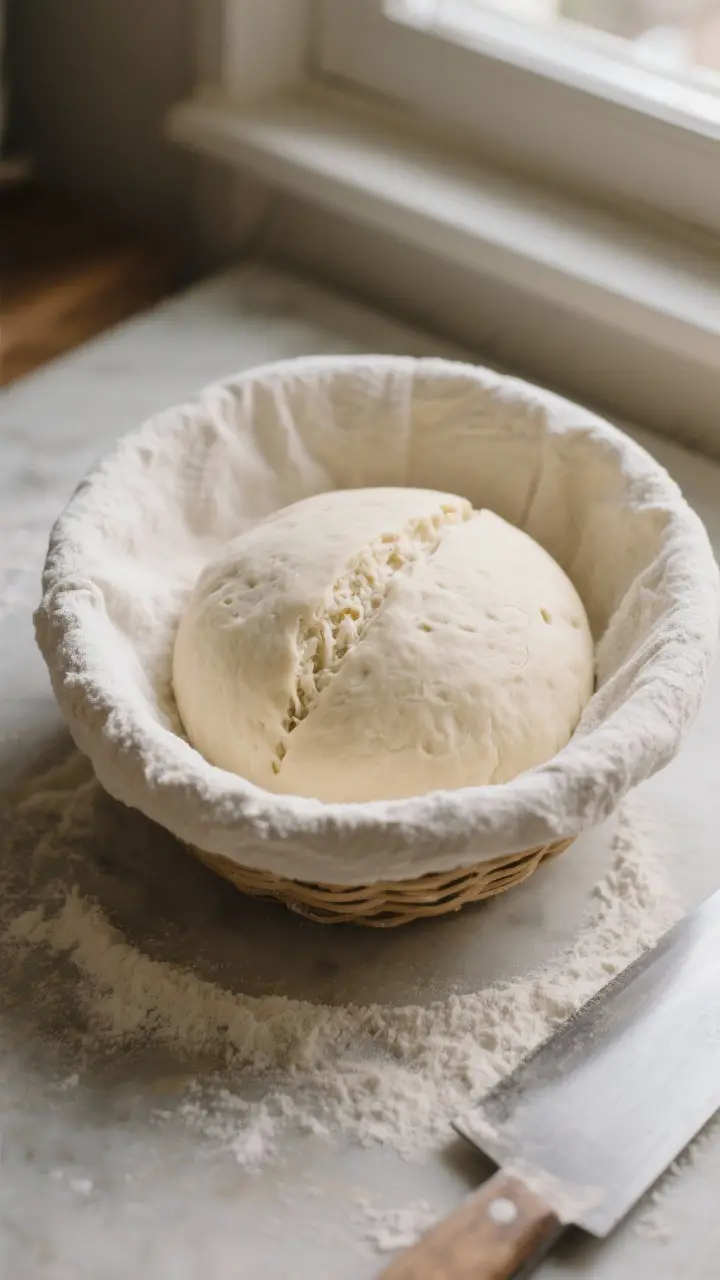
Keep inclusions tucked inside to avoid burnt exposed fruit. Place seam-side up in a rice flour–dusted banneton or a towel-lined bowl.
- Cold proof. Cover and refrigerate for 8–16 hours. This slows fermentation, deepens flavor, and makes scoring easier.
- Preheat the oven. Place a Dutch oven (or baking stone plus steam setup) inside and preheat to 475°F (245°C) for at least 30 minutes.
- Score and bake. Turn the dough onto parchment seam-side down.
Score with a sharp lame. Transfer to the hot Dutch oven, cover, and bake 20 minutes. Reduce heat to 450°F (232°C), remove the lid, and bake another 20–25 minutes until deep brown with a crisp crust.
- Cool completely. Let the loaf cool on a rack for at least 1–2 hours before slicing.
This sets the crumb and preserves moisture.
Storage Instructions
- Room temperature: Keep the loaf cut-side down on a board or in a bread box for up to 2 days. Avoid plastic, which softens the crust.
- For longer storage: Slice and freeze in a zip-top bag for up to 2 months. Toast slices straight from the freezer.
- Revive the crust: If the crust softens, warm the loaf at 350°F (175°C) for 8–10 minutes.
Benefits of This Recipe
- Balanced flavor: Tart cranberries, buttery walnuts, and a gentle sour snap make a loaf that pairs with sweet or savory toppings.
- Great texture: Chewy interior, crisp crust, and nutty crunch mean every slice feels satisfying.
- Nutrient boost: Whole wheat adds fiber; walnuts bring healthy fats and protein.
- Flexible schedule: Cold proofing lets you bake when it suits you and enhances flavor complexity.
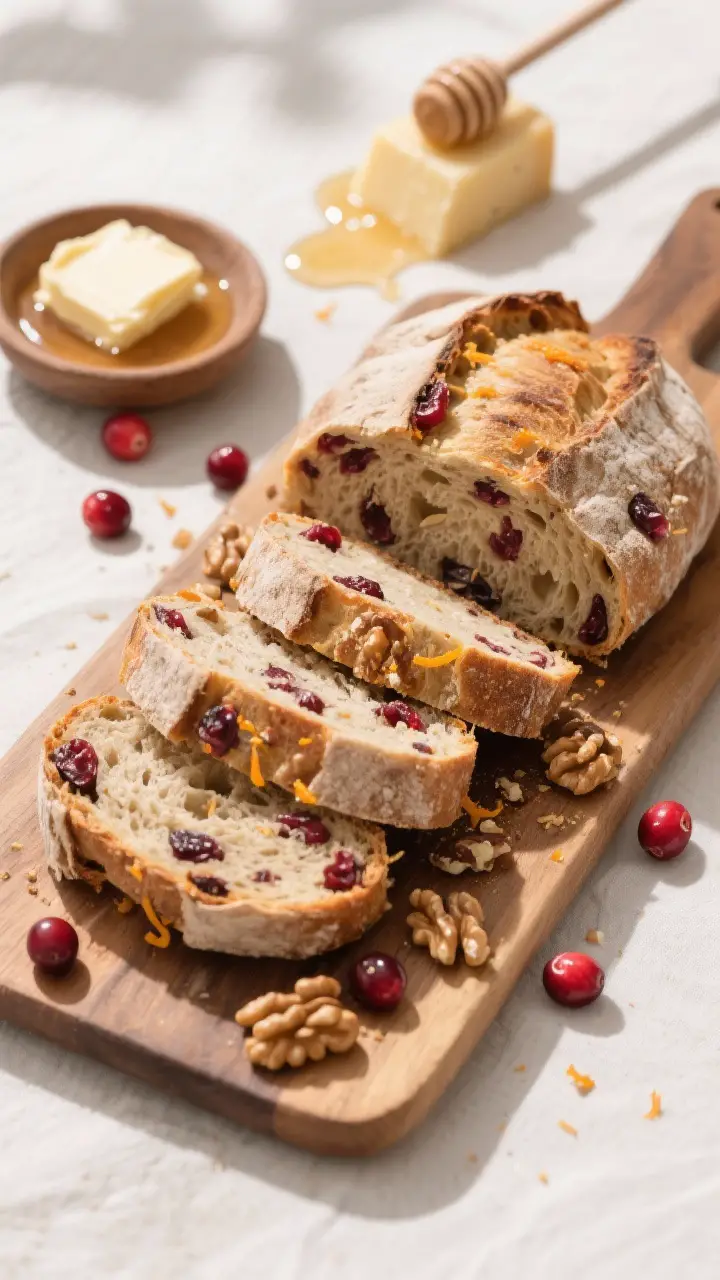
- Versatile use: Works for breakfast toast, grilled cheese, turkey sandwiches, or a festive bread basket.
What Not to Do
- Don’t add inclusions too early. Mixing cranberries and walnuts at the start can tear gluten and lead to a dense loaf.
- Don’t skip the rest after pre-shape. A quick bench rest prevents a tight, misshapen final loaf.
- Don’t cut while hot. Slicing too soon compresses the crumb and makes it gummy.
- Don’t over-hydrate. A very wet dough plus inclusions can be hard to shape.
Add water gradually.
- Don’t proof too warm. Overproofing dulls oven spring and can push fruit to the surface where it burns.
Recipe Variations
- Seeded tweak: Add 2 tablespoons flax or sesame seeds for extra crunch. Hydrate flax seeds first to avoid stealing moisture from the dough.
- Citrus twist: Swap cranberries for dried cherries and keep the orange zest. It turns the loaf into a brighter, dessert-leaning bread.
- Holiday version: Add 1 teaspoon ground cinnamon and a pinch of nutmeg.
Reduce cranberries to 100 g and add 40 g golden raisins.
- Nut swap: Pecans or hazelnuts work well. Keep the same weight and toast lightly.
- Whole grain boost: Use 150 g whole wheat and 350 g bread flour. Add an extra 10–20 g water if the dough feels tight.
- No Dutch oven: Bake on a preheated stone at 475°F (245°C) with a tray of boiling water or lava rocks for steam during the first 20 minutes.
FAQ
How do I know my starter is active enough?
It should double within 4–6 hours of feeding, look bubbly, and pass the float test (a spoonful floats in water).
If it’s sluggish, give it a couple of warm feedings before baking.
Can I use all-purpose flour instead of bread flour?
You can, but expect a slightly softer dough and less oven spring. If using all-purpose, reduce the water by 10–20 g and handle the dough gently.
My cranberries are sweetened. Is that okay?
Yes.
Sweetened cranberries work, but the loaf will lean a touch sweeter. If you prefer balance, add a pinch more salt or use a sharper cheese when serving.
What if my dough feels too sticky to handle?
Wet your hands and use a bench scraper. Stickiness often eases after a few folds and a short rest.
Avoid adding a lot of extra flour, which can toughen the crumb.
How long should I bulk ferment in a cool kitchen?
At 68–70°F (20–21°C), bulk may take 4–6 hours. Watch for signs: a puffy feel, rounded edges, and small bubbles. Time is a guide; the dough’s look and feel matter more.
Can I bake straight after shaping without a cold proof?
Yes, proof at room temperature for 60–90 minutes until slightly puffy, then bake.
The flavor will be milder, and scoring may be a bit stickier.
How do I prevent burnt fruit on the crust?
Keep most cranberries inside the dough during shaping and score with purpose. A covered bake for the first 20 minutes protects the surface, too.
What’s the best way to slice this loaf?
Use a serrated knife and cut slightly thicker slices for toast or sandwiches. Let the loaf cool fully so the crumb doesn’t smear around the inclusions.
In Conclusion
This cranberry walnut sourdough brings bakery results to your kitchen with familiar steps and reliable flavor.
It’s bright, nutty, and versatile enough for everyday meals or special tables. With a lively starter and a calm approach, you’ll get a crusty, beautiful loaf that rewards your patience. Keep this one in your rotation—you’ll reach for it again and again.
Printable Recipe Card
Want just the essential recipe details without scrolling through the article? Get our printable recipe card with just the ingredients and instructions.