
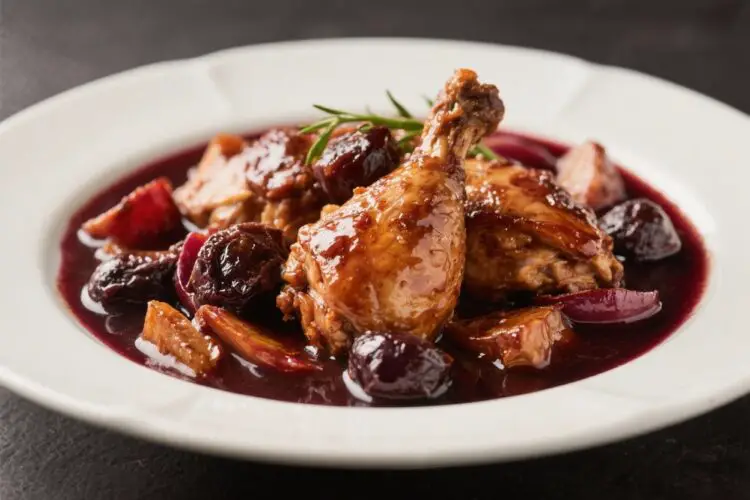
Coq au Vin is one of those dishes that feels special without being fussy. Rustic, rich, and deeply savory, it’s a French classic that turns simple ingredients into something memorable. Think tender chicken simmered in red wine with smoky bacon, mushrooms, and pearl onions.
It smells incredible as it cooks and tastes even better the next day. If you like a cozy, slow-simmered meal that practically cooks itself, this is it.
What Makes This Special
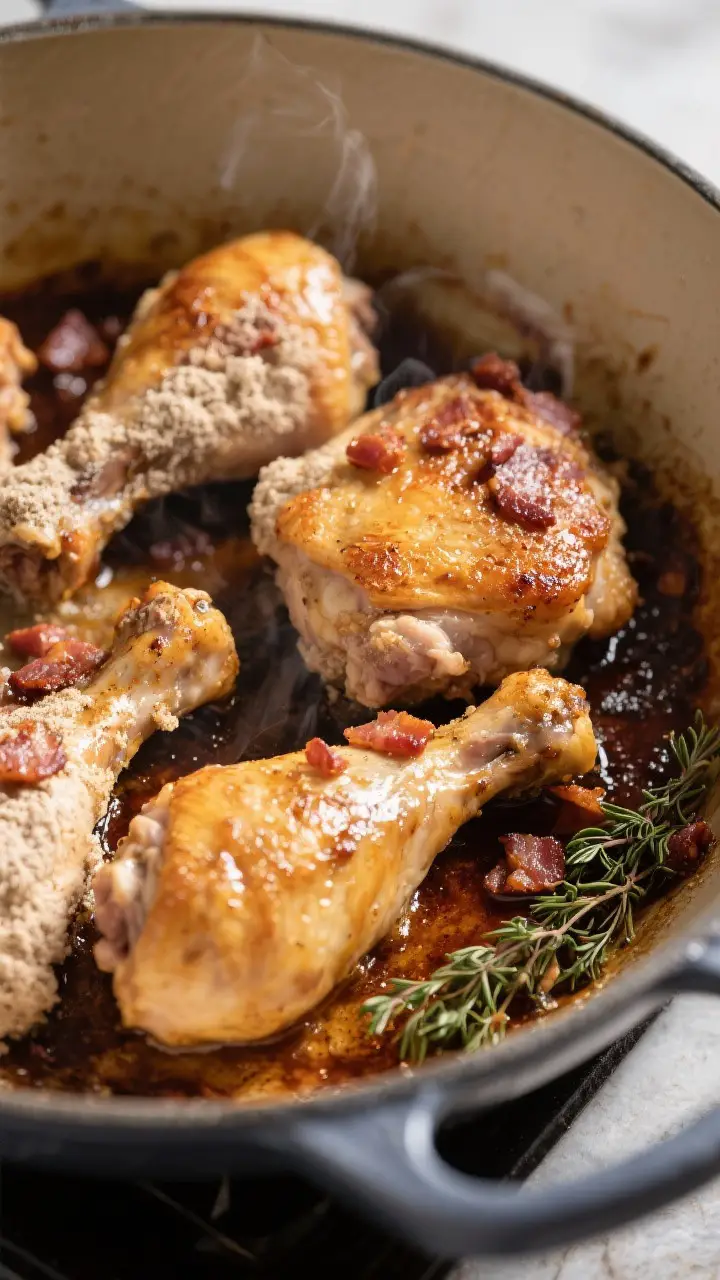
This dish is all about layering flavor. The bacon renders fat that browns the chicken, which then stews in wine and stock until it’s meltingly tender.
Mushrooms and onions add sweetness and earthiness. A touch of tomato paste and herbs brings balance, and a final pat of butter brings everything together.
It’s also surprisingly flexible. You can use different cuts of chicken, swap the wine, or adjust the richness.
It’s fancy enough for company and comforting enough for a quiet Sunday night. And yes, it reheats beautifully.
Shopping List
- Chicken: 3–4 pounds bone-in, skin-on thighs and drumsticks (or a whole chicken cut into 8 pieces)
- Red wine: 1 bottle (750 ml) dry red wine, such as Burgundy, Pinot Noir, or Côtes du Rhône
- Chicken stock: 1–2 cups, low-sodium
- Bacon or pancetta: 6–8 ounces, chopped
- Mushrooms: 10–12 ounces cremini or button mushrooms, halved or quartered
- Pearl onions: 1 cup peeled (frozen is fine)
- Carrots: 2 medium, cut into thick rounds
- Onion:1 medium yellow onion, chopped
- Garlic: 4–6 cloves, minced
- Tomato paste: 1 tablespoon
- Flour: 2–3 tablespoons (for dredging and thickening)
- Butter: 2 tablespoons, divided
- Olive oil: 1–2 tablespoons, as needed
- Herbs: 2 bay leaves, a few sprigs of thyme, and optional parsley for garnish
- Salt and black pepper: to taste
Instructions
- Prep the chicken. Pat the chicken dry and season well with salt and pepper. Lightly dredge in flour, shaking off the excess.
This helps with browning and gives the sauce body.
- Crisp the bacon. In a large Dutch oven, cook the chopped bacon over medium heat until crisp. Scoop out the bacon and set aside, leaving the fat in the pot.
- Brown the chicken. Increase heat to medium-high. Sear chicken in batches, skin-side down first, until deep golden on both sides.
Don’t rush this step. Transfer browned pieces to a plate.
- Sauté the vegetables. If the pot is dry, add a splash of olive oil. Add chopped onion and carrots with a pinch of salt, cooking 3–4 minutes.
Stir in garlic and tomato paste and cook 1 minute until fragrant and brick red.
- Deglaze with wine. Pour in the red wine, scraping up any browned bits. Let it bubble for 2–3 minutes to mellow the alcohol.
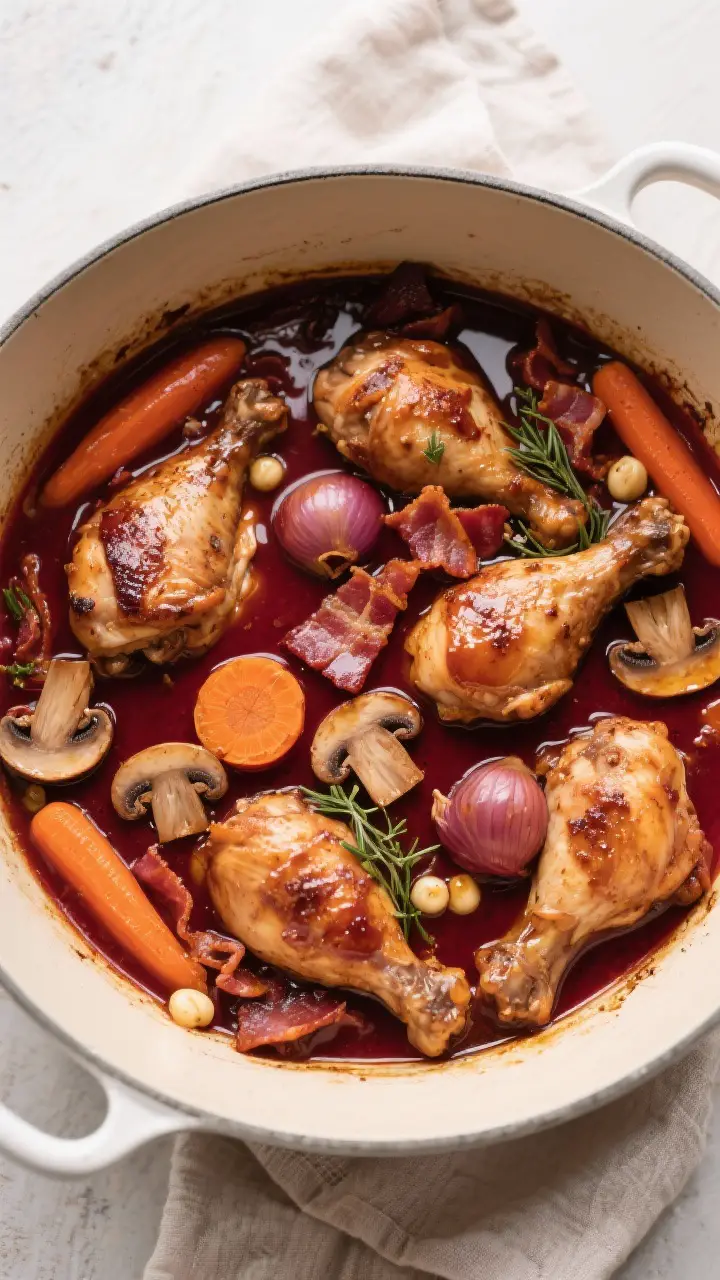
- Add stock and herbs. Return the bacon to the pot. Nestle in the chicken pieces with any juices.
Add enough chicken stock to come about halfway up the chicken. Add bay leaves and thyme.
- Simmer gently. Bring to a low simmer, cover, and cook on low heat for 40–50 minutes, turning chicken once. The meat should be very tender but not falling apart.
- Sauté mushrooms and pearl onions. While the chicken simmers, heat 1 tablespoon butter in a skillet.
Add mushrooms and cook until browned. Add pearl onions and a pinch of salt; cook until lightly caramelized. Set aside.
- Thicken the sauce (optional but great). In a small bowl, mash 1 tablespoon soft butter with 1 tablespoon flour to make a paste (beurre manié).
Remove chicken to a platter. Whisk the paste into the simmering sauce and cook 3–5 minutes until slightly thickened.
- Finish the stew. Stir in the mushrooms and pearl onions. Return chicken to the pot and simmer 5 minutes to warm through.
Taste and adjust salt and pepper. Remove bay leaves and thyme stems.
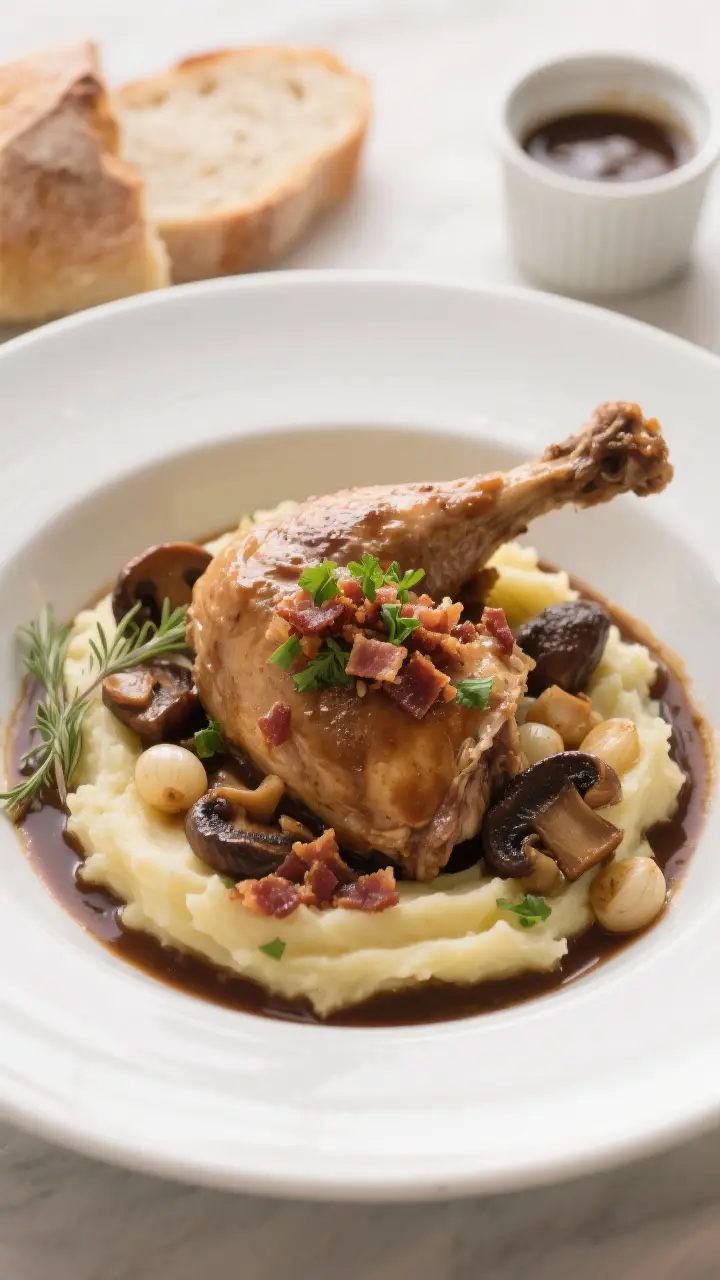
- Serve. Garnish with chopped parsley. Serve with mashed potatoes, buttered noodles, or crusty bread to soak up the sauce.
How to Store
Let the coq au vin cool to room temperature, then store in an airtight container in the refrigerator for up to 4 days.
The flavors deepen overnight, so leftovers are a bonus. Reheat gently on the stovetop over low heat, adding a splash of stock or water if the sauce thickens too much.
For longer storage, freeze for up to 3 months. Thaw overnight in the fridge, then reheat slowly.
Keep the sauce at a gentle simmer to avoid toughening the chicken.
Benefits of This Recipe
- Make-ahead friendly: Tastes even better the next day, ideal for entertaining.
- Comforting yet elegant: Works for a weeknight treat or a dinner party.
- Balanced richness: Wine and aromatics cut through the hearty sauce.
- Flexible ingredients: Use affordable chicken pieces and common pantry staples.
- One-pot meal: Minimal cleanup with a Dutch oven or heavy pot.
Common Mistakes to Avoid
- Skipping the sear: Browning the chicken builds flavor and gives the sauce color. Don’t crowd the pot.
- Boiling too hard: A gentle simmer keeps the chicken tender. Vigorous boiling makes it stringy.
- Using very oaky wine: Strongly oaked wines can taste bitter when reduced.
Choose a dry, fruit-forward red.
- Under-salting: The sauce needs proper seasoning to shine. Taste at the end.
- Forgetting to reduce: If the sauce is thin, simmer uncovered a few minutes more or use a butter-flour paste to thicken.
Variations You Can Try
- Coq au Vin Blanc: Swap red wine for dry white wine (like Chardonnay) and use leeks for a lighter twist.
- Add brandy: Stir in a splash of cognac or brandy after browning the chicken and flame it carefully for extra depth.
- Smoky touch: Use smoked bacon or add a pinch of smoked paprika for a subtle campfire note.
- Vegetable boost: Add parsnips or celery root with the carrots for more sweetness and texture.
- Gluten-free: Skip the flour dredge and thicken with a cornstarch slurry at the end.
- Slow cooker: Brown everything on the stovetop, then transfer to a slow cooker on Low for 6–7 hours. Finish sauce on the stove if needed.
FAQ
What’s the best wine to use?
Choose a dry, medium-bodied red like Burgundy, Pinot Noir, or Côtes du Rhône.
It should be something you’d drink, but it doesn’t need to be expensive. Avoid very oaky or heavily tannic wines, which can turn harsh.
Can I use boneless chicken?
Yes, but bone-in, skin-on pieces give better flavor and stay juicier. If using boneless thighs, reduce the simmering time and keep an eye on tenderness to avoid drying out.
Do I have to use bacon?
No, but it adds a smoky backbone.
If skipping bacon, use 1–2 tablespoons of olive oil and consider adding a dash of soy sauce or a touch of smoked paprika to round out the flavor.
How do I peel pearl onions easily?
Blanch them in boiling water for 45–60 seconds, then shock in ice water. Trim the root end and squeeze— the skins slip right off. Frozen peeled pearl onions are a convenient shortcut.
Can I make this ahead?
Absolutely.
Coq au vin is even better the next day. Cool it, refrigerate overnight, and reheat gently. Skim any chilled fat from the top before warming if you prefer a lighter sauce.
What should I serve with coq au vin?
Mashed potatoes are classic, but buttered egg noodles, creamy polenta, or crusty bread work perfectly.
A simple green salad or steamed green beans balance the richness.
How do I thicken the sauce without flour?
Use a cornstarch slurry: mix 1 tablespoon cornstarch with 1–2 tablespoons cold water and whisk into the simmering sauce. Cook a minute until glossy and slightly thickened.
Wrapping Up
Coq au Vin brings warmth and a little bit of French charm to the table. With a few simple steps and pantry staples, you get tender chicken in a silky, wine-rich sauce that feels like a hug.
Make it on a slow weekend, enjoy the leftovers on a busy night, and keep this classic in your back pocket for whenever you want something truly satisfying.
Printable Recipe Card
Want just the essential recipe details without scrolling through the article? Get our printable recipe card with just the ingredients and instructions.