
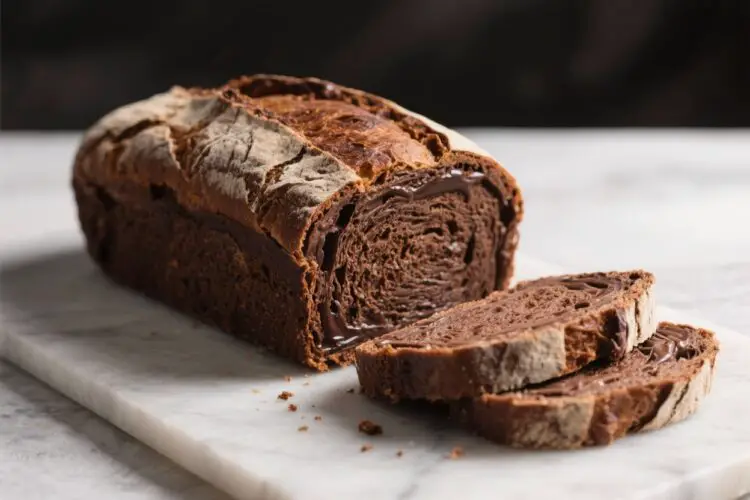
Sourdough doesn’t have to be all tang and crust. This chocolate sourdough bread is soft, rich, and lightly sweet—more like a dessert loaf you slice thick and enjoy with coffee. It keeps the gentle tang of sourdough, but leans into cocoa, chocolate chips, and a touch of vanilla.
It’s not cake-sweet, so it still feels like bread, just indulgent. If you love the depth of sourdough and the comfort of chocolate, this loaf hits the sweet spot.
What Makes This Special
- Layers of flavor: Cocoa, espresso powder, and sourdough tang build a deep, chocolatey profile without being overly sweet.
- Great texture: A tender crumb with a bit of chew, plus melty chocolate chips throughout.
- Flexible schedule: The dough is forgiving. You can rest it in the fridge overnight to fit your day.
- Better than a quick bread: Natural fermentation adds complexity, aroma, and a longer shelf life.
- Comfort loaf: Toasts beautifully, takes butter or mascarpone like a dream, and works for breakfast or dessert.
Ingredients
- Active sourdough starter: 120 g (fed and bubbly)
- Warm milk or water: 260 g (milk makes it richer; water keeps it lighter)
- Bread flour: 320 g
- Cocoa powder (unsweetened): 40 g
- Granulated or light brown sugar: 60 g
- Salt: 8 g
- Instant espresso powder: 1–2 tsp (optional, boosts chocolate flavor)
- Vanilla extract: 1 tsp
- Butter (softened): 30 g (or neutral oil)
- Chocolate chips or chunks: 120–150 g (dark or semisweet)
- Optional add-ins: 50 g chopped toasted nuts or dried cherries
- For shaping/dusting: Cocoa or flour as needed
Step-by-Step Instructions
- Mix the starter and liquid: In a large bowl, combine the active starter with warm milk or water.
Stir until mostly smooth.
- Add dry ingredients: Add bread flour, cocoa, sugar, salt, and espresso powder. Mix with a spatula or your hand until no dry spots remain. The dough will be sticky and dark.
- Rest (autolyse): Cover and let sit for 30 minutes.
This helps hydrate the flour and makes the dough easier to handle.
- Add vanilla and butter: Work in the vanilla and softened butter. Pinch and fold until fully incorporated. The dough will feel tacky but should start to smooth out.
- Bulk ferment with folds: Cover and let rise at room temperature for 3–4 hours.
Every 30–45 minutes for the first 2 hours, do a set of stretch-and-folds: grab one side, stretch up, fold over; rotate the bowl and repeat 4–6 times. This builds strength.
- Add chocolate chips: After the first hour of folds, gently laminate or fold in the chips (and any nuts or cherries). Try to distribute evenly without tearing the dough.
- Check the rise: The dough should look puffed and slightly domed, with small bubbles.
It may not double due to the cocoa. If it’s slow, give it another 30–60 minutes.
- Pre-shape: Lightly flour the counter, turn out the dough, and gently shape it into a loose round. Rest uncovered for 20 minutes to relax gluten.
- Final shape: Shape into a tight round (boule) or oval (batard).
Keep the chocolate chips mostly inside to avoid burnt spots.
- Proof: Place seam-side up in a floured banneton or a bowl lined with a floured towel. Cover and proof 1–2 hours at room temp or cold-proof overnight in the fridge for better flavor and easier scoring.
- Preheat the oven: Heat your oven to 450°F (232°C) with a Dutch oven inside, or preheat a baking stone/steel with a steam setup.
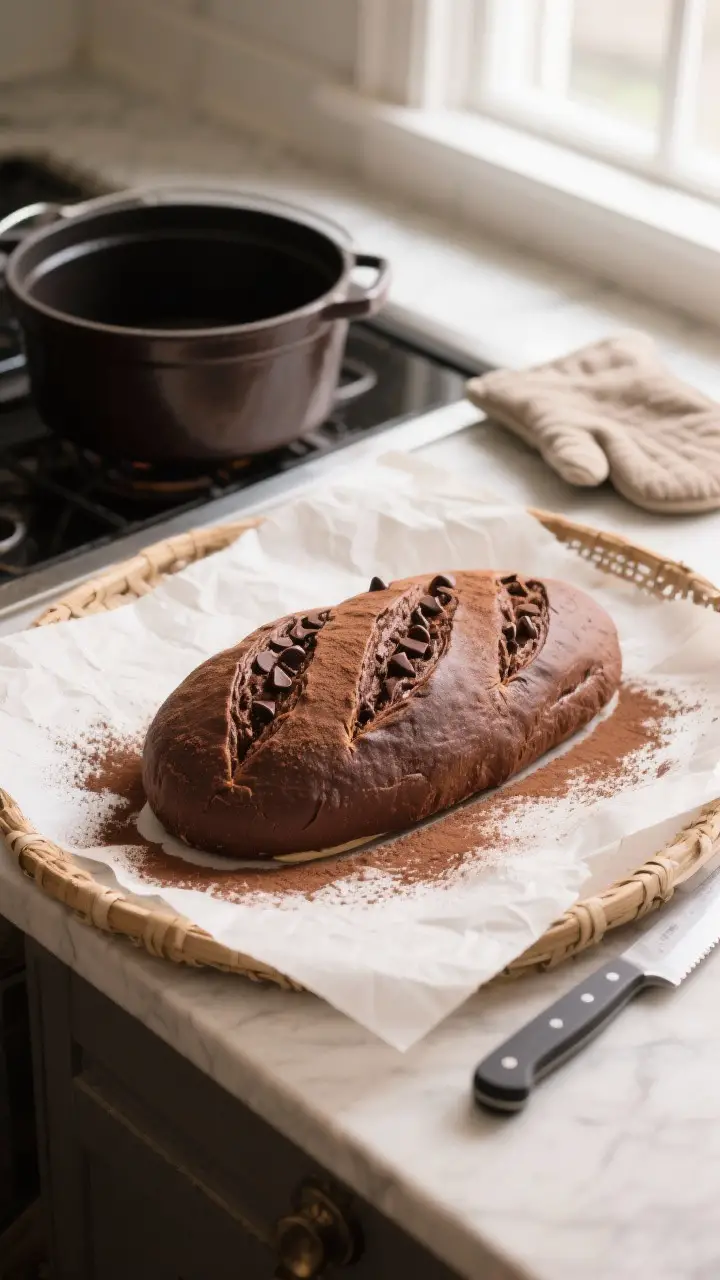
- Score and bake: Turn the loaf onto parchment, score with a sharp lame or knife, and load into the hot Dutch oven. Bake covered for 20 minutes, then uncover and reduce heat to 425°F (218°C).
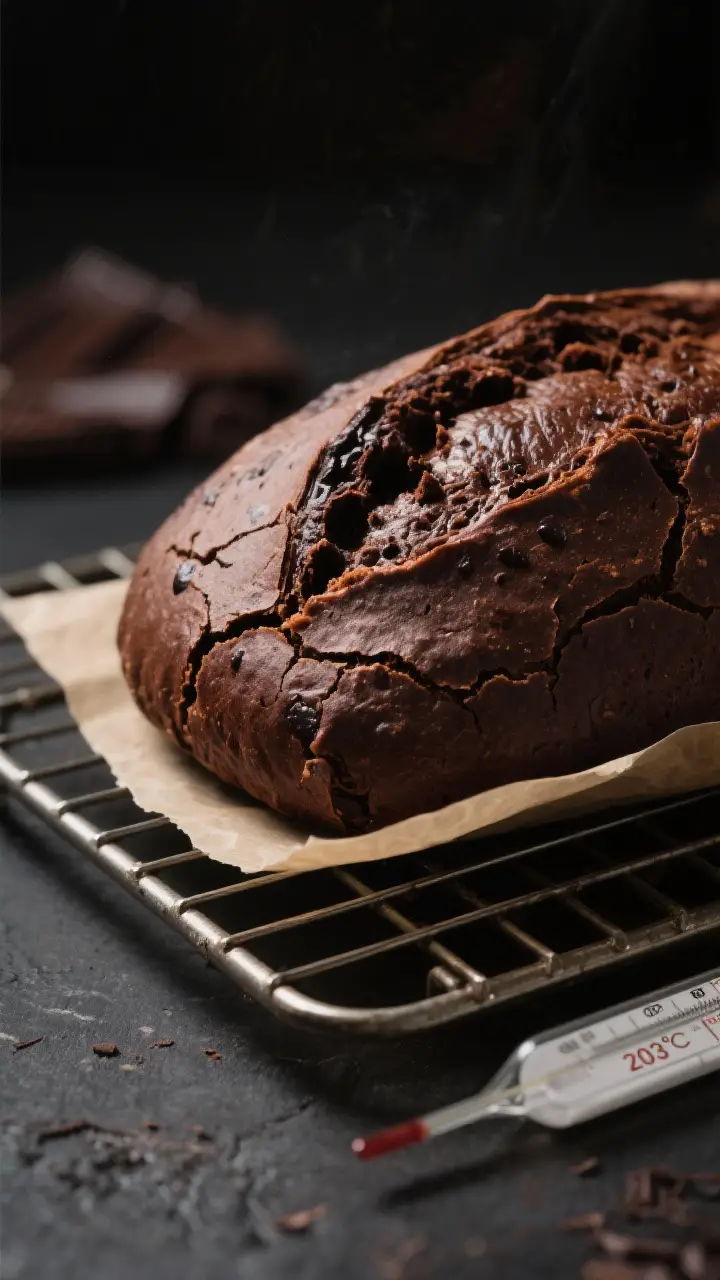
Bake 20–25 minutes more until the crust is set and the loaf hits an internal temperature of about 200–205°F (93–96°C).
- Cool completely: This is key. Let it cool at least 1–2 hours so the crumb sets and chocolate firms up. Slice with a sharp serrated knife.
Keeping It Fresh
- Room temperature: Store the cooled loaf in a paper bag inside a loose plastic bag for up to 3 days.
This keeps the crust from getting leathery while preventing sogginess.
- Freezer: Slice and freeze in a zip bag for up to 2 months. Toast straight from frozen.
- Revive: Lightly toast slices or warm the whole loaf in a 300°F (150°C) oven for 8–10 minutes to refresh.
Why This is Good for You
- Fermentation perks: Sourdough fermentation can make gluten easier to digest for some people and may improve mineral availability.
- Less sugar than cake: This loaf is gently sweet, so you get dessert vibes without the sugar crash.
- Cocoa benefits: Unsweetened cocoa has antioxidants and a deep flavor that satisfies with smaller portions.
- Steady energy: The mix of carbs and a bit of fat from butter and chocolate makes it a satisfying snack.
What Not to Do
- Don’t rush the proof: Under-proofed dough won’t open up nicely and will taste flat.
- Don’t add chips too early: Add-ins during the first folds are fine; adding them at the start can tear the dough and melt into streaks.
- Don’t skip the rest after mixing: The autolyse step makes handling much easier, especially with cocoa in the dough.
- Don’t slice hot: Warm bread will smear melted chocolate and compress the crumb.
- Don’t overbake: Cocoa-dark dough can trick you into thinking it’s not done. Use a thermometer to avoid drying it out.
Variations You Can Try
- Mocha swirl: Mix 1–2 teaspoons extra espresso powder with a splash of hot water and streak it through during shaping.
- Orange-chocolate: Add 1 tablespoon orange zest and swap vanilla for 1 teaspoon orange extract.
- Cherry almond: Fold in dried tart cherries and slivered almonds; sprinkle sliced almonds on top before baking.
- Double chocolate: Use 70% dark chunks plus white chocolate chips for contrast.
- Spiced: Add 1 teaspoon cinnamon and a pinch of cardamom for warmth.
- Milk chocolate treat: Swap in milk chocolate chips for a sweeter loaf, great for kids.
FAQ
Can I use all-purpose flour instead of bread flour?
Yes, but reduce the liquid slightly by 10–20 g if the dough feels too slack.
The crumb will be a bit softer and less chewy, but still delicious.
How do I know my starter is ready?
It should be bubbly, doubled in volume, and pass the float test in water. If it’s sluggish, feed it once or twice before baking.
Do I need a Dutch oven?
No, but it helps. If you don’t have one, bake on a preheated stone or sheet and create steam by adding a pan of hot water to the oven for the first 15 minutes.
Why is my dough so sticky?
Cocoa reduces gluten development and absorbs moisture differently.
Wet your hands for folds, and give it time—strength builds during the bulk ferment and folds.
Can I make it vegan?
Yes. Use water or a rich plant milk, swap butter for olive oil or vegan butter, and choose dairy-free chocolate chips.
How sweet is this loaf?
It’s mildly sweet—more like a pain au chocolat vibe than a cake. If you want sweeter, add an extra 20–30 g sugar.
What should I serve with it?
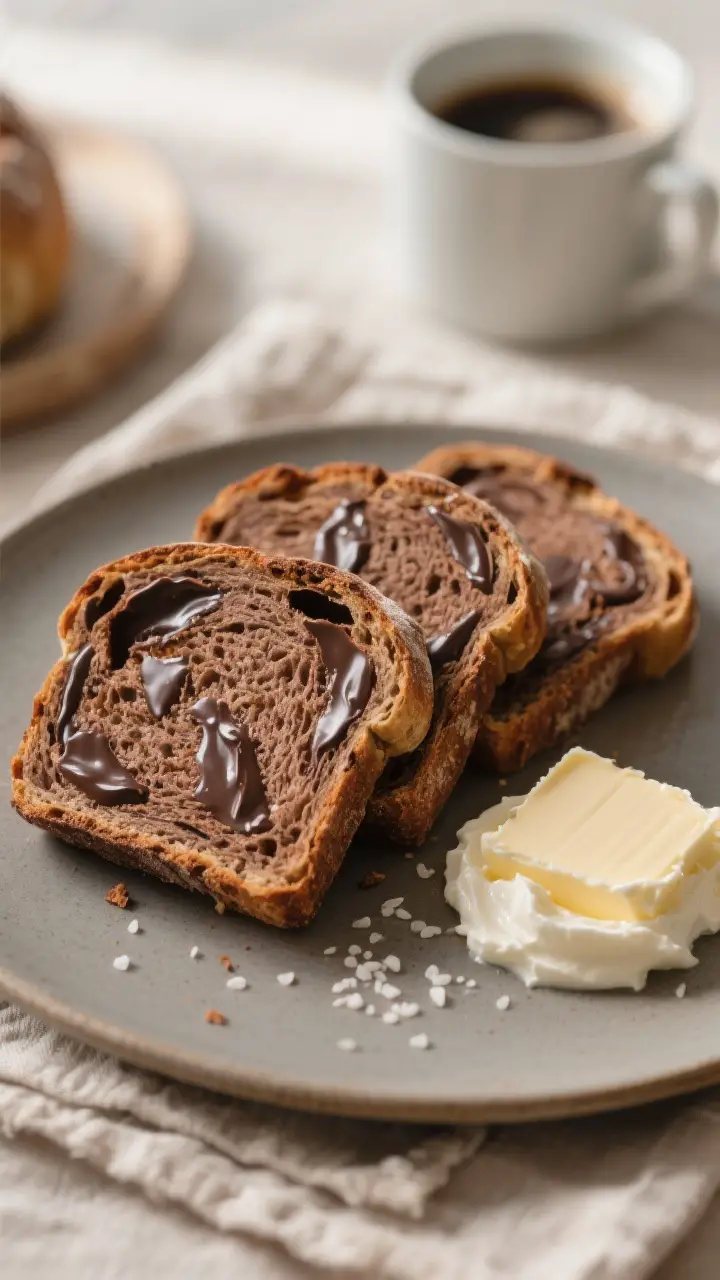
Butter, cream cheese, mascarpone, or a swipe of hazelnut spread.
It’s excellent toasted with a pinch of flaky salt.
Final Thoughts
Chocolate sourdough bread blends comfort and craft in one loaf. You get the satisfying chew of sourdough with a gentle sweetness and deep cocoa flavor. It’s a bakery-style treat that fits into a home baker’s schedule and tastes even better the next day.
Keep the process relaxed, trust the dough, and enjoy every warm, chocolatey slice.
Printable Recipe Card
Want just the essential recipe details without scrolling through the article? Get our printable recipe card with just the ingredients and instructions.