
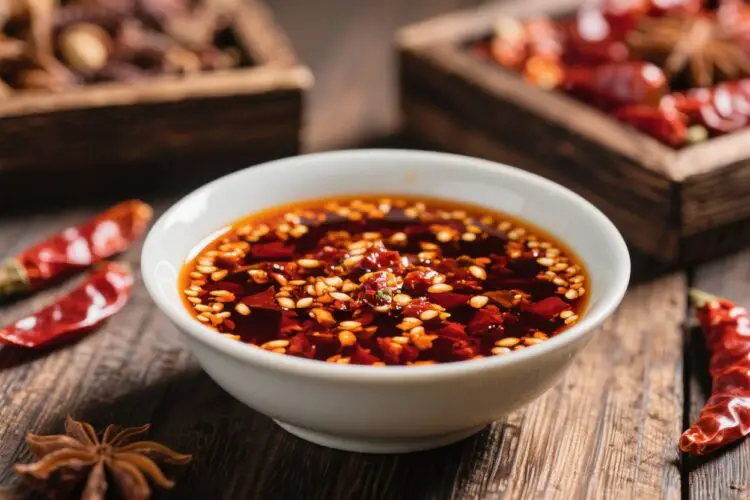
This is the jar you reach for when dinner needs a kick. Chili crisp (also known as chili oil) brings heat, crunch, and deep umami to everything from noodles and dumplings to eggs and pizza. It’s easy to make at home, and you can tune the spice, aroma, and texture exactly how you like it.
The magic comes from gently toasting spices, heating oil just right, and pouring it over the chili flakes to bloom their flavor. Once you make a batch, you’ll wonder how you ever cooked without it.
Why This Recipe Works
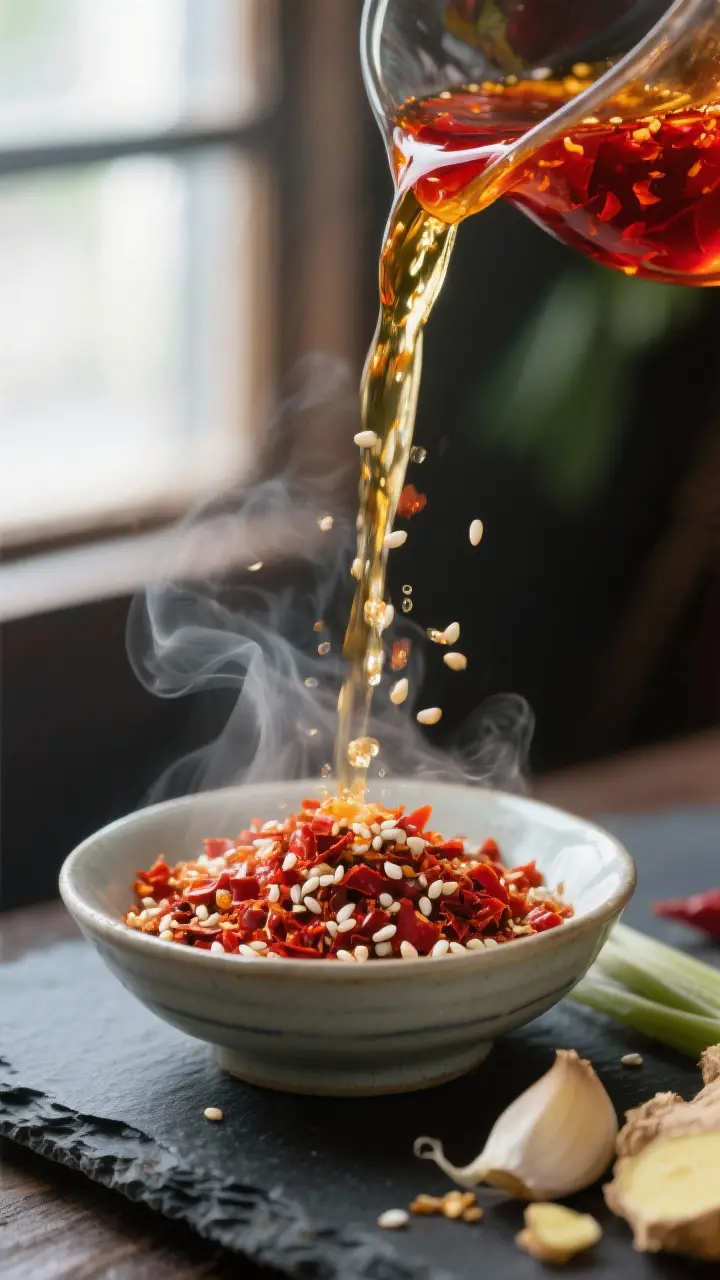
- Bloomed aromatics unlock flavor: Heating spices and aromatics in oil pulls out fat-soluble flavors, giving the oil depth without harshness.
- Controlled heat: We heat the oil to the sweet spot—hot enough to sizzle, not so hot it burns the chili flakes or garlic.
- Layered texture: A mix of crispy shallots, garlic, fried peanuts, and sesame seeds provides crunch in every spoonful.
- Balanced heat and aroma: Using a blend of chili flakes (like Chinese chili flakes, a.k.a. facing heaven or gochugaru) gives color, fragrance, and adjustable heat.
- Customizable and pantry-friendly: Swap spices or adjust oil and sugar levels to suit noodles, salads, or stir-fries.
What You’ll Need
- 2 cups neutral oil (peanut, canola, grapeseed, or corn oil)
- 1 cup Chinese chili flakes (coarse; look for Sichuan chili flakes or use half gochugaru for color)
- 2–3 tablespoons Sichuan peppercorns (lightly crushed)
- 6–8 cloves garlic, thinly sliced
- 2 medium shallots, thinly sliced
- 1-inch piece ginger, thinly sliced
- 2 star anise
- 1 small cinnamon stick (Chinese cassia preferred)
- 2 bay leaves
- 2 tablespoons white sesame seeds
- 1/3 cup roasted peanuts, roughly chopped (optional but great for crunch)
- 2 teaspoons sugar
- 1–1.5 teaspoons kosher salt (adjust to taste)
- 2 tablespoons soy sauce (or 1 tablespoon soy + 1 tablespoon black vinegar for tang)
Step-by-Step Instructions
- Set up your chili base: In a heatproof bowl, combine chili flakes, sesame seeds, sugar, and salt. Place the bowl on a heat-safe surface.
Have soy sauce (and vinegar if using) ready to stir in later.
- Warm the oil with spices: Add oil to a medium pot. Stir in star anise, cinnamon, bay leaves, and crushed Sichuan peppercorns. Heat over medium-low until the oil reaches about 250–275°F (120–135°C).
You should see gentle shimmering and faint bubbling around spices.
- Add aromatics for golden crisp: Stir in sliced garlic, shallots, and ginger. Keep the heat steady. Fry until the garlic and shallots turn light gold and crisp, 8–12 minutes.
If they darken too fast, lower the heat. Remove the pot from heat once they’re pale golden; they’ll deepen a bit as they rest.
- Strain the oil: Set a fine strainer over a clean bowl or pot. Carefully pour the hot oil through, catching aromatics and whole spices.
Reserve the crisp bits; discard the large whole spices (star anise, cinnamon, bay leaves).
- Check the oil temperature: You want it around 325°F (165°C) for blooming chili flakes. If it’s cooler, return it to the stove briefly. If you don’t have a thermometer, dip a chopstick: vigorous bubbles mean it’s hot enough.
- Bloom the chili flakes: Pour the hot oil over the chili-sesame mixture in two pours, stirring between each.
It should sizzle. This blooming step releases color and aroma without burning.
- Add umami and crunch: Stir in soy sauce (and black vinegar if using). Fold in the reserved crispy garlic, shallots, and ginger, plus chopped peanuts.
Mix well. Taste and adjust salt or sugar as needed.
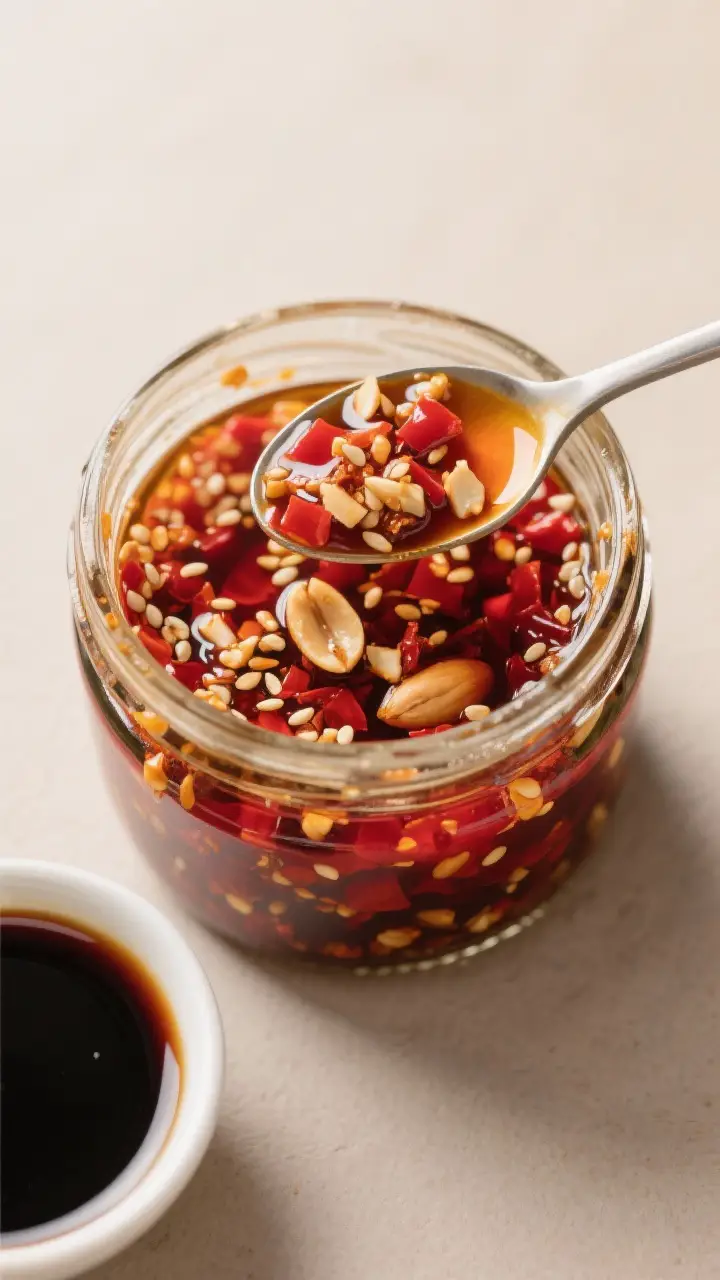
- Cool and jar it: Let the chili crisp cool to room temperature. Transfer to a clean, dry glass jar.
The flavor will deepen over the next 24 hours.
Keeping It Fresh
- Storage: Keep refrigerated in a sealed jar. Top off with a thin layer of oil to cover solids.
- Shelf life: About 1–2 months in the fridge. For best crunch, enjoy within 3–4 weeks.
- Clean spoons only: Avoid introducing moisture or food bits.
That’s what shortens shelf life.
- Stir before using: The chili flakes settle; a quick stir brings back the perfect spoonful.
Why This is Good for You
- Capsaicin benefits: Chili peppers may support metabolism and can help you feel satisfied with smaller portions.
- Aromatic spices: Ginger and Sichuan pepper add antioxidants and aid digestion for some people.
- Mindful fats: Using a neutral, high-smoke-point oil makes it versatile; a little goes a long way for flavor.
- Custom control: You decide the sodium, sugar, and crunch—better than store-bought for dietary needs.
What Not to Do
- Don’t overheat the oil: Oil that’s too hot burns the chili flakes, turning them bitter and smoky in a bad way.
- Don’t skip straining: Whole spices left in the jar can overpower or become woody over time.
- Don’t add wet ingredients directly: Water and hot oil don’t mix. Make sure soy sauce and vinegar are at room temperature and add after the bloom.
- Don’t rush the fry: Garlic and shallots should be pale gold, not dark brown. Burned bits will ruin the batch.
Variations You Can Try
- Fermented twist: Add 1–2 teaspoons of doubanjiang (fermented broad bean chili paste) to the hot oil after straining for deep savory notes.
- Citrus-pepper aroma: Add a strip of dried tangerine peel to the oil during the spice warm-up; remove before blooming.
- Nut swap: Use cashews, almonds, or toasted soy nuts instead of peanuts for different crunch.
- Heat control: Blend flakes—use half mild gochugaru for brilliant red color and half hotter Sichuan flakes for kick.
- Garlic-forward crisp: Double the garlic and add fried garlic chips at the end for extra crunch.
- Vegan “umami bomb”: Stir in 1 teaspoon mushroom powder or finely minced dried shiitakes.
FAQ
Can I use olive oil?
Olive oil’s flavor can clash with the spices and it has a lower smoke point.
A neutral oil like peanut, canola, or grapeseed is the better choice.
What chili flakes should I buy?
Look for Chinese-style chili flakes (often labeled “facing heaven” or simply “chili flakes”). Gochugaru works well for color and mild heat. Avoid crushed red pepper flakes with many seeds; they’re harsher and less fragrant.
How do I make it less spicy?
Use a higher proportion of mild flakes like gochugaru, remove seeds if present, and increase the crispy shallots and peanuts.
You still get flavor and crunch without the burn.
My chili crisp tastes bitter—what went wrong?
The oil was likely too hot, or the garlic/shallots over-browned. Next time, keep temps moderate and aim for pale gold. Also avoid burning the chili flakes during the bloom.
Do I need Sichuan peppercorns?
They’re traditional and add that signature numbing, citrusy note.
If you can’t find them, you can still make delicious chili oil, but the flavor will be less “Sichuan.”
Can I keep it at room temperature?
It’s safer and fresher in the fridge, especially with garlic and shallots. If you plan to keep it out briefly, make sure the solids are fully covered by oil and use a clean spoon.
What do I put it on?
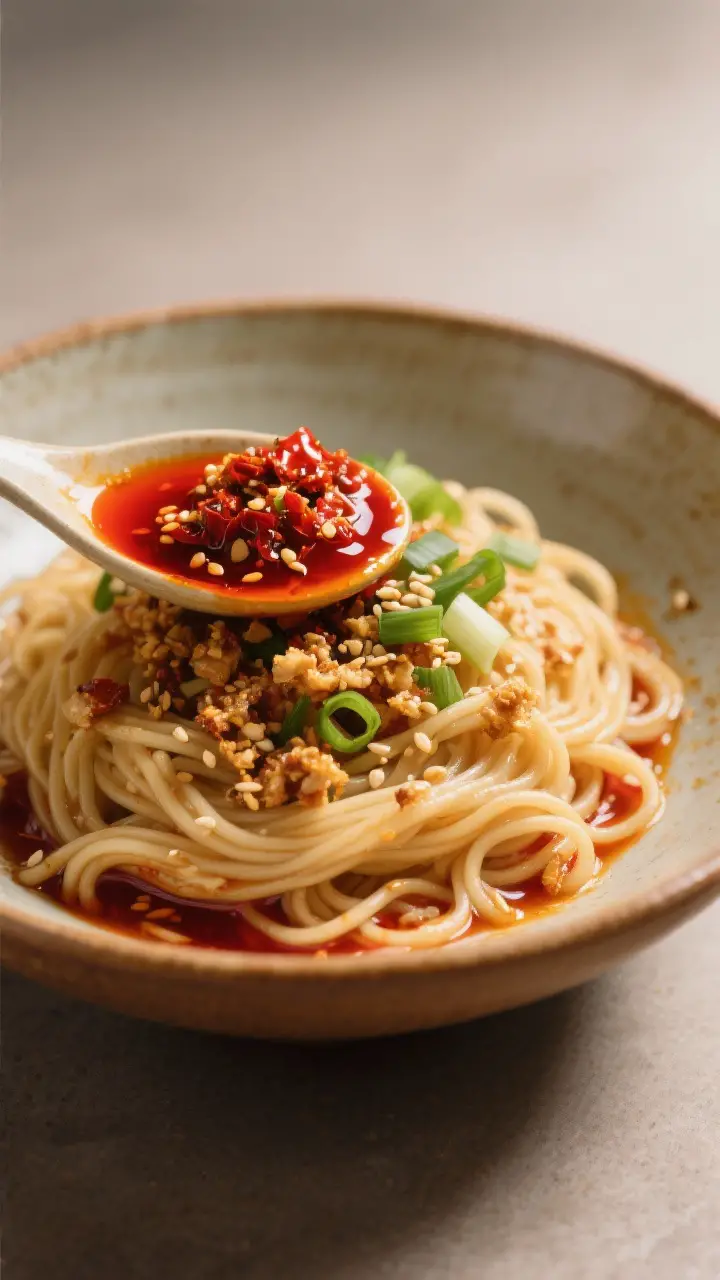
Everything. Noodles, dumplings, fried eggs, rice bowls, tofu, grilled veggies, roasted meats, even pizza or avocado toast.
It’s a fast track to flavor.
In Conclusion
Homemade Sichuan-style chili crisp is simple, customizable, and wildly useful. Bloom your spices gently, pour hot oil over good chili flakes, and finish with crunchy bits for texture. Keep a jar in the fridge and use it to wake up weeknight meals, quick snacks, and leftovers.
One spoonful turns “fine” into “wow”—every time.
Printable Recipe Card
Want just the essential recipe details without scrolling through the article? Get our printable recipe card with just the ingredients and instructions.