
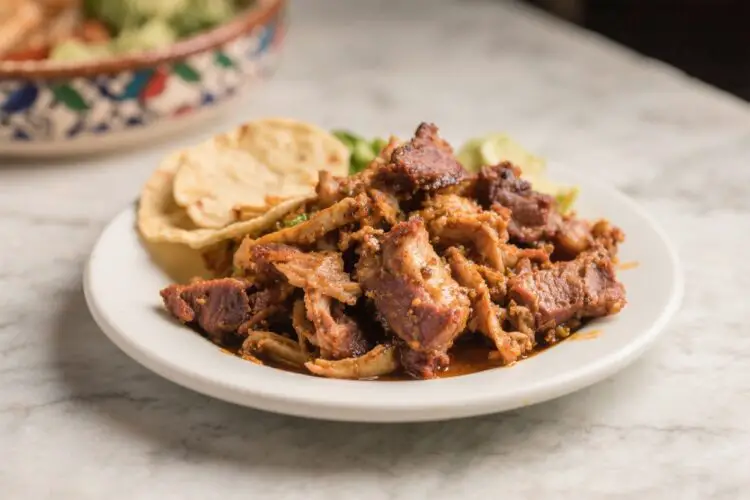
Carnitas are the kind of food that makes a kitchen feel alive—simmering pork, citrus in the air, and that irresistible sizzle right at the end. This version sticks close to Michoacán tradition: simple ingredients, slow cooking, and a final crisp that makes every bite sing. You don’t need fancy equipment or complicated steps, just time and patience.
Serve it with warm tortillas, onions, cilantro, and a squeeze of lime, and you’ve got a meal that feels like home. It’s comfort food, but with character.
Why This Recipe Works
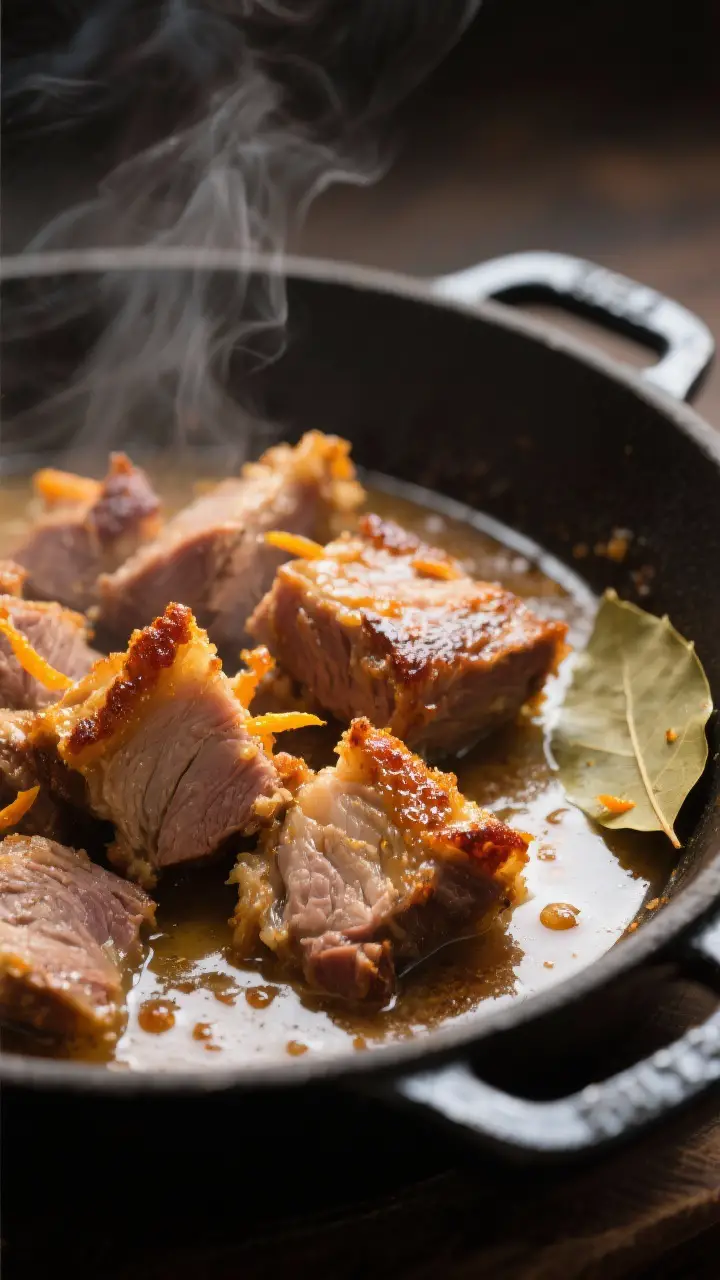
This recipe follows the classic Michoacán method: cook pork gently in its own fat with aromatics until tender, then crisp it just before serving. The result is meat that’s both juicy and caramelized.
A touch of orange adds brightness without turning it into a sweet dish. Whole milk helps tenderize and adds subtle richness, while bay leaves and garlic bring a clean, savory backbone. Finishing the carnitas uncovered builds that golden crust you want without drying the meat.
Shopping List
- Pork shoulder (pork butt), 3–4 pounds, cut into large chunks (about 2–3 inches)
- Pork lard (manteca), 1–2 cups (or enough to come halfway up the meat; see note below)
- Orange, 1 (zest and juice)
- Lime, 1 (optional, for a slight tang)
- Whole milk, 1/2 cup
- Garlic, 6–8 cloves, smashed
- Bay leaves, 2–3
- Cinnamon stick, 1 small (optional but traditional in some regions)
- Onion, 1 small, quartered
- Kosher salt, 1–1.5 tablespoons (to taste)
- Black pepper, 1 teaspoon
- Water, as needed
- For serving: Warm corn tortillas, chopped white onion, fresh cilantro, lime wedges, salsa roja or salsa verde
Note: Traditional carnitas are cooked in plenty of lard. If you prefer, you can use less lard and supplement with water to create a shallow confit.
The goal is gentle simmering, not deep frying.
How to Make It
- Prep the pork. Trim excess surface skin if needed, but keep some fat. Cut the pork into large, even chunks. Pat dry and season generously with salt and pepper.
- Set up your pot. Use a wide, heavy pot like a Dutch oven.
Add the pork in a single layer. Add lard to come roughly halfway up the meat. If you’re light on lard, add enough water to reach the same level.
- Add aromatics. Toss in smashed garlic, onion, bay leaves, cinnamon stick (if using), orange zest, and the orange juice.
Add the milk. The milk helps tenderize and adds a gentle caramel note.
- Bring to a gentle simmer. Set the pot over medium heat until you see small, steady bubbles. Do not boil.
Stir once or twice to prevent sticking.
- Slow-cook until tender. Partially cover and maintain a gentle simmer for 1.5–2.5 hours, depending on chunk size. The pork should be very tender but still hold together. If using water, it will slowly cook off, leaving mostly fat.
- Adjust seasoning. Taste the cooking liquid and add more salt if needed.
Remove the bay leaves, cinnamon, and onion pieces.
- Crisp the edges. Increase the heat to medium-high. Let the pork cook uncovered, stirring occasionally, until the edges turn golden and crisp, about 10–15 minutes. Don’t shred yet—crisp first, then break larger pieces apart by hand or with tongs.
- Rest briefly. Transfer carnitas to a tray and let them sit a few minutes so juices redistribute.
Pull into large, rustic chunks.
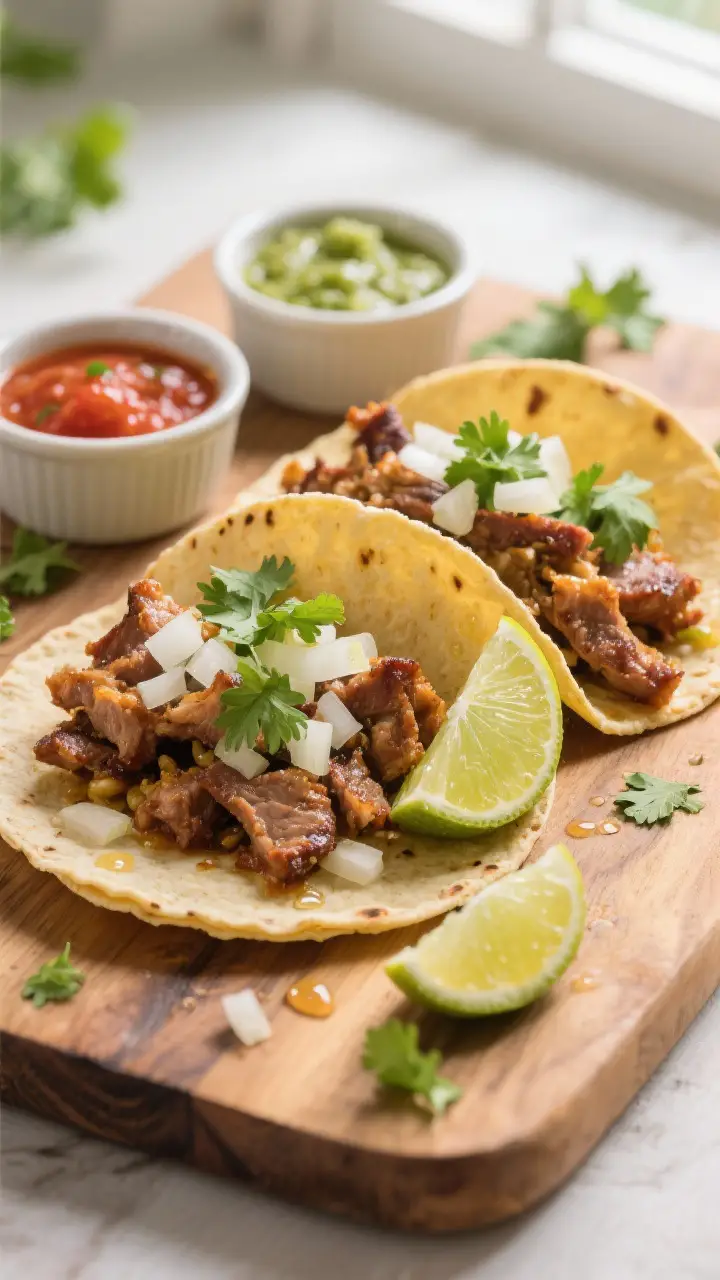
- Serve. Pile into warm tortillas and top with onion, cilantro, and a squeeze of lime. Offer salsa on the side.
Storage Instructions
- Refrigerator: Store cooled carnitas in an airtight container with a little of the cooking fat to keep them moist. They keep for 4 days.
- Freezer: Freeze in portions for up to 3 months.
Add a spoonful of fat to each bag to prevent freezer burn.
- Reheating: Re-crisp in a hot skillet with a bit of the reserved fat for 4–6 minutes. Avoid microwaving alone, which softens the edges.
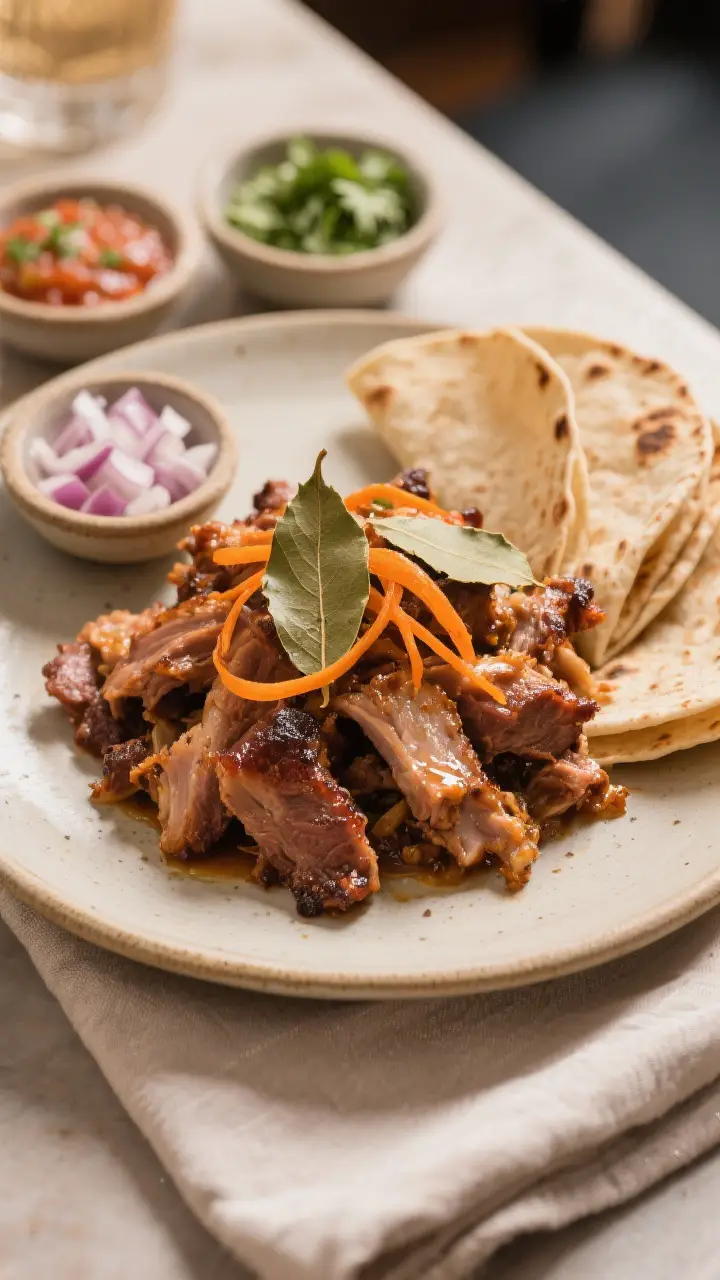
Benefits of This Recipe
- Authentic technique: Inspired by Michoacán methods—simple, honest ingredients and slow cooking.
- Reliable texture: Tender inside, crisp outside, with rich flavor and subtle citrus.
- Make-ahead friendly: Great for parties and tacos; reheats beautifully.
- Flexible: Works for tacos, burritos, tortas, nachos, or rice bowls.
- Budget-conscious: Pork shoulder is affordable and feeds a crowd.
Common Mistakes to Avoid
- Boiling too hard: High heat toughens the meat and dries it out. Keep a gentle simmer until tender.
- Skipping the fat: The lard protects the meat and creates that signature texture.
If you reduce it, use enough liquid to keep the pork moist until the end.
- Over-shredding early: Crisp chunks first, then break them up. Shredded meat can turn greasy and lose those caramelized edges.
- Under-seasoning: Pork needs salt. Taste the liquid mid-cook and adjust.
- Rushing the crisp: Take the extra 10–15 minutes at the end.
That’s where the magic happens.
Variations You Can Try
- Coca-Cola twist: Replace some water with Mexican Coca-Cola for a lightly caramelized finish. Use sparingly to avoid sweetness.
- Herb-forward: Add a sprig of oregano and thyme for a greener, aromatic profile.
- Spice-kissed: Add a few whole peppercorns and a pinch of cumin. Keep it subtle so it stays true to carnitas.
- Broiler finish: Spread cooked carnitas on a sheet tray and broil for 3–5 minutes, tossing once, for quick crisping when making large batches.
- Lean cut workaround: If using pork leg, add extra lard and don’t skimp on the milk for tenderness.
FAQ
Can I make carnitas without lard?
Yes.
Use a mix of neutral oil and water to create a shallow braise. You’ll still get tender meat, but lard gives the best flavor and crisping. Finish in a hot pan to get those golden edges.
What cut of pork is best?
Pork shoulder (also called pork butt or Boston butt) is ideal.
It has the right balance of fat and connective tissue, so it stays juicy after hours of cooking and crisps up beautifully.
Do I need to marinate the pork?
No. The long simmer with aromatics infuses plenty of flavor. Just season well with salt and pepper at the start.
How do I scale the recipe for a crowd?
Use a wider pot or two pots so the pork sits in a single layer.
Crowding makes it stew unevenly. Double the aromatics proportionally and allow extra time for the final crisp.
What should I serve with carnitas?
Warm corn tortillas, chopped white onion, cilantro, and lime are classic. Add salsa verde or roja, radishes, and a simple cabbage slaw if you like.
For a full spread, serve with beans and Mexican rice.
Why add milk to the pot?
Milk gently tenderizes and contributes to a subtle caramel note as it reduces. It’s a common cook’s trick for extra silkiness without changing the core flavor.
How do I keep carnitas from drying out when reheating?
Reheat in a skillet with a spoon of reserved fat over medium-high heat. If needed, add a splash of water, then let it evaporate so the edges crisp again.
Can I use an Instant Pot or slow cooker?
Yes.
Cook until very tender (Instant Pot about 45–60 minutes on high pressure; slow cooker 6–8 hours on low), then crisp in a skillet or under the broiler. You’ll miss some flavor from the gentle fat simmer, but it’s convenient and tasty.
In Conclusion
Authentic Michoacán-style carnitas are all about patience, simple ingredients, and a confident finish. You get juicy pork with a caramelized edge that’s made for tacos and shared plates.
Once you make it at home, you’ll see why this method has lasted generations. Keep it slow, keep it simple, and let the pork do the talking.
Printable Recipe Card
Want just the essential recipe details without scrolling through the article? Get our printable recipe card with just the ingredients and instructions.