
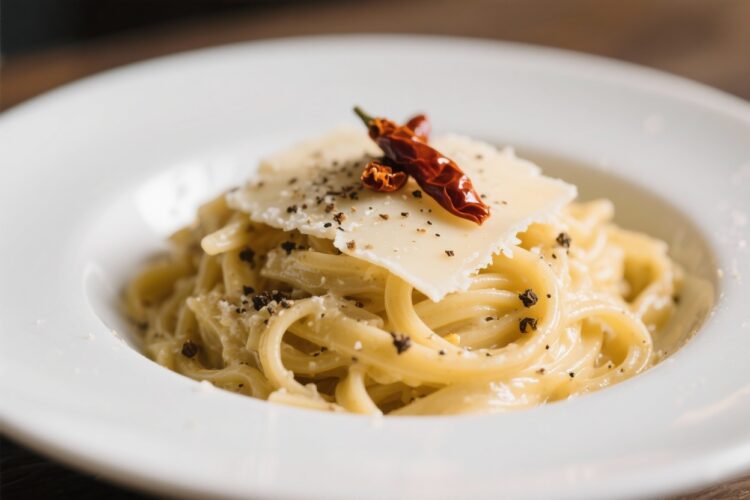
Cacio e Pepe is one of those dishes that proves how far a few good ingredients can go. It’s creamy without cream, rich without butter, and deeply satisfying with just cheese, pepper, and pasta. If you’ve ever wondered how something so simple can taste like magic, this is it.
The trick lies in technique and timing—plus choosing the right cheese and grind of pepper. Let’s make a bowl of pure Roman comfort that feels special any night of the week.
What Makes This Recipe So Good
- Minimal ingredients, maximum flavor: Just pasta, Pecorino Romano, black pepper, and water. That’s it—no cream, no butter.
- Silky sauce without shortcuts: The starchy pasta water emulsifies with the cheese, giving you that glossy, clingy sauce.
- Quick and weeknight-friendly: You can be eating in 20 minutes, start to finish.
- Classic Roman flavor: Sharp, salty Pecorino and fragrant, freshly cracked pepper are the stars.
- Budget-friendly: A restaurant-quality dish with pantry basics.
Ingredients
- 10 oz (280 g) spaghetti or tonnarelli
- 1 cup (90 g) finely grated Pecorino Romano (grate ultra-fine; a Microplane or fine rasp is best)
- 2–3 teaspoons freshly cracked black pepper (coarsely ground, then lightly crushed)
- Salt for pasta water (go lighter than usual; Pecorino is salty)
- 1–1.5 cups hot starchy pasta water (reserved from the pot)
How to Make It
- Prep your ingredients first. Finely grate the Pecorino Romano into a fluffy pile.
Coarsely crack the pepper. Have a ladle or measuring cup ready for the pasta water.
- Boil the pasta. Bring a large pot of water to a boil and salt it lightly. Cook spaghetti until just shy of al dente (about 1 minute less than package instructions).
Reserve at least 1.5 cups of the starchy water before draining.
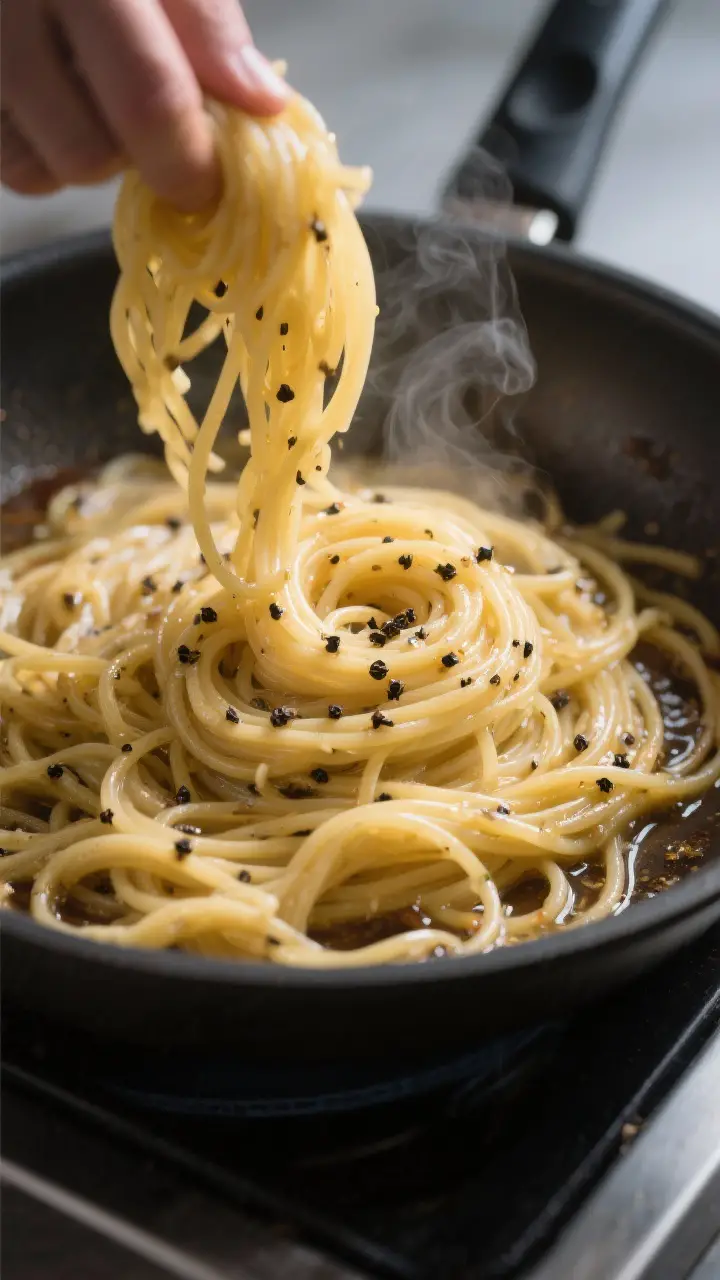
- Bloom the pepper. In a large skillet or wide pan, toast the cracked pepper over medium heat for 30–45 seconds until fragrant. Add a ladle of hot pasta water to the pan to create a peppery “tea.”
- Build the emulsion base. Transfer the drained pasta to the skillet with the pepper water. Toss over medium heat so the pasta absorbs some liquid.
Add more pasta water as needed to keep things glossy.
- Make the cheese paste. In a bowl, whisk the grated Pecorino with a splash of hot pasta water to form a thick, smooth paste. It should be creamy and spreadable, not runny.
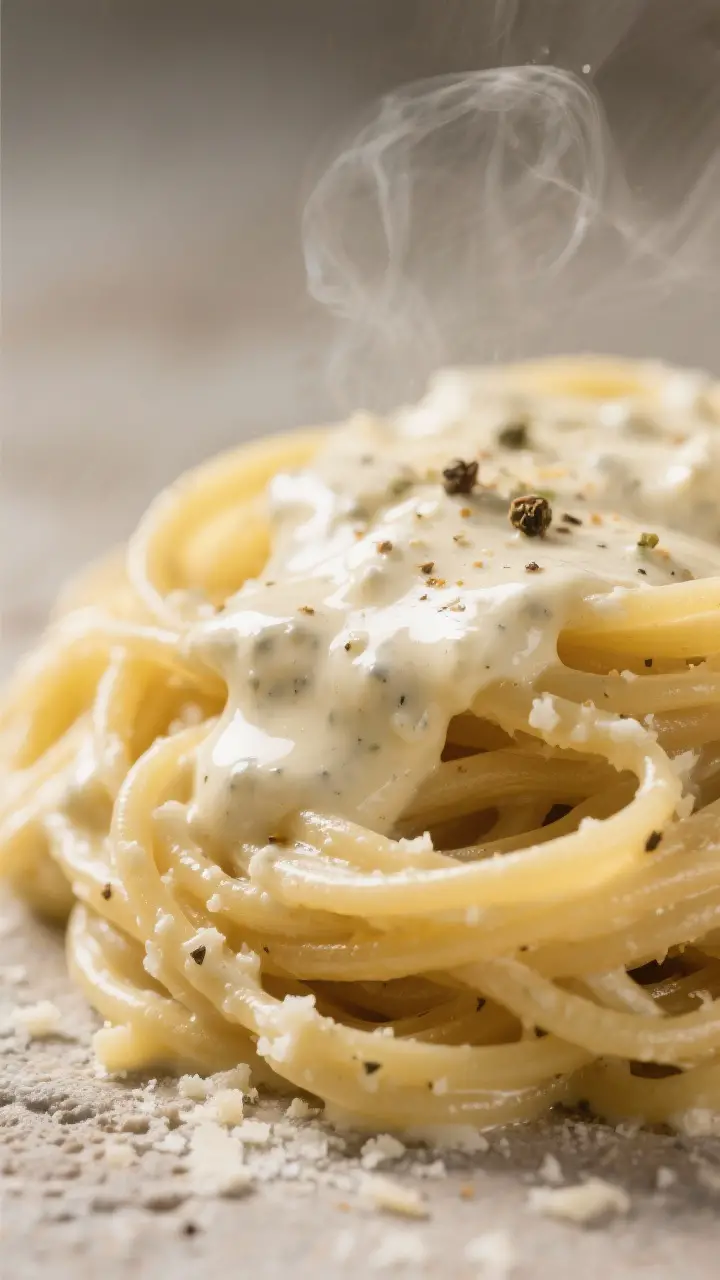
- Finish off-heat. Remove the skillet from the heat. Add the cheese paste to the pasta, tossing quickly and vigorously.
Add more hot pasta water, a little at a time, until a silky, clinging sauce forms. The sauce should coat every strand without clumping.
- Adjust and serve. Taste and add more pepper if you like. If it’s too thick, loosen with more pasta water.
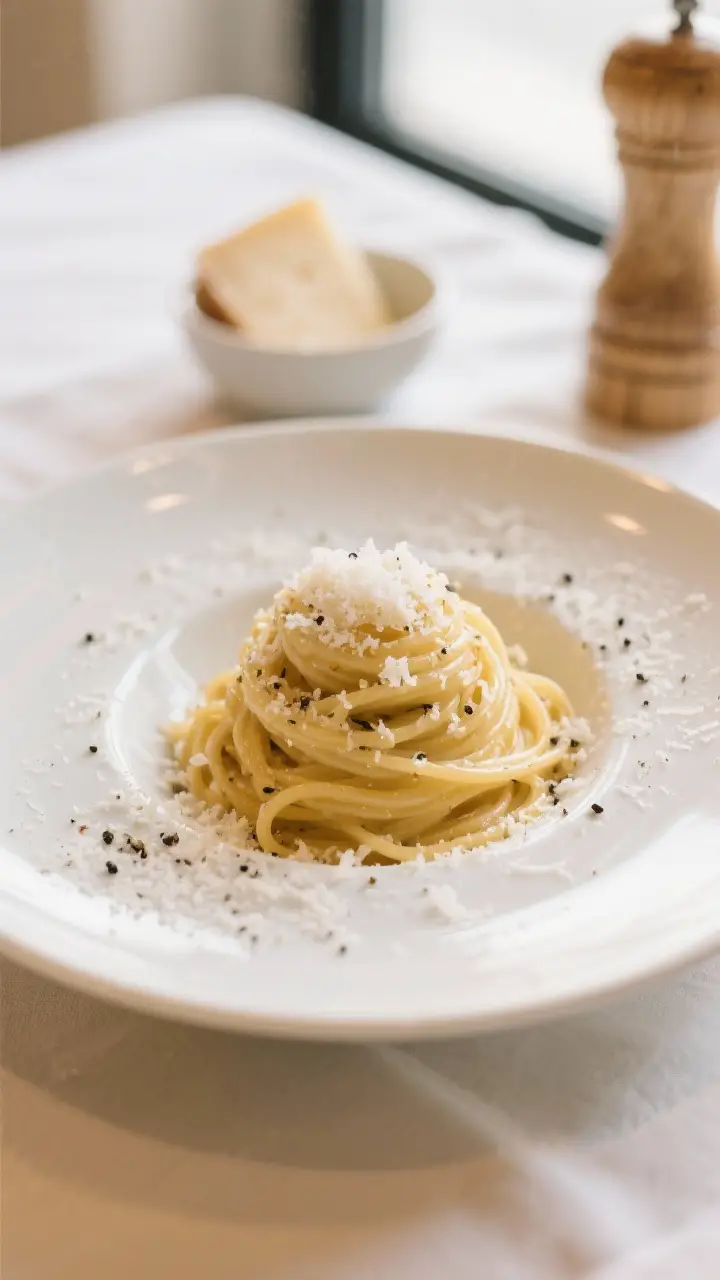
Serve immediately with a light dusting of Pecorino and a final crack of pepper.
Storage Instructions
This dish is best eaten right away. The sauce can thicken and become grainy as it cools. If you must store leftovers, keep them in an airtight container in the fridge for up to 2 days.
To reheat, add a splash of water in a skillet over low heat and toss gently.
You can revive the texture, but the flavor and silkiness are always best fresh.
Health Benefits
- Protein and calcium: Pecorino Romano provides both, supporting bones and muscle repair.
- Simple, whole ingredients: No cream or butter means a lighter profile than many creamy pastas.
- Portion control friendly: Because the dish is rich and flavorful, a moderate serving satisfies.
- Customizable: You can use whole-wheat pasta for extra fiber or add vegetables on the side to balance the meal.
Pitfalls to Watch Out For
- Cheese clumping: This happens if the cheese hits very hot pasta directly or the pan is still on the heat. Always remove from heat before adding the cheese paste.
- Grainy sauce: Usually due to using pre-shredded cheese, coarse grating, or not enough starchy water. Use freshly and finely grated Pecorino.
- Over-salting: Pecorino is salty.
Go light on salt in the pasta water and taste before adding more.
- Not enough starch: Don’t discard the pasta water. It’s the key to emulsifying the sauce and getting that glossy finish.
- Rushing the emulsion: Add water gradually and toss vigorously to build a smooth sauce.
Variations You Can Try
- Half Pecorino, half Parmesan: Softer flavor, slightly creamier texture. Still classic-adjacent.
- Butter-kissed: Add a tablespoon of butter after you bloom the pepper for a rounder mouthfeel.
Not traditional, but delicious.
- Lemon-pepper twist: Add a small splash of lemon juice or zest at the end for brightness. Use carefully to avoid curdling.
- Heat lovers: A pinch of red pepper flakes with the black pepper adds a gentle burn.
- Gluten-free: Use a quality gluten-free spaghetti and be extra mindful with your emulsion, as GF pasta water can vary in starchiness.
FAQ
Can I use Parmesan instead of Pecorino?
Yes, but it will taste less sharp and a bit sweeter. For a balanced flavor, try a 50/50 blend of Pecorino Romano and Parmesan.
If you use only Parmesan, the sauce may be slightly less punchy and you may need a touch more pepper.
Why did my sauce get clumpy?
Most likely the pan or pasta was too hot when you added the cheese, or the cheese wasn’t finely grated. Always remove the pan from heat before adding the cheese paste and whisk the cheese with a little hot water first to form a smooth base.
Is cream used in authentic cacio e pepe?
No. Traditional cacio e pepe relies on starchy pasta water and Pecorino to emulsify into a creamy sauce—no cream, no butter required.
What pepper should I use?
Freshly cracked black pepper is essential.
Coarsely grind it so you can taste the pepper’s aroma and gentle heat, and toast it briefly to wake up the oils.
Which pasta shape works best?
Spaghetti and tonnarelli are classic. Bucatini also works, though it can be a bit heavier. Choose a bronze-cut pasta if you can—the rougher surface grabs the sauce better.
Can I make it ahead?
Not really.
Cacio e pepe is at its best right off the stove. If you need to prep, have everything grated and measured so you can cook and serve quickly.
How do I fix a sauce that’s too thick?
Add a splash of hot pasta water and toss vigorously until the sauce loosens and turns glossy again. Add water slowly so you don’t overshoot.
What if my sauce is watery?
Toss the pasta over low heat briefly and add a little more grated cheese, off-heat, to help it thicken.
Keep tossing to rebuild the emulsion.
Wrapping Up
Cacio e pepe is a masterclass in getting the most from simple ingredients. With finely grated Pecorino, plenty of starchy pasta water, and a gentle hand with heat, you’ll get a silky, peppery sauce every time. Keep it classic, or tweak it with a butter pat or a Parmesan blend—either way, it’s comfort in a bowl.
Pour a glass of something you like, crack extra pepper on top, and enjoy the Roman way tonight.
Printable Recipe Card
Want just the essential recipe details without scrolling through the article? Get our printable recipe card with just the ingredients and instructions.