
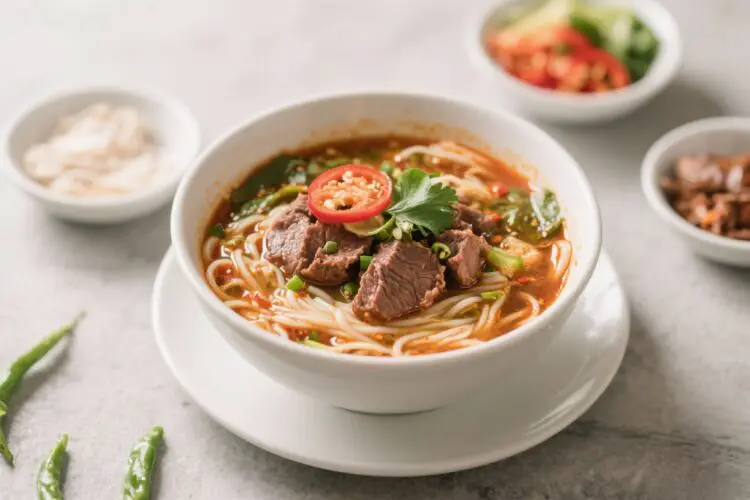
Bun Bo Hue is a bold, heady bowl of noodle soup that wakes up all your senses. It’s spicy, savory, and slightly sweet, with a deep broth scented by lemongrass and chili. Unlike the gentler pho, this central Vietnamese classic packs heat and personality.
You’ll get tender slices of beef, sometimes pork, slippery round rice noodles, and a vibrant pile of herbs and lime on top. It’s a complete meal that feels special but is approachable if you plan ahead.
What Makes This Recipe So Good
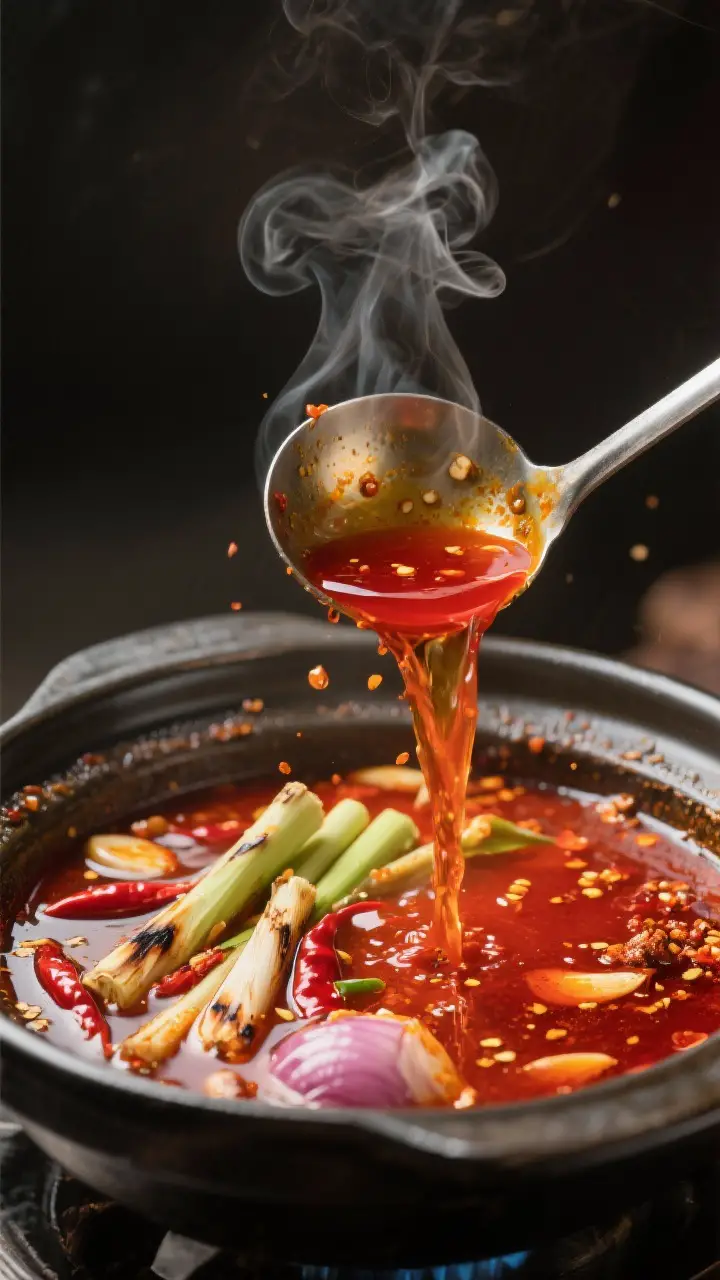
- Balanced heat and depth: The broth is spicy but layered, thanks to lemongrass, fish sauce, shrimp paste, and slow-simmered bones.
- Authentic flavor profile: A fragrant chili oil and fermented shrimp paste deliver that unmistakable Bun Bo Hue character.
- Satisfying textures: Round rice noodles, tender beef, and fresh herbs create contrast in every bite.
- Customizable spice level: Adjust the chili oil and fresh chilies to suit your taste without losing the soul of the dish.
- Meal-prep friendly: The broth tastes even better the next day, and you can cook noodles as needed.
What You’ll Need
- Beef bones: Marrow or knuckle bones for a rich, gelatinous broth.
- Beef shank or brisket: For tender meat slices after a long simmer.
- Pork hock (optional but traditional): Adds body and that signature Bun Bo Hue richness.
- Lemongrass: Several stalks, bruised, for citrusy fragrance.
- Onion and ginger: Charred or lightly roasted for depth.
- Fish sauce: The main salty seasoning.
- Fermented shrimp paste (mam ruoc): A little goes a long way; essential for authenticity.
- Rock sugar or brown sugar: Balances salt and spice.
- Anatto seeds or oil (optional): For a warm, orange hue.
- Chili oil or sate sauce: Store-bought or homemade for heat and aroma.
- Round rice noodles (bun Bo Hue noodles): Thicker than pho, usually sold as “Bun Bo Hue” noodles.
- Herbs and toppings: Lime wedges, cilantro, scallions, Thai basil, mint, shredded banana blossom or cabbage, bean sprouts.
- Condiments: Fresh chilies, chili flakes, extra fish sauce.
- Cooking basics: Salt, water, neutral oil.
How to Make It
- Parboil the bones and meats: Add beef bones, beef shank/brisket, and pork hock to a large pot. Cover with cold water and bring to a boil for 5–10 minutes.
Drain and rinse the bones and meats to remove impurities. Clean the pot.
- Build the broth base: Return the bones and meats to the pot. Add bruised lemongrass, halved onion, and sliced ginger.
Cover with fresh water (about 4–5 quarts). Bring to a boil, then lower to a gentle simmer.
- Simmer low and slow: Skim foam as needed. Simmer 2.5–3 hours, until the shank or brisket is tender and the pork hock is soft but still holds shape.
- Season the broth: Add fish sauce and a small piece of rock sugar.
In a small bowl, whisk fermented shrimp paste with hot broth, then strain it back into the pot to avoid gritty bits. Taste and adjust salt and fish sauce.
- Make the color and chili oil: Heat a small pan with neutral oil. Add anatto seeds to tint the oil, then strain them out.
In the tinted oil, gently sizzle minced garlic and chili flakes or sate sauce until fragrant. Stir this into the broth for color and heat.
- Remove and slice the meats: Lift out the shank/brisket and pork hock. Let rest, then slice thinly across the grain.
Keep warm.
- Cook the noodles: Boil the round rice noodles according to package directions until chewy-tender. Rinse briefly under hot water to remove excess starch. Portion into bowls.
- Prep the toppings: Slice scallions and cilantro.
Rinse basil and mint. Thinly shred banana blossom or cabbage if using. Cut lime into wedges.
Thinly slice fresh chili.
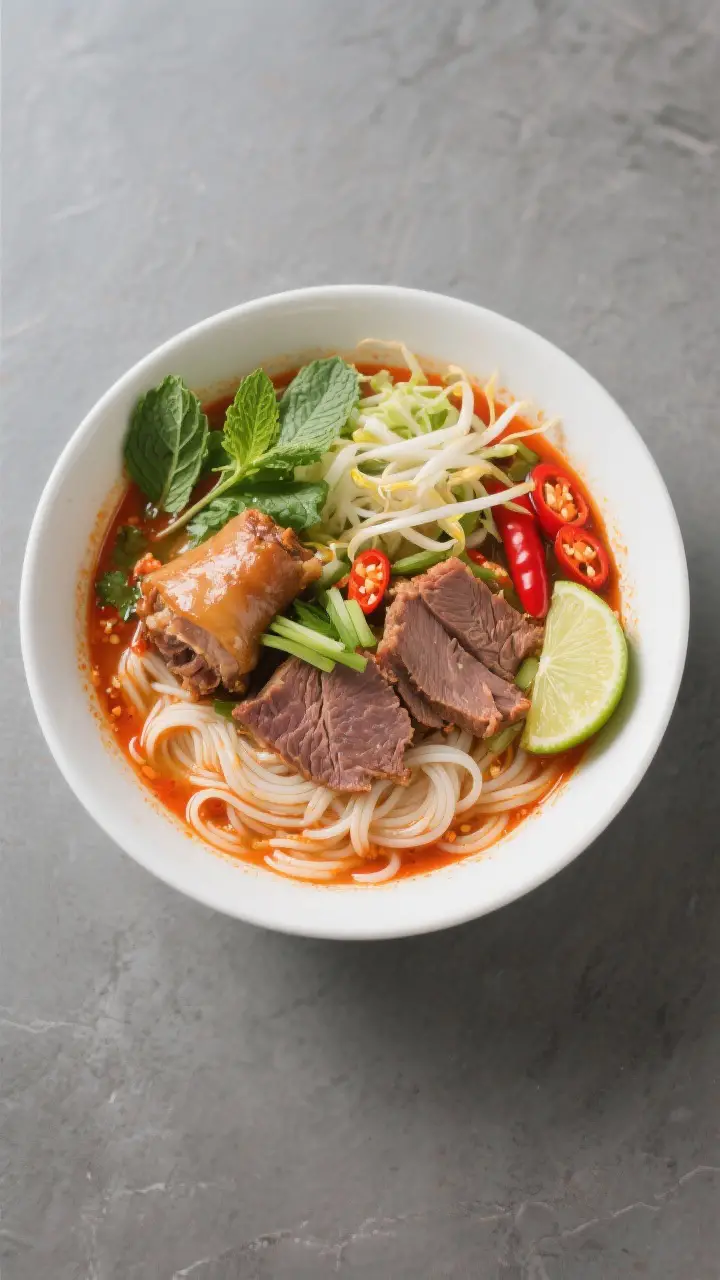
- Assemble bowls: Top noodles with sliced meats. Ladle in the hot, spicy broth. Finish with herbs, scallions, cabbage or banana blossom, bean sprouts, lime, and fresh chili.
Serve extra chili oil and fish sauce on the side.
- Adjust to taste: Brighten with lime, add heat with chili oil, and deepen savoriness with a splash of fish sauce as you eat.
How to Store
- Broth: Cool completely, then refrigerate up to 4 days or freeze up to 3 months. The flavor improves after a day.
- Meats: Store separately from the broth to keep textures intact. Refrigerate up to 4 days.
- Noodles: Cook fresh as needed.
Cooked noodles become mushy in the fridge; if you must store them, toss with a bit of oil and use within 1–2 days.
- Herbs and toppings: Keep washed and dried in airtight containers with a paper towel. Use within 2–3 days.
Benefits of This Recipe
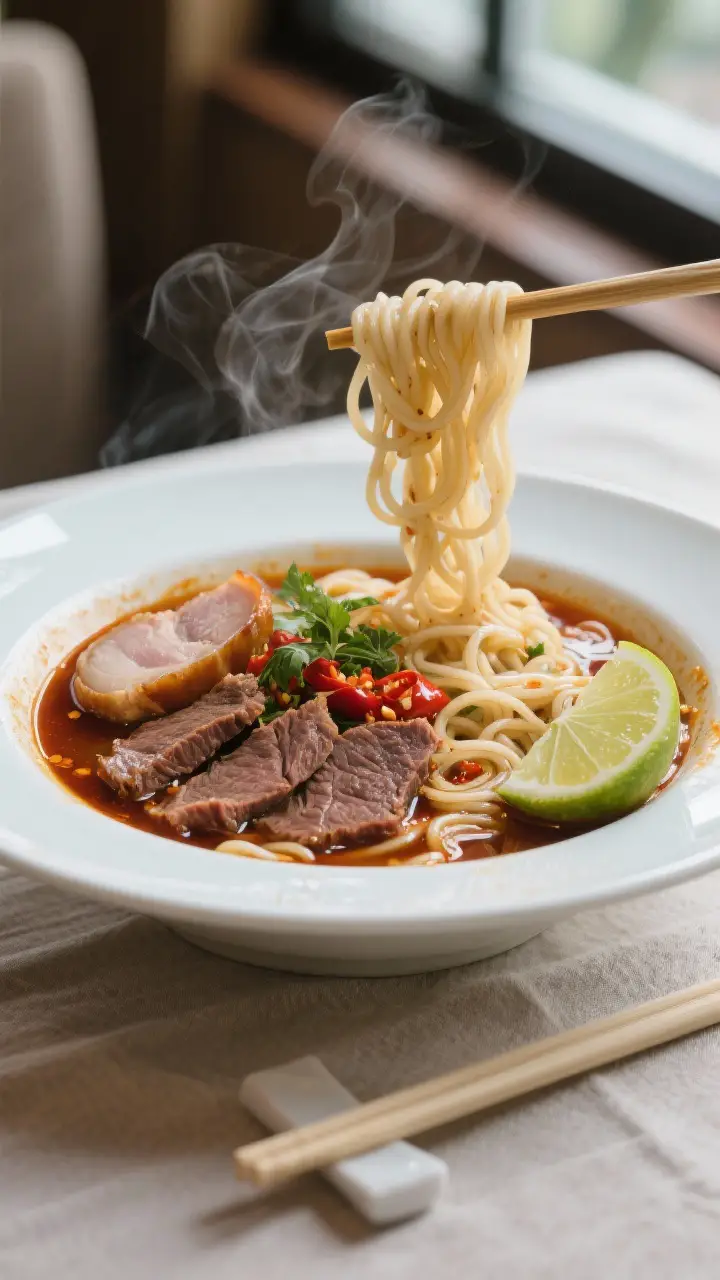
- Deep nourishment: A slow-simmered bone broth delivers collagen and a satisfying mouthfeel without cream or heavy thickeners.
- Customizable nutrition: Add more lean beef, extra herbs, or plenty of crunchy vegetables to suit your goals.
- Big-batch cooking: One pot yields multiple meals, ideal for busy weeks.
- Restaurant-quality at home: Mastering the shrimp paste and chili oil technique brings authentic flavor to your kitchen.
What Not to Do
- Don’t skip the parboil step: It removes scum and keeps the broth clear and clean-tasting.
- Don’t boil aggressively: A rolling boil clouds the broth and toughens the meat. Keep it at a gentle simmer.
- Don’t overdo shrimp paste: It’s potent.
Start small, taste, and adjust.
- Don’t cook noodles too early: They soften quickly. Boil them right before serving.
- Don’t forget acidity: A squeeze of lime balances the richness and heat.
Alternatives
- Protein swaps: Use only beef (shank, brisket, oxtail) if you prefer to skip pork. For a lighter version, try chicken thighs and chicken bones, understanding the flavor will drift from classic.
- Noodle options: If you can’t find round Bun Bo Hue noodles, use thick vermicelli or even udon in a pinch.
- Heat control: Replace some chili oil with paprika oil for color without too much spice, or add bird’s eye chilies for extra kick.
- Aromatics: If fresh lemongrass is unavailable, use good-quality lemongrass paste or dried lemongrass tied in a sachet.
- No shrimp paste: Use a little extra fish sauce plus a touch of anchovy paste.
It won’t be the same, but it keeps that savory backbone.
FAQ
Is Bun Bo Hue the same as pho?
No. Pho is typically lighter and more aromatic with star anise and cinnamon, while Bun Bo Hue is spicier and lemongrass-forward with a richer, slightly funky depth from shrimp paste.
How spicy should the broth be?
It should have a noticeable kick, but the heat is adjustable. Control it through the chili oil and fresh chilies added at the end, keeping the base broth flavorful but balanced.
Can I make it ahead?
Yes.
In fact, the broth tastes better the next day. Store the broth and meats separately and cook the noodles fresh before serving.
What if I can’t find fermented shrimp paste?
Use more fish sauce and a touch of anchovy paste for umami. It won’t perfectly replicate the traditional flavor, but it gets you close.
How do I keep the broth clear?
Parboil and rinse the bones, simmer gently, and skim regularly.
Avoid stirring aggressively, which can emulsify fat into the broth.
Can I use an Instant Pot?
Yes. Pressure cook the bones, meats, lemongrass, onion, and ginger for about 60–75 minutes, then season with fish sauce and shrimp paste afterward. Finish with chili oil just before serving.
What are the must-have toppings?
At minimum, lime wedges, scallions, cilantro, and some fresh chili.
If available, add Thai basil, mint, shredded cabbage or banana blossom, and bean sprouts for crunch.
Why use rock sugar?
It provides a gentle sweetness that rounds the edges of salt and spice without making the broth taste sugary.
How do I slice the meat thinly?
Chill the cooked meat slightly so it firms up, then slice across the grain with a sharp knife. This gives clean slices that stay tender.
Can I make it less rich?
Skim more fat, use only beef shank and bones, and lighten the chili oil. Add extra vegetables and herbs to brighten the bowl.
Final Thoughts
Bun Bo Hue is comfort food with charisma: spicy, aromatic, and deeply satisfying.
With a few key steps—parboiling, gentle simmering, balanced seasoning—you can bring restaurant-level results to your home kitchen. Keep the noodles chewy, the herbs fresh, and the lime handy. Once you’ve nailed your preferred heat and salt levels, this becomes the kind of soup you’ll crave on repeat.