

Rhubarb may scream “pie,” but it moonlights as a sassy, ruby-red sauce that plays nice with crispy duck and golden waffles. Imagine tart-sweet sparks, silky texture, and a whisper of basil that keeps everything fresh, not fussy. You’ll spoon it over duck confit, swipe it across waffles, and then—because you’re only human—eat it straight from the pan. Let’s build a Rhubarb-Basil Reduction that earns a permanent spot in your brunch rotation.
Why This Combo Slaps
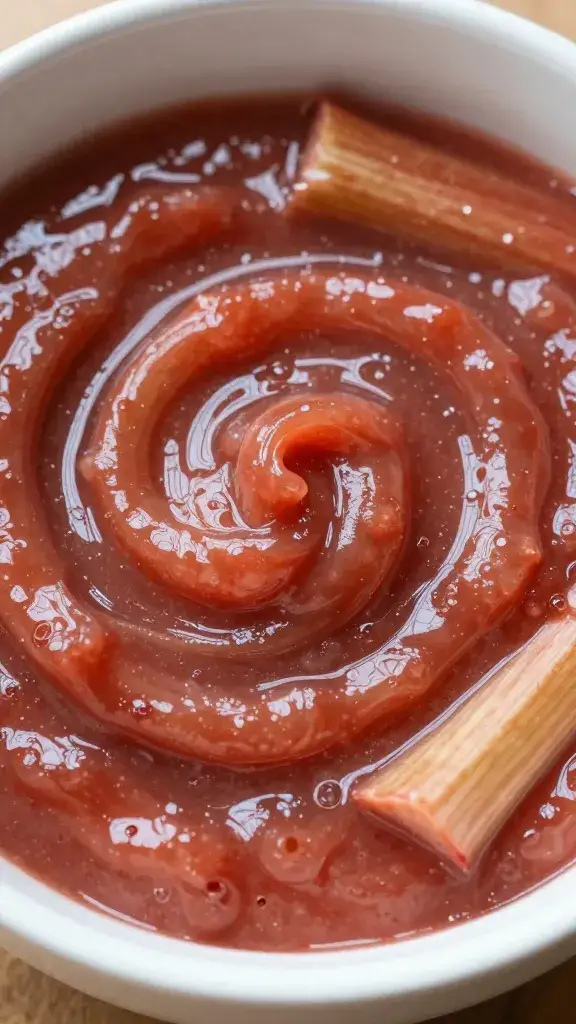
Rhubarb brings punchy acidity and gentle sweetness. Duck brings savory richness and crispy edges. Waffles add buttery comfort and crunch. The basil? It brightens the whole plate like a citrusy green light. Balanced, bold, and a little bougie—without making you cry at the grocery store.
You also get range. This reduction doubles as a glaze, a drizzle, and a spread. It’s not just a one-trick pony—it’s the entire brunch pony show.
The Flavor Game Plan
Let’s talk profile so you can steer the ship:
- Base: Rhubarb stewed into a silky reduction—tart, tangy, and slightly floral.
- Sweetener: A mix of sugar and honey for clean sweetness plus subtle depth.
- Acid: Red wine vinegar for sparkle; orange zest for perfume.
- Herb: Fresh basil stirred in at the end—never cooked to death.
- Backbone: A pinch of salt to wake it all up.
You want a sauce that coats the back of a spoon but still drips in luscious ribbons. Too thick? You made jam. Too thin? You made pink soup. Neither is a tragedy, but let’s aim sweet-spot glossy.
What You’ll Need (and Why)

- Rhubarb stalks (4 cups, chopped): Bright, tart fruit-adjacent veggie that reduces beautifully.
- Sugar (1/3 cup) + honey (2 tbsp): Balanced sweetness and sheen.
- Red wine vinegar (1–2 tbsp): Lifts the flavor, adds zip.
- Orange zest (1 tsp) + juice (2–3 tbsp): Fresh citrusy backbone.
- Fresh basil (1/2 cup, loosely packed, chiffonade): Peppery, anise-kissed finish.
- Salt (1/2 tsp) + black pepper (a few grinds): Essential seasoning, not optional.
- Optional boosters: A small splash of balsamic for roundness; a pinch of chili flakes if you like a wink of heat.
Make the Rhubarb-Basil Reduction
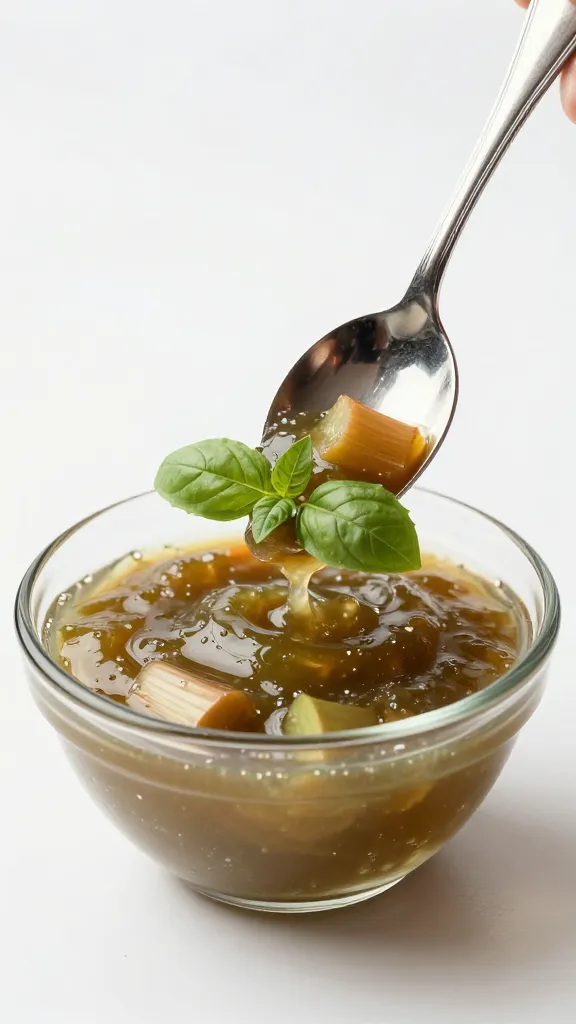
Yes, it’s easy. Yes, it makes your kitchen smell like spring swaggered in and took over.
- Mac erate the rhubarb: Toss chopped rhubarb with sugar and salt. Let it sit 10–15 minutes until it weeps. FYI, this jump-starts the sauce and keeps you from adding extra liquid.
- Simmer low and slow: Add honey, orange zest, and juice. Bring to a gentle simmer over medium heat. Cook 10–12 minutes, stirring occasionally, until the rhubarb collapses and the mixture thickens.
- Balance with acid: Stir in red wine vinegar 1 tablespoon at a time. Taste. You want bright, not harsh. Add pepper.
- Adjust texture: For a rustic spoonable sauce, leave it chunky. For a luxe drizzle, blitz with an immersion blender until silky and glossy.
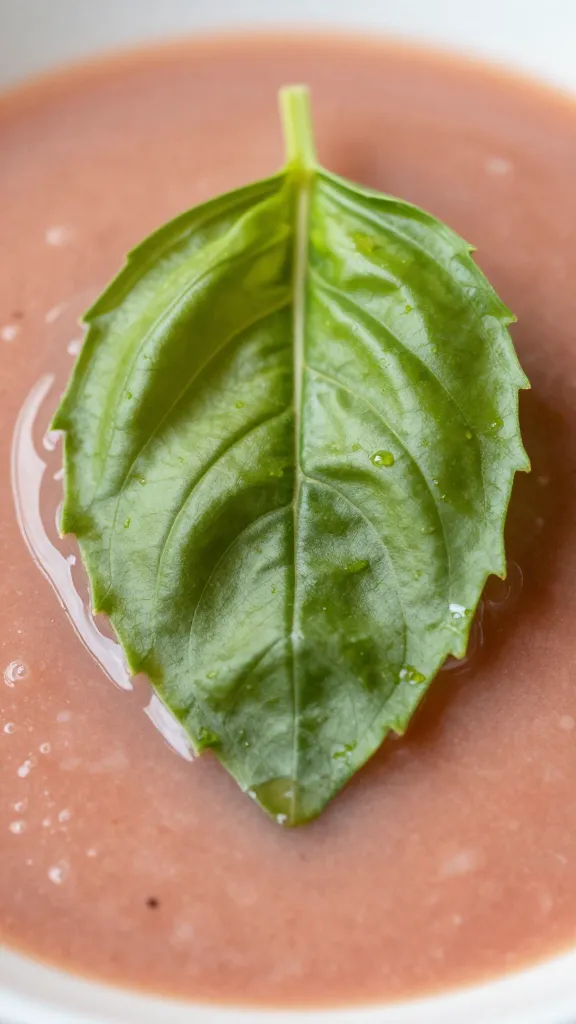
- Finish with basil: Take off the heat. Fold in basil so it stays vivid and fragrant. IMO, this step makes the sauce sing.
Consistency Check
Dip a cold spoon and swipe a finger through the coating. If the line holds, you nailed it. If it runs like a track star, simmer 2–3 more minutes. If it clings like jam, thin with a teaspoon of water or orange juice.
Duck + Waffle: The Crunch-Factor Duo
You don’t need a restaurant setup. You just need heat, timing, and a little confidence.
Crispy Duck Options
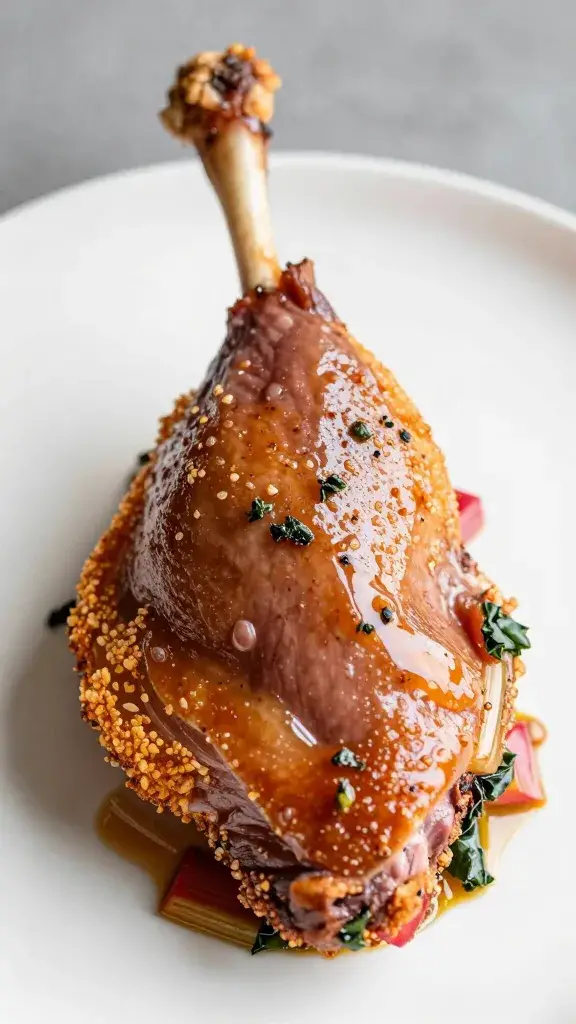
- Duck confit (easiest): Crisp store-bought confit legs skin-side down in a skillet until shatteringly crisp. Shred or serve whole.
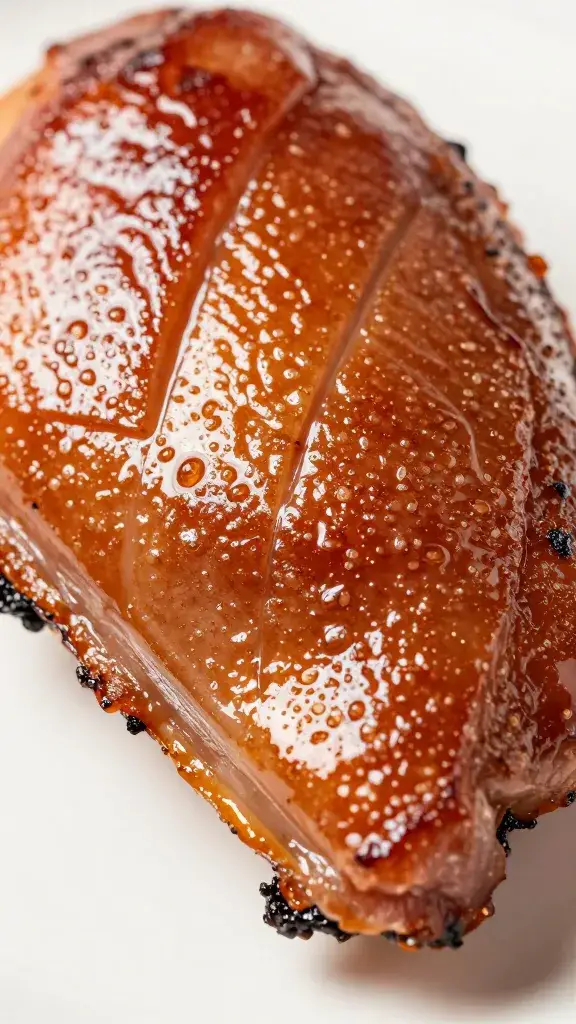
- Pan-seared duck breast: Score the skin, season, then render fat slowly over medium-low until the skin turns deep golden and crisp. Flip, finish to medium-rare (130–135°F), rest, and slice.
Waffle Strategy
Keep waffles light, buttery, and crisp. A classic yeasted or buttermilk waffle works best. Warm them in a 350°F oven directly on the rack for 5–7 minutes right before plating. No soggy squares allowed.
Plating That Brings Drama (the Good Kind)
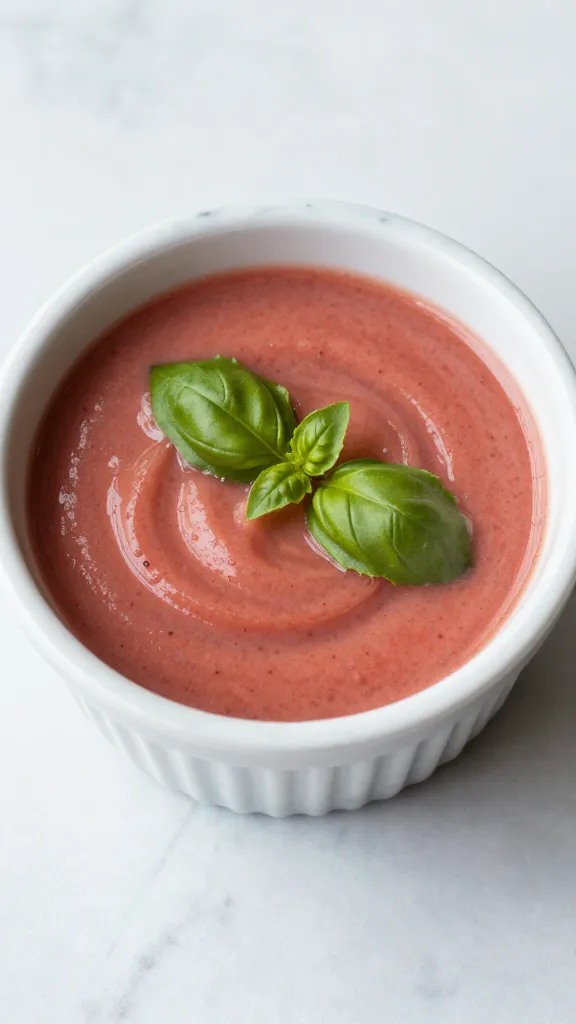
Layer textures and temperatures for maximum payoff:
- Warm plate, hot waffle—set the stage.
- Spread a spoonful of reduction on the waffle to anchor the duck.
- Add crisp duck (shredded confit or sliced breast).
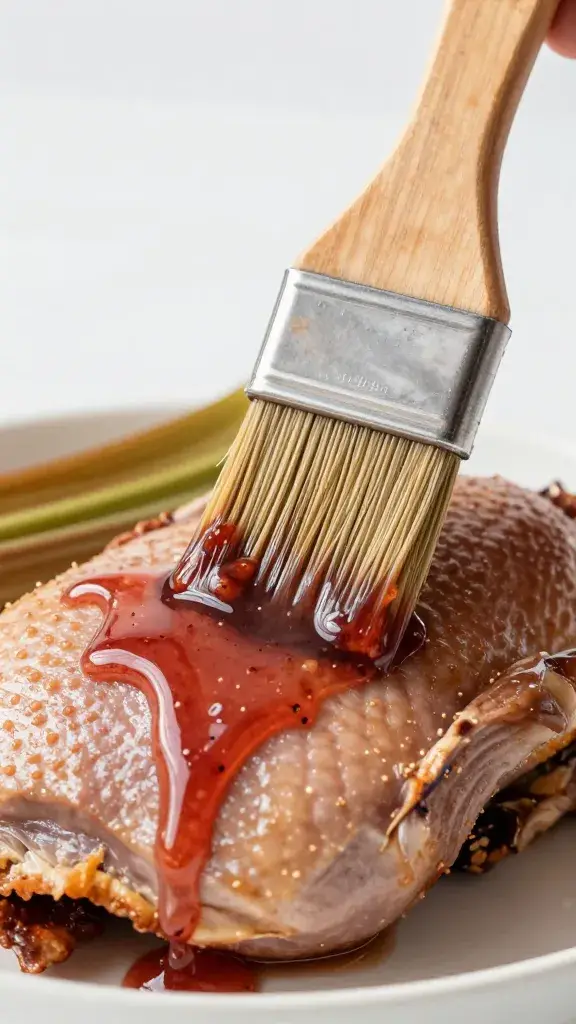
- Drizzle more reduction over the top. Let it pool in the waffle pockets because obviously.
- Finish with a few basil ribbons, flaky salt, and a micro-grate of orange zest.
Pro Pairings
- Side: Peppery arugula tossed with lemon and olive oil cuts richness.
- Drink: A dry sparkling rosé or a Belgian-style witbier. Both love citrus and herbs.
- Crunch: Toasted pistachios or crushed candied walnuts for texture and subtle sweetness.
Make-Ahead, Storage, and Swaps
You can totally prep this without chaos. Future you will send a thank-you note.
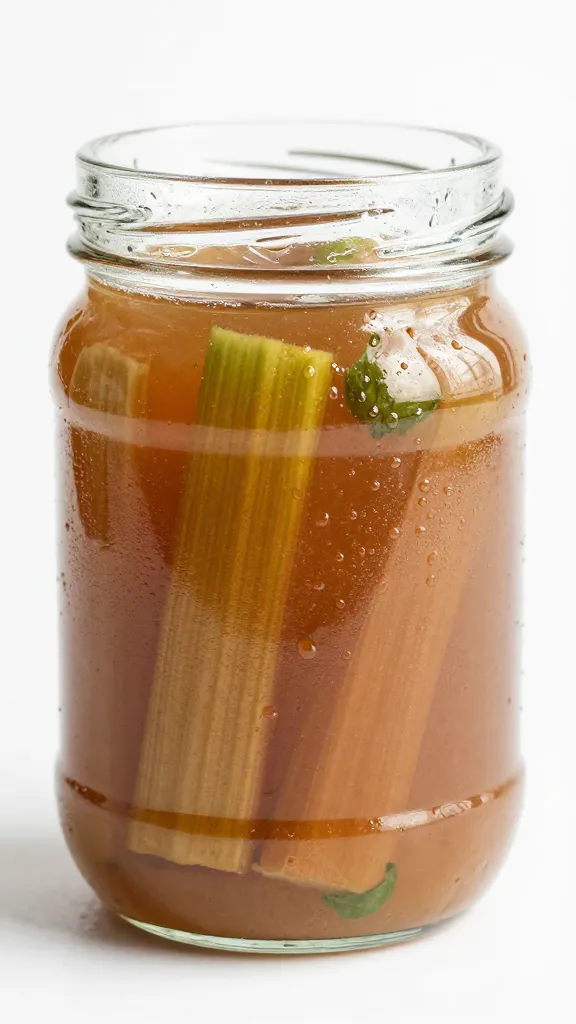
- Make-ahead: Cook the reduction up to 5 days early. Chill in a sealed jar.
- Reheat: Warm gently on low heat. If it thickened in the fridge, loosen with a teaspoon of water or orange juice.
- Freeze: Yes, up to 2 months. Thaw overnight in the fridge and whisk.
- Basil swap: Try tarragon for anise vibes, mint for cooler brightness, or Thai basil for peppery lift.
- Sweetener swaps: Maple syrup adds woodsy depth; brown sugar amps caramel notes. Adjust vinegar so it doesn’t skew too sweet.
Not Into Duck?
No problem. This reduction crushes it with:
- Crispy chicken thighs or fried chicken
- Pork belly or grilled pork chops
- Seared salmon or roasted cod
- Halloumi or roasted cauliflower steaks (vegetarian win)
Troubleshooting Like a Pro
Stuff happens. We fix it.
- Too tart? Add a teaspoon of honey and a pinch of salt. Taste again. Repeat if needed.
- Too sweet? Add a splash of red wine vinegar or a squeeze of lemon.
- Too thin? Simmer 2–4 minutes. Stir often so sugars don’t scorch.
- Too thick? Whisk in water or orange juice, a teaspoon at a time.
- Herb flavor vanished? You cooked the basil too long. Stir in fresh ribbons right before serving. FYI, heat is the herb villain here.
FAQ

Do I need to peel rhubarb?
Nope. Young, fresh rhubarb softens quickly and doesn’t need peeling. If you see tough, stringy bits on very mature stalks, pull a few strands, but don’t overdo it or you’ll lose color and volume.
Can I use frozen rhubarb?
Absolutely. Thaw and drain excess liquid first so you don’t water down the reduction. You may need a slightly longer simmer to reach that glossy finish.
How sweet should the reduction be?
Aim for balanced tart-sweet that perks up savory duck without turning dessert-y. Start with the suggested sugar and honey, then tweak with vinegar or a touch more sweetener. Taste as you go—your palate runs the show.
What waffle batter works best?
Buttermilk waffles bring tang and crisp edges, while yeasted batter gives you light, airy pockets. Both rock here. Avoid super-sweet batters since the sauce already brings enough personality.
Can I make it spicy?
Yes, and you should if you like a kick. Add a pinch of red pepper flakes or a tiny hit of Aleppo pepper during the simmer. Spice loves fruit-tart sauces, IMO.
How do I keep duck skin ultra-crisp?
Start with dry skin, score gently, and render over medium-low heat to slowly melt the fat. Finish skin-side down for extra crunch, then rest the meat so juices settle and the skin stays lacquered.
Conclusion
This Rhubarb-Basil Reduction takes duck and waffles from “nice” to “whoa, who made this?” in under 30 minutes. It’s vibrant, balanced, and flexible enough to dress up everything from confit to cauliflower. Keep it bright with vinegar, finish it fresh with basil, and serve it like you meant to start a small brunch cult. Go forth and drizzle—with confidence.