
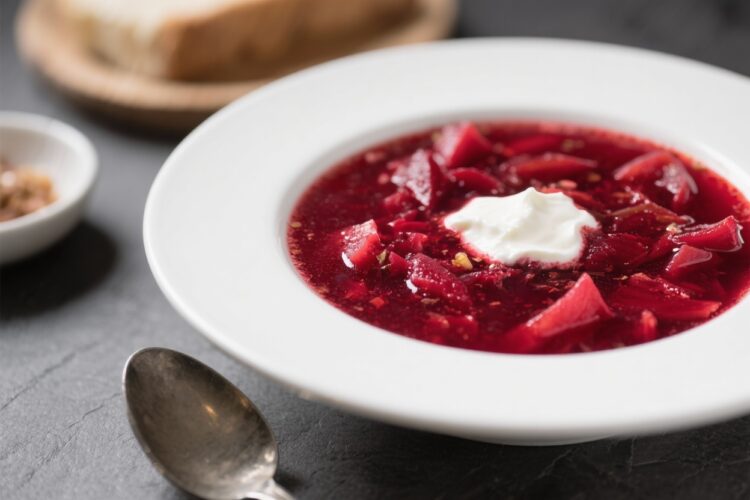
Borscht is one of those soups that feels like a warm hug. It’s vibrant, savory, and just a little bit tangy, with a color that always makes the table pop. The beets give it sweetness, while cabbage, carrots, and potatoes add body and comfort.
A dollop of sour cream at the end ties everything together and makes it silky. Whether you’re cooking for a cozy weeknight or a special meal, this Ukrainian classic always satisfies.
Why This Recipe Works
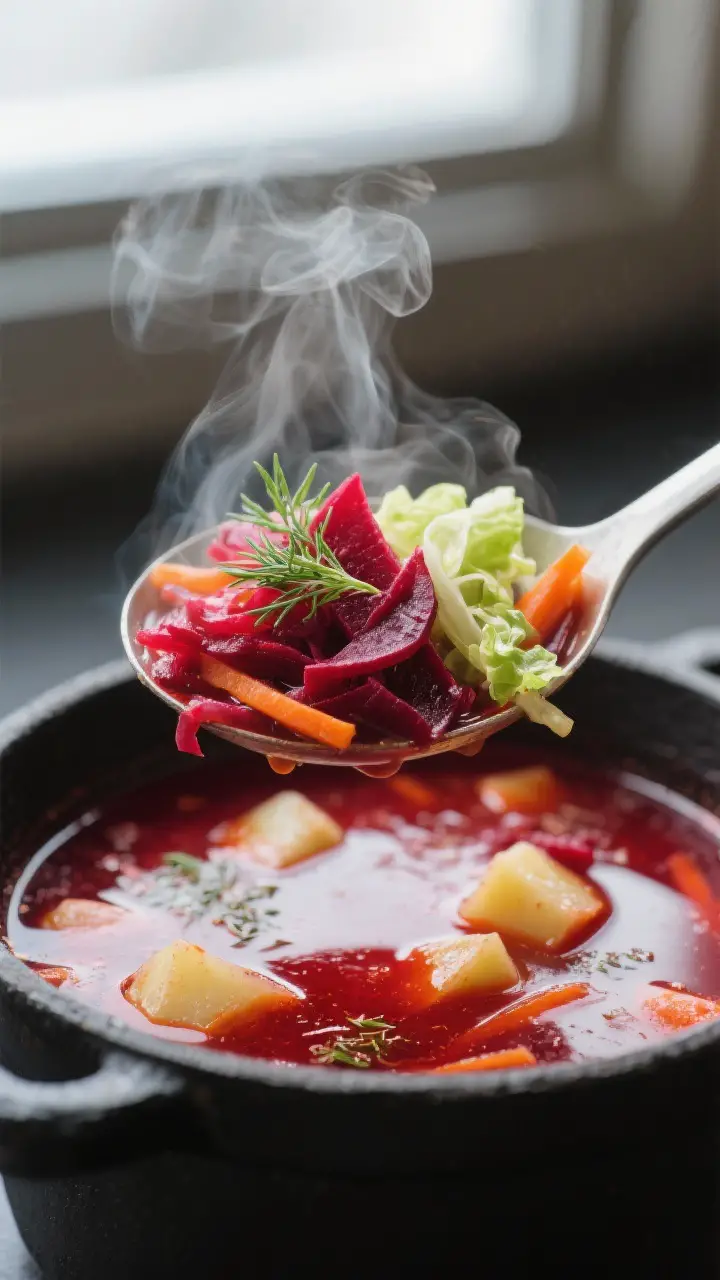
This version keeps the heart of traditional Ukrainian borscht while making it accessible for home cooks. The soup builds layers of flavor: first from sautéed aromatics, then from beets and carrots, and finally from a slow simmer with stock and cabbage.
A touch of vinegar or lemon balances the natural sweetness of beets. Fresh dill and garlic added at the end brighten the entire pot. The result is a soup that’s hearty yet light, with just the right tang.
Shopping List
- Beets (4 medium), peeled and grated or finely diced
- Carrots (2 medium), peeled and grated
- Yellow onion (1 large), finely chopped
- Potatoes (2 medium), peeled and diced
- Green cabbage (2–3 cups), thinly shredded
- Garlic (3–4 cloves), minced
- Tomato paste (2 tablespoons)
- Crushed or diced tomatoes (1 cup, optional but recommended)
- Beef or vegetable stock (6–7 cups)
- Bay leaves (2)
- White vinegar or lemon juice (1–2 tablespoons)
- Sugar (1 teaspoon, optional, to balance acidity)
- Neutral oil or butter (2–3 tablespoons)
- Fresh dill (a small bunch), chopped
- Sour cream (for serving)
- Salt and black pepper (to taste)
- Optional add-ins: cooked shredded beef or chicken, a can of white beans, or a small beet greens bundle (chopped)
How to Make It
- Prep the vegetables: Peel and grate the beets and carrots.
Chop the onion, dice the potatoes, and shred the cabbage. Mince the garlic. Keep everything in separate bowls for easy cooking.
- Sweat the aromatics: In a large pot, warm the oil over medium heat.
Add the onion with a pinch of salt and cook until soft and translucent, about 5 minutes.
- Build the beet base: Add grated beets and carrots. Cook, stirring often, for 6–8 minutes. Stir in tomato paste and cook for 1–2 minutes to caramelize slightly.
- Add tomatoes and stock: Pour in crushed tomatoes (if using), then add the stock and bay leaves.
Bring to a gentle boil.
- Simmer the potatoes: Add diced potatoes. Reduce heat to a simmer and cook for 10 minutes.
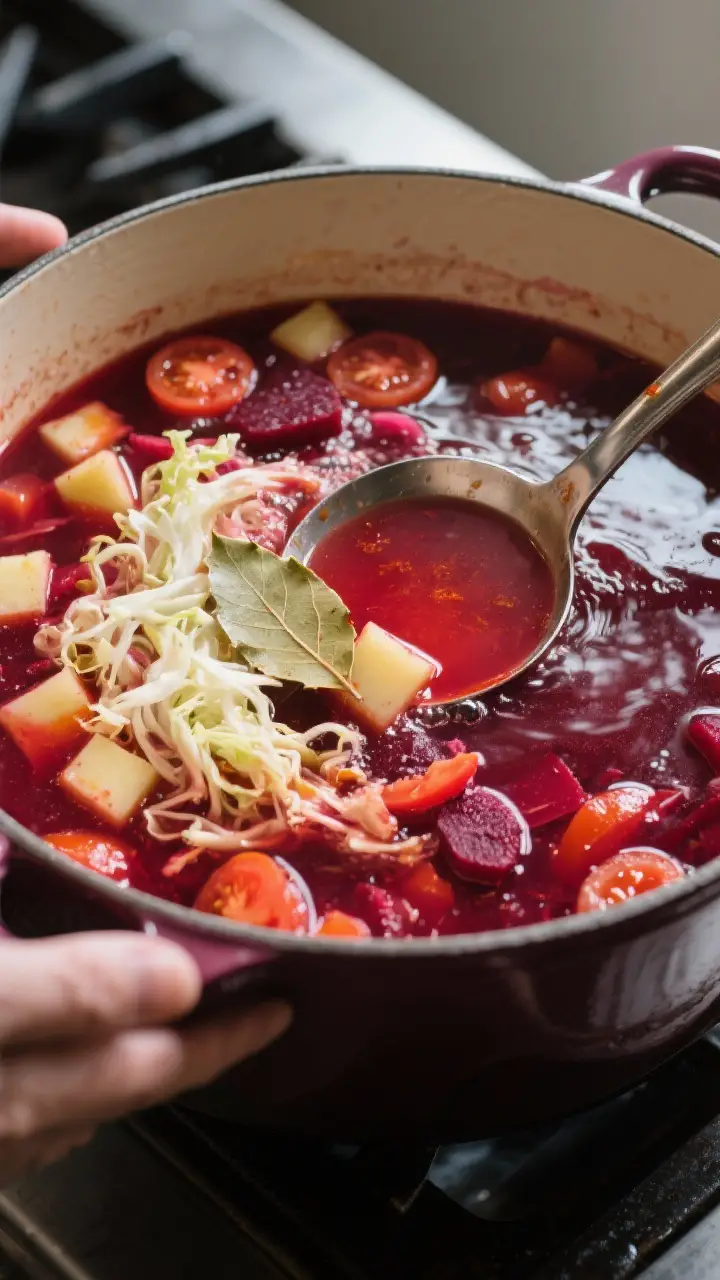
- Stir in the cabbage: Add shredded cabbage and continue simmering for another 10–15 minutes, until all the vegetables are tender but not mushy.
- Finish with garlic and acidity: Add minced garlic, vinegar or lemon juice, and sugar if needed. Taste and adjust seasoning with salt and pepper.
The flavor should be bright and well-balanced.
- Add protein or beans (optional): If using shredded meat or beans, stir them in and warm through for 3–5 minutes.
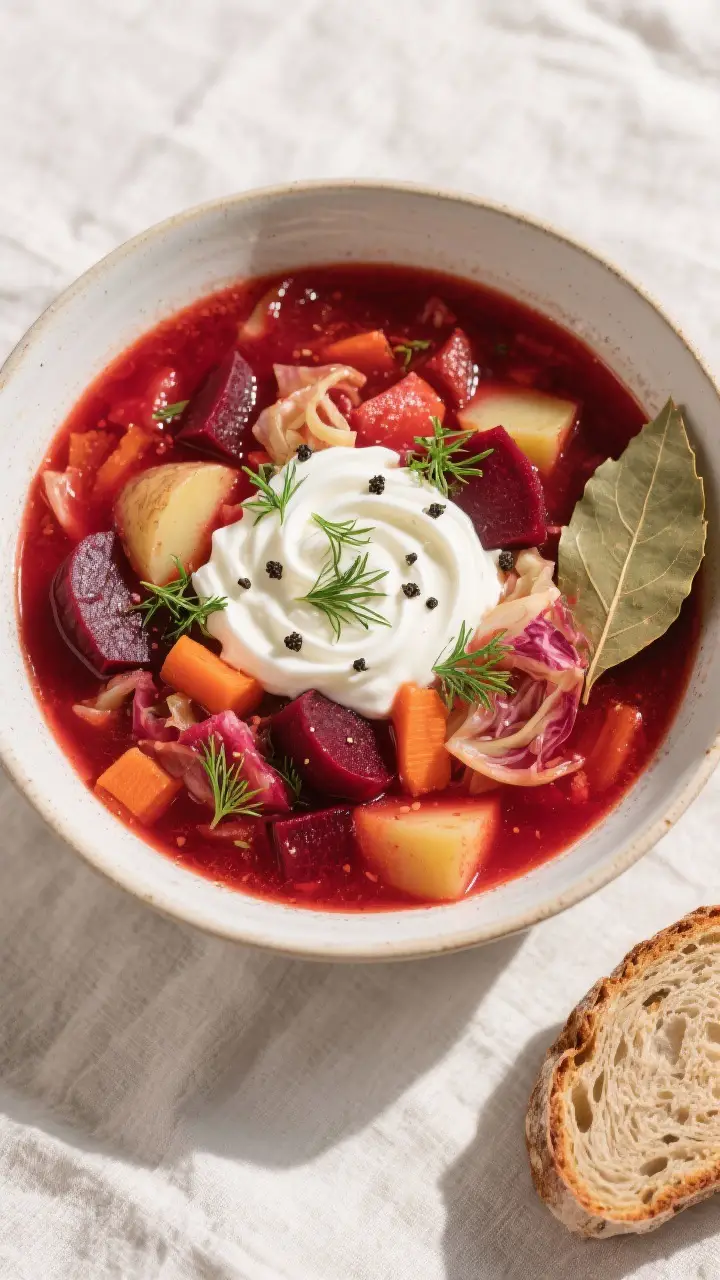
- Rest and garnish: Turn off the heat and let the soup rest for 10 minutes. Stir in chopped dill. Serve hot with a generous spoonful of sour cream.
Keeping It Fresh
Borscht actually tastes better the next day as the flavors meld.
Let it cool, then store it in an airtight container in the fridge for up to 4 days. Reheat gently on the stove, adding a splash of water or stock if it thickens. For longer storage, portion into freezer-safe containers and freeze for up to 3 months. Add sour cream only when serving; don’t freeze the soup with dairy mixed in.
Why This is Good for You
Beets are rich in fiber, folate, and antioxidants that support heart health.
Carrots, cabbage, and potatoes add vitamins, minerals, and steady energy. If you use vegetable stock and skip the meat, it’s a nourishing vegetarian option. The soup is satisfying without being heavy, especially when you keep the sour cream to a moderate dollop. It’s a balanced bowl: plenty of vegetables, some carbs from potatoes, and optional protein from beans or meat.
Common Mistakes to Avoid
- Overcooking the vegetables: Beets and cabbage should be tender, not limp.
Keep the simmer gentle and watch the timing.
- Skipping the acidity: Without vinegar or lemon, borscht can taste flat. A small splash at the end brightens everything.
- Adding sour cream too early: Stirring sour cream into the pot can cause splitting. Add it to individual bowls.
- Not salting in stages: Season the onions, then the simmering soup, and finally adjust at the end.
It brings out the vegetables’ natural sweetness.
- Forgetting fresh herbs: Dill adds signature flavor. Parsley works in a pinch, but dill makes it taste like classic borscht.
Alternatives
- Vegetarian and vegan: Use vegetable stock and skip the sour cream. For creaminess, use a plant-based yogurt or cashew cream when serving.
- Meaty version: Add shredded cooked beef or short ribs.
You can also simmer the soup with a beef bone for a richer broth.
- Bean boost: White beans or kidney beans add protein and make it more filling without meat.
- Different tang: Swap vinegar for lemon juice or a spoonful of sauerkraut brine for extra depth.
- Spice tweak: A pinch of smoked paprika or caraway seeds can add a new dimension while staying close to tradition.
FAQ
Can I use canned beets?
You can, but fresh beets taste brighter and hold texture better. If using canned, drain well and add them later in the simmer so they don’t break down.
What kind of stock is best?
Beef stock delivers a classic savory base, while vegetable stock keeps it lighter and vegetarian. Choose low-sodium so you can control the seasoning.
How do I keep the color vibrant?
Don’t overcook the beets, and add your acidic ingredient near the end.
Acid helps preserve that vivid ruby color.
Can I make it in a slow cooker?
Yes. Sauté onions, beets, carrots, and tomato paste on the stovetop first, then transfer to the slow cooker with stock, potatoes, and bay leaves. Cook on Low for 6–7 hours, add cabbage for the last hour, then finish with garlic, acid, dill, and serve with sour cream.
Is borscht served hot or cold?
Traditionally, Ukrainian red borscht is served hot.
There are chilled beet soups in other traditions, but this version shines when warmed and topped with sour cream.
What should I serve with it?
Rye bread or garlic bread is perfect. A simple cucumber and dill salad also complements the soup’s flavors.
Can I grate instead of dice the beets?
Absolutely. Grating helps them cook faster and gives a cohesive texture.
If you prefer chunkier bites, dice them small and simmer a bit longer.
How do I reduce the sweetness?
Increase acidity slightly with vinegar or lemon, add more salt gradually, and make sure the soup is well-seasoned. A small pinch of black pepper also balances sweetness.
Can I use red cabbage?
You can, but it may darken the soup. Green cabbage keeps the color bright and the flavor classic.
What’s the best sour cream to use?
Use a full-fat sour cream for a rich, smooth finish.
If you want something lighter, Greek yogurt works well too.
Wrapping Up
Borscht is simple to make, deeply comforting, and easy to adapt. With bright beets, tender vegetables, and a touch of dill and sour cream, it’s a bowl that feels both homey and special. Make a big pot, enjoy it today, and love it even more tomorrow.
This Ukrainian classic deserves a spot in your regular rotation.