
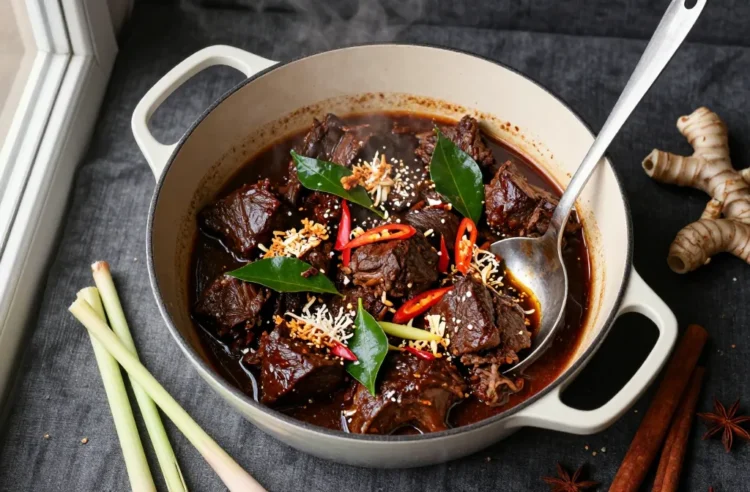
Cooking for a crowd and want a guaranteed mic-drop moment? Make beef rendang, the slow-cooked Indonesian stunner that gets even better after a night in the fridge. It’s ultra-savory, naturally low-carb, and feeds twenty without making you sweat. Bonus: your kitchen will smell like a tropical spice market, and yes—you’ll be the hero.
1. Build A Flavor Base That Slaps
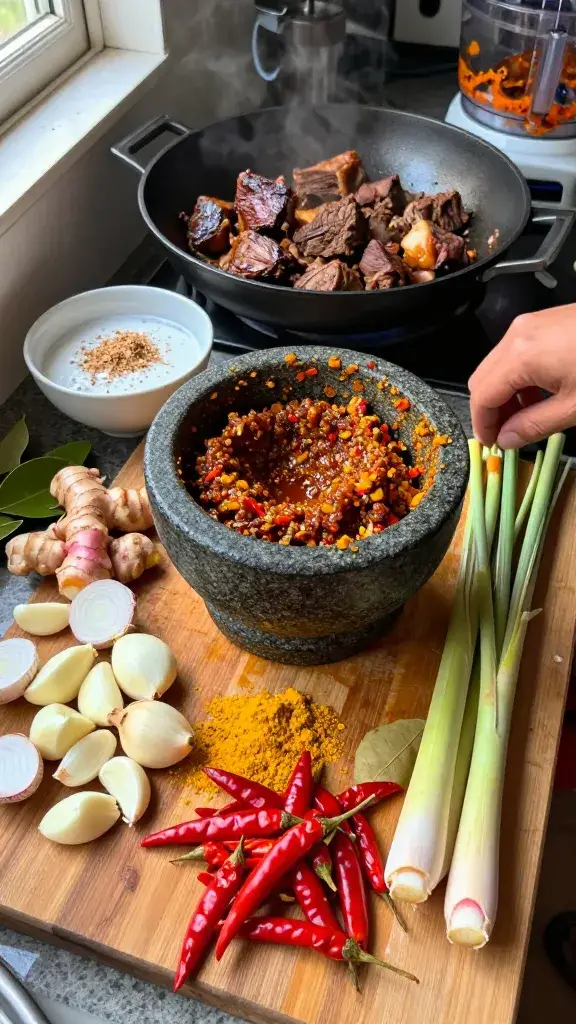
Rendang wins or loses in the spice paste. Get this part right and everything else feels easy. You’re aiming for a deep, aromatic base that clings to the beef and reduces into glossy, toasty perfection.
Core Aromatics (For 20 Servings):
- Shallots (15–18 large) and garlic (20 cloves) for sweetness and backbone
- Fresh ginger (1/2 cup chopped), galangal (1/2 cup), and turmeric (1/4 cup) for warm heat and color
- Red chilies (12–16, seeded to taste) for glow—not just fire
- Lemongrass (6 stalks, tender inner parts) for bright citrus lift
- Kaffir lime leaves (12–16) and lime zest (2 limes) for perfume
Spices That Matter:
- Coriander seeds (3 tbsp), cumin seeds (2 tbsp), and black pepper (2 tsp), lightly toasted and ground
- Cinnamon sticks (3), whole cloves (12), star anise (6)
- Salt (start with 5 tbsp kosher), palm sugar or keto-friendly sweetener (2–3 tbsp) to balance
Blend the wet aromatics with a splash of coconut milk until smooth. Toast the dry spices in a dry pan until fragrant, then stir into the paste. You want a bold, concentrated mix because it needs to season a mountain of beef. The payoff? A sauce with layers, not just heat.
Use this base anytime you want a luxe, restaurant-level result without restaurant-level stress.
2. Choose The Right Cut And Cut It Right
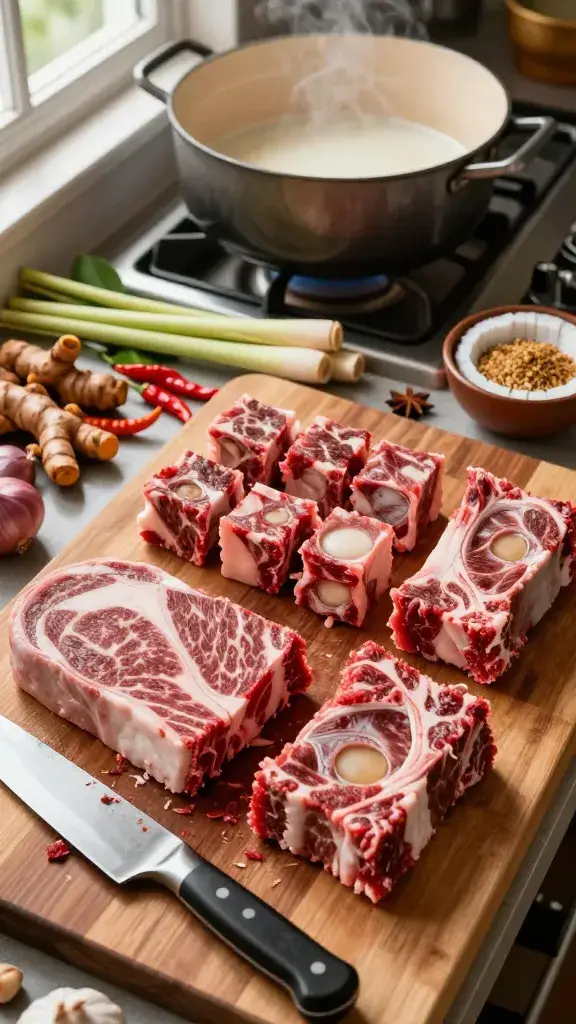
You need beef that loves long, gentle heat. Think fatty, collagen-rich cuts that surrender into tender chunks while staying juicy. Lean meat turns sulky and dry—don’t do it dirty.
Best Cuts For Rendang (Budget To Bougie):
- Chuck roast or blade roast (top pick for flavor and marbling)
- Beef shin/shank (incredible gelatinous texture)
- Short rib (boneless works great, bone-in is extra luxe for stocky depth)
Plan about 10–11 pounds (4.5–5 kg) total for 20 hearty servings. Trim only the hard, waxy fat and any silverskin. Cut into 1.5–2 inch cubes—large enough to hold shape during a long braise.
Why Size Matters:
- Big cubes prevent overcooking while you reduce the sauce
- Even pieces cook evenly—shocker, I know
- Chunky bites feel more celebratory for a crowd
These cuts shine in batch cooking, so keep them on your “feeds-a-crowd” list for stews and chilis too.
3. Master The Slow Simmer (And The Magical Oil Split)
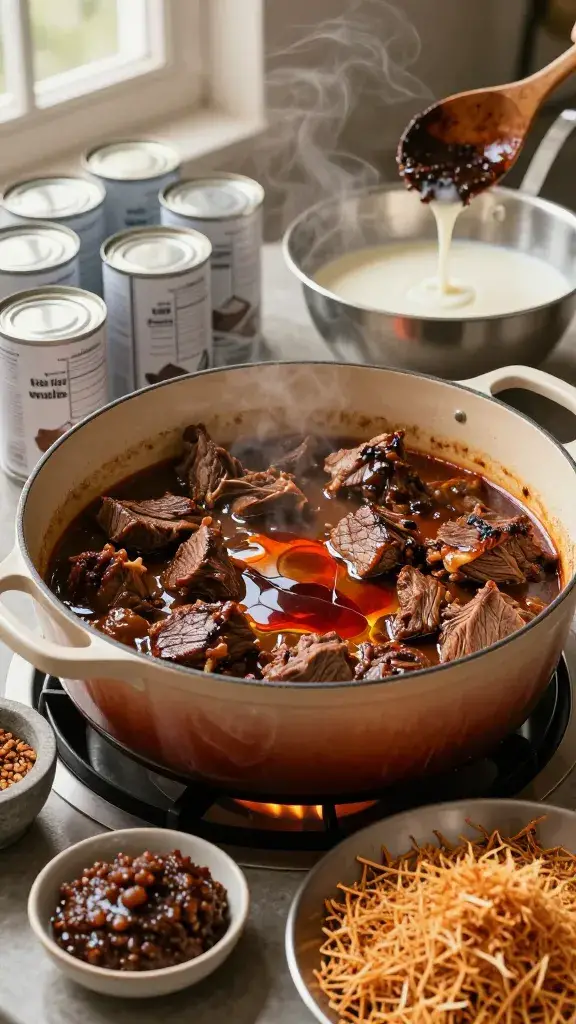
The cook is where rendang transforms from “nice curry” to “jaw-drop braise.” Low, slow heat reduces coconut milk, caramelizes the paste, and “splits” the oil—a sign you nailed it. Don’t rush; you’re building gold here.
Liquid & Fat, The Low-Carb Way:
- Full-fat coconut milk (8 cans, 13–14 oz each) or 1.5 gallons fresh coconut milk if you’re fancy
- Unsweetened shredded coconut (2 cups), dry-toasted until golden, then blitzed into kerisik (nutty paste)
- Optional: 2–3 tbsp tamarind paste for tangy balance
Step-By-Step Flow:
- Sear the beef in batches in a large heavy pot until browned. Don’t crowd the pan—crispy edges = flavor.
- Sauté the spice paste in the rendered fat for 5–7 minutes until it darkens slightly and smells intense.
- Add coconut milk, kaffir leaves, lemongrass, cinnamon, star anise, cloves. Nestle in the browned beef.
- Simmer uncovered on low for 2.5–3.5 hours, stirring every 15 minutes toward the end to prevent catching.
- Stir in kerisik and reduce until the oil separates and the sauce turns deep brown and clingy.
- Adjust salt and sweetness. Add a squeeze of lime for brightness if needed.
Target a thick, almost dry braise—not a soupy curry. That stickiness? That’s umami glue, and it coats every bite. Perfect for make-ahead parties and meal prep, IMO.
Key Signs You’re There:
- Oil split: You see glistening fat pooling around dark, toasty sauce.
- Color shift: From sunset orange to deep mahogany.
- Texture: Beef is tender but not shredded; sauce clings and refuses to drip.
This technique works beautifully for other coconut braises too—think dry-ish, punchy finishes that don’t drown the meat.
4. Make-Ahead Magic: Why Day Two Tastes Better
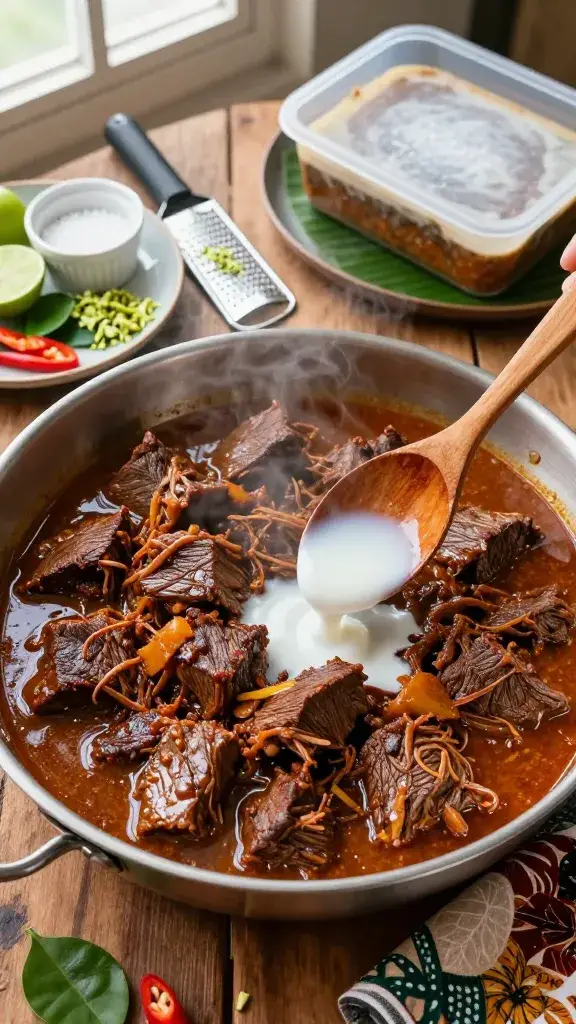
Rendang practically begs you to cook it ahead. Aromatics mellow, spices marry, and the sauce thickens into pure velvet after chilling. Day-two rendang tastes like you hired a private chef—without paying them.
Chill, Reheat, Repeat:
- Cool completely, then refrigerate in shallow containers for 12–24 hours.
- Skim or stir in the solidified coconut fat on top—flavor lives there.
- Rewarm gently over low heat with a splash of coconut milk or water to loosen.
- Taste and finish with fresh lime zest, a pinch more salt, or a kiss of sweetener if needed.
Why It Improves:
- Spices diffuse evenly into the meat overnight—science and sorcery teaming up
- Gelatin sets, then melts on reheating for luxurious mouthfeel
- Moisture redistribution keeps every bite juicy
Hosting a big group? Cook two days early and free your party day for vibes, not panic. FYI, it freezes like a dream for up to 3 months.
Low-Carb Serving Ideas For 20:
- Coconut-lime cauliflower rice: Toast riced cauliflower in coconut oil, finish with lime and coriander.
- Garlicky long beans: Quick stir-fry with garlic, chili, and a splash of fish sauce.
- Shaved cucumber salad: Rice vinegar, a pinch of sweetener, sesame, fresh herbs.
Batch-friendly, low-carb, and zero flavor FOMO—yes, you can have it all.
5. Crowd-Pleaser Logistics (Scaling, Swaps, And Serving Without Chaos)
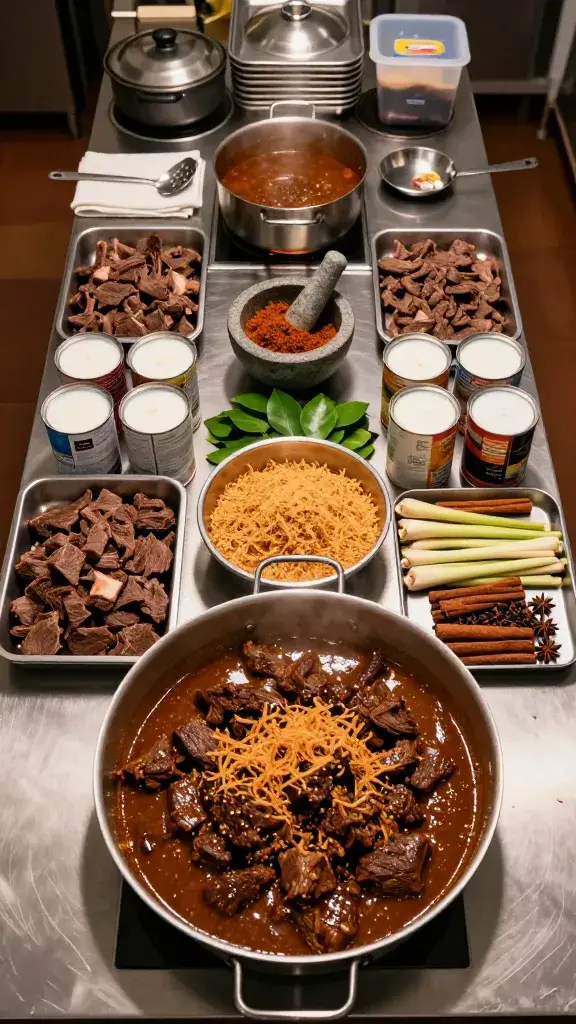
Feeding twenty sounds scary until you systemize it. A few strategic swaps keep it low-carb and accessible. Then you serve it hot, fast, and without juggling ten pans like a kitchen octopus.
Quantities At A Glance (For ~20 Servings):
- Beef: 10–11 lb (4.5–5 kg)
- Coconut milk: 8 cans (13–14 oz each)
- Spice paste: from Section 1 quantities
- Kerisik: 2 cups shredded coconut, toasted and blended
- Aromatics whole: 12–16 kaffir leaves, 6 lemongrass, 3 cinnamon sticks, 6 star anise, 12 cloves
Swaps & Substitutions:
- Can’t find galangal? Sub 2/3 the amount ginger + a touch of lime zest.
- No palm sugar? Use allulose or erythritol + a drizzle of coconut aminos.
- Kaffir leaves MIA? Double lime zest and add a bay leaf for structure.
- Dairy-free? It already is. High-five.
Serving Without Stress:
- Hold hot in a slow cooker on “warm” with a splash of coconut milk.
- Set up a self-serve station: rendang, cauliflower rice, crunchy cucumbers, chili sambal.
- Garnish in bulk: fried shallots, torn herbs (cilantro, Thai basil), lime wedges.
Troubleshooting Fast:
- Too wet? Increase heat and stir until thick and glossy.
- Too salty? Add coconut milk and a squeeze of lime; simmer to balance.
- Too bitter/toasty? A pinch of sweetener and extra kerisik smooths it out.
- Not enough heat? Stir in chili crisp or sambal at the end.
This blueprint works for potlucks, holiday spreads, and “I fed 20 without crying” bragging rights—seriously.
Ready to turn your kitchen into a flavor vacation? Make the rendang, stash it overnight, and watch it glow up on day two. You’ll feed a crowd, stay low-carb, and earn repeat-guest status by default. Go on—beef destiny awaits.