
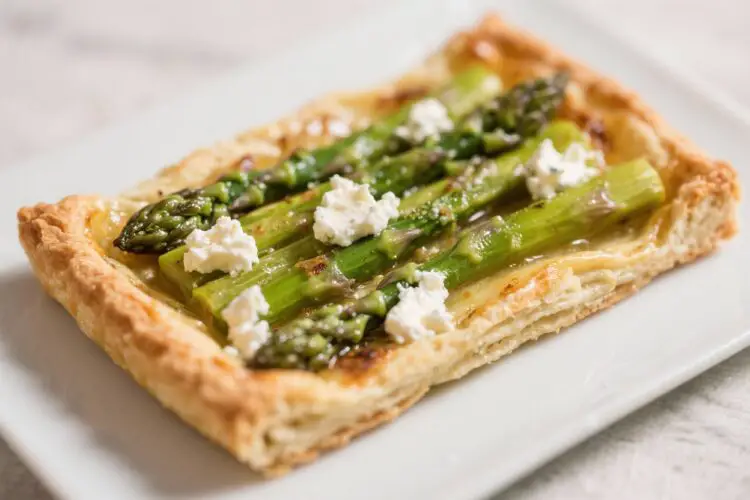
An asparagus and goat cheese tart feels special without being fussy. Crisp, buttery pastry holds creamy, tangy cheese and tender asparagus, making it a great choice for brunch, lunch, or a light dinner. You can serve it warm or at room temperature, so it’s easy to time around guests.
The flavors are bright and simple, and the whole thing looks like it took more effort than it did. If you’re new to tarts, this is a forgiving place to start.
Why This Recipe Works
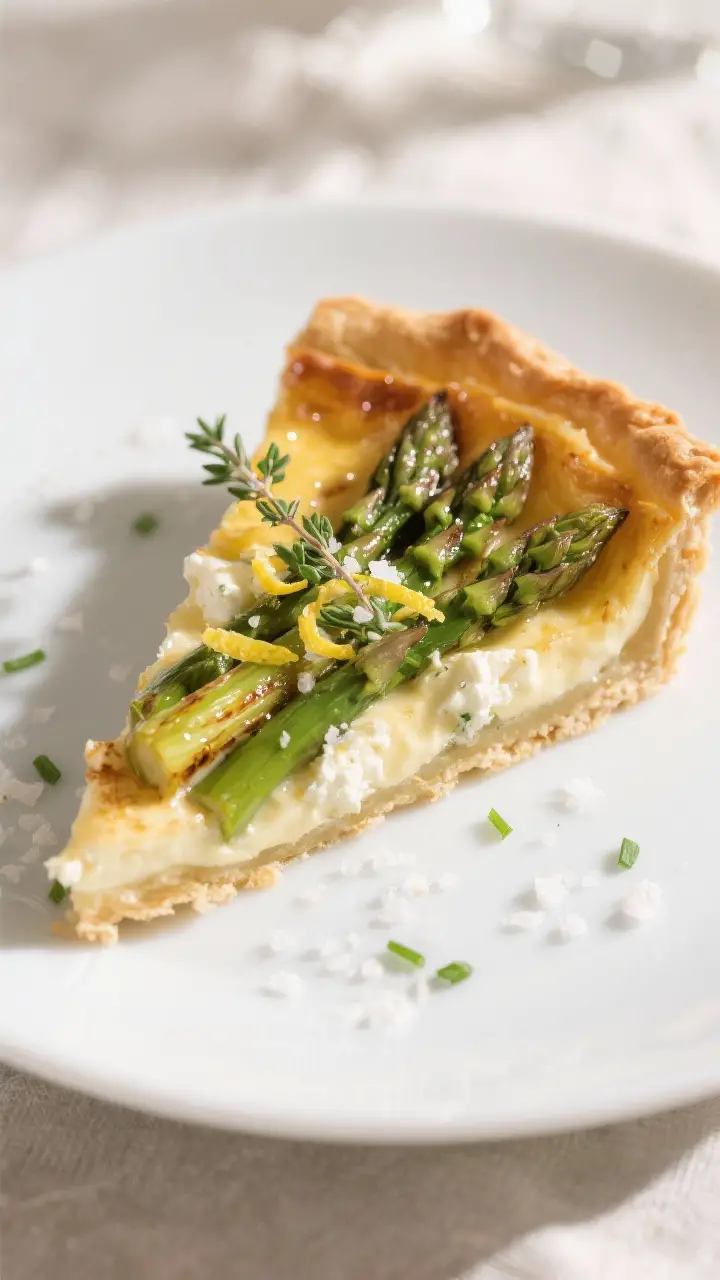
This tart pairs the mild sweetness of asparagus with the tang and creaminess of goat cheese, creating a balanced flavor that doesn’t need heavy seasoning. Store-bought puff pastry or pie dough keeps the process quick while still delivering a flaky, golden base.
A simple custard—just eggs and a splash of cream—sets the filling and allows the cheese to melt into every bite. Lemon zest and fresh herbs lift the flavors without overpowering the asparagus. The result is a dish that tastes fresh, looks polished, and comes together with minimal stress.
Shopping List
- Puff pastry (1 sheet, thawed) or pie dough for a 9–10 inch tart
- Goat cheese (soft, 4–6 ounces)
- Asparagus (1 bunch; medium-thin spears work best)
- Eggs (3 large)
- Heavy cream or half-and-half (1/2 cup)
- Lemon (zest of 1; optional squeeze of juice)
- Fresh herbs (thyme, chives, or parsley)
- Garlic (1 clove, finely grated or minced)
- Olive oil (1–2 teaspoons)
- Parmesan (2 tablespoons, finely grated; optional)
- Salt and black pepper
- Flour (for dusting if using puff pastry)
- Egg wash (1 egg beaten with 1 teaspoon water; optional for glossy edges)
Step-by-Step Instructions
- Preheat the oven. Set to 400°F (200°C).
Place a rack in the middle. If using a metal tart pan, set it on a sheet pan for easy handling.
- Prep the asparagus. Snap off woody ends. If spears are thick, slice them in half lengthwise.
Pat dry to avoid soggy spots.
- Make the custard. In a bowl, whisk eggs, cream, garlic, lemon zest, 1/2 teaspoon salt, and a few grinds of pepper until smooth. Stir in 1 tablespoon chopped herbs. Add Parmesan if using.
- Prepare the pastry. For puff pastry, lightly flour your surface and roll to fit a 9×13-inch sheet pan or a 9–10 inch tart pan.
For pie dough, roll to about 1/8 inch thick. Fit it into the pan, trim excess, and prick the base with a fork.
- Blind bake (quick set for crispness). Line the pastry with parchment and fill with pie weights or dried beans. Bake for 10 minutes.
Remove weights and parchment, and bake 5 minutes more until just lightly golden. This helps keep the crust crisp.
- Layer the cheese. Crumble goat cheese over the warm crust in an even layer. Use the back of a spoon to gently spread some of it.
It doesn’t need to be perfectly smooth.
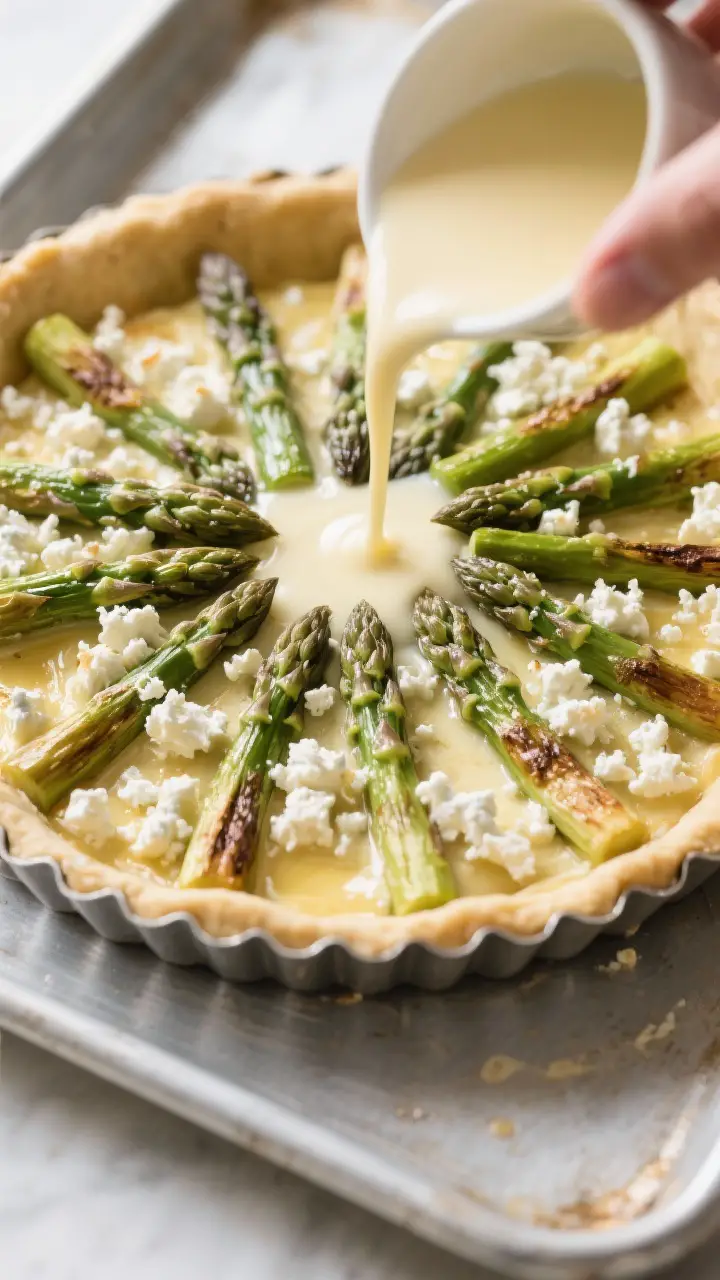
- Add asparagus. Arrange spears in neat rows or a spoke pattern. Drizzle with a little olive oil and sprinkle with a pinch of salt.
- Pour in the custard. Slowly pour it over the asparagus and cheese, letting it settle around the spears. Don’t overfill—leave a small rim at the top.
- Finish and bake. Brush exposed pastry edges with egg wash if you want a glossy finish.
Bake 22–28 minutes, until the filling is set in the center and the crust is deep golden. The tart should not jiggle in the middle.
- Rest and garnish. Cool on a rack for 10–15 minutes. Sprinkle with more herbs and a tiny squeeze of lemon juice for brightness.
Slice and serve warm or at room temperature.
Storage Instructions
- Refrigerate: Cool completely, then cover and store for up to 3 days.
- Reheat: Warm slices in a 350°F (175°C) oven for 10–12 minutes to revive crispness. Avoid the microwave if you can; it softens the crust.
- Freeze: Freeze tightly wrapped slices for up to 1 month. Reheat from frozen at 350°F (175°C) for 15–20 minutes.
Benefits of This Recipe
- Fast and flexible: Using ready-made pastry saves time without sacrificing flavor.
- Balanced flavors: Tangy goat cheese complements the sweet, grassy notes of asparagus.
- Light but satisfying: The custard adds richness without heaviness.
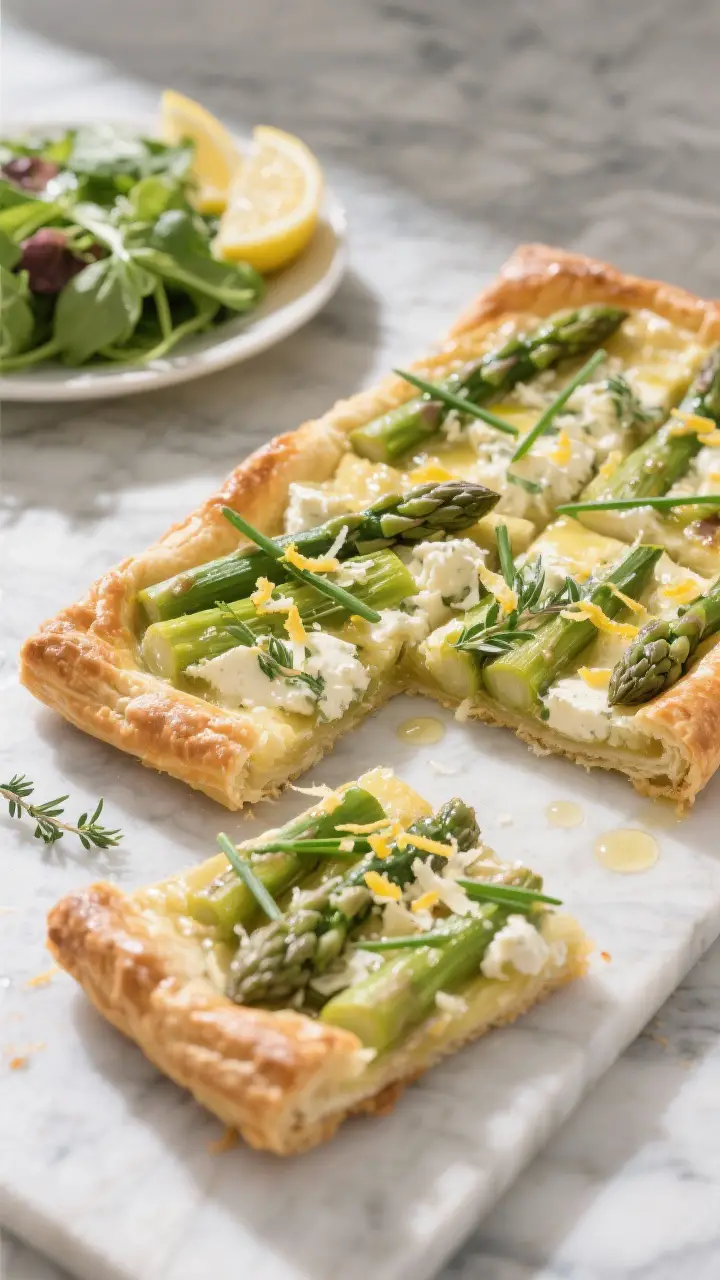
- Great presentation: The arranged spears make the tart look restaurant-worthy with little effort.
- Seasonal and adaptable: Works with spring asparagus but welcomes swaps depending on what’s fresh.
Common Mistakes to Avoid
- Skipping blind baking: This often leads to a soggy bottom.
Pre-baking creates a barrier.
- Overfilling the custard: Overflow can burn and make the crust gummy. Leave a small border.
- Using wet asparagus: Excess moisture dulls the texture. Pat the spears dry.
- Baking at too low a temperature: The crust won’t puff or brown properly.
Stick to 400°F (200°C).
- Not seasoning the custard: A little salt, pepper, and zest make a big difference.
Alternatives
- Cheese swaps: Try ricotta (well-drained) for a milder taste, feta for a brinier edge, or a mix of goat cheese and cream cheese for extra creaminess.
- Vegetable variations: Use thinly sliced zucchini, cherry tomatoes, leeks, or blanched broccolini. Keep moisture in check.
- Herb choices: Dill, basil, or tarragon pair well with asparagus. Add them after baking for fresh flavor.
- Crust options: Shortcrust pastry gives a sturdier, more buttery base.
Gluten-free pie crust works too; just be gentle when rolling.
- Dairy-free tweaks: Use a plant-based cream and a dairy-free soft cheese. Texture may vary, but it’s still tasty.
- Protein add-ins: Scatter crisped pancetta, smoked salmon (after baking), or flaked hot-smoked trout for a heartier tart.
FAQ
Do I need to blanch the asparagus first?
For thin or medium spears, no. They cook through in the oven.
If your asparagus is very thick, blanch for 1 minute in salted water, drain, and pat dry before assembling.
Can I make this ahead?
Yes. Bake the tart, cool, and refrigerate. Reheat at 350°F (175°C) until warmed through.
You can also blind bake the crust and prep the filling a few hours ahead, then assemble and bake right before serving.
What if I don’t have a tart pan?
Use a quarter sheet pan or a standard pie dish. With puff pastry, you can fold the edges to make a rustic border right on a lined sheet pan.
How do I know when the tart is done?
The center should be set with no wobble, the edges golden, and the asparagus tender. If the crust browns too quickly, tent loosely with foil for the last few minutes.
Can I use milk instead of cream?
Yes, but use whole milk for better texture.
The filling will be slightly less rich and may take a few extra minutes to set.
What’s the best goat cheese for this?
A soft, fresh chèvre works best. It melts smoothly and balances the asparagus. Avoid aged, very firm goat cheeses for this recipe.
How can I add more lemon flavor?
Use extra zest in the custard and finish the tart with a light squeeze of juice and a sprinkle of flaky salt.
You can also add a teaspoon of lemony herbs like chopped tarragon.
Final Thoughts
An asparagus and goat cheese tart is a dependable go-to when you want something fresh, pretty, and satisfying. It’s easy enough for a weeknight and elegant enough for guests. With a few simple steps—blind bake, season well, and don’t overfill—you’ll get a crisp crust and a creamy, bright filling every time.
Serve it with a green salad or a bowl of soup, and you’ve got a complete, crowd-pleasing meal.