
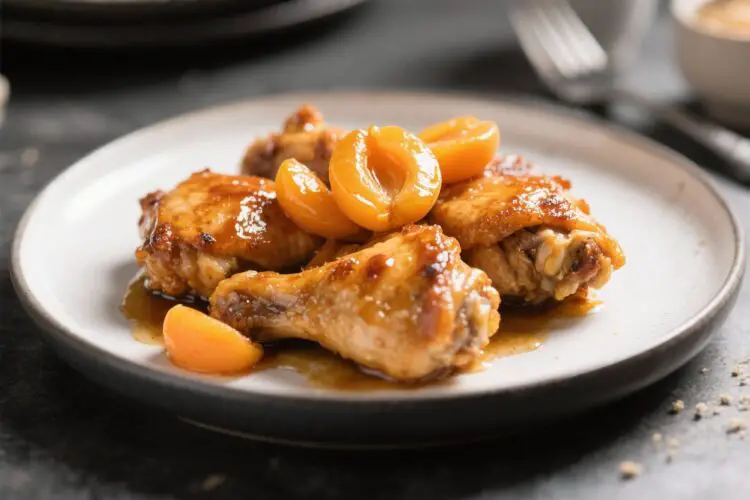
Juicy chicken thighs coated in a glossy apricot glaze hit all the right notes: sweet, tangy, and a little savory. This is the kind of recipe that looks impressive but takes very little effort. It’s perfect for a busy weeknight, yet special enough for guests.
The glaze caramelizes in the oven, giving you sticky edges and tender meat. Pair it with rice, couscous, or a crisp salad, and dinner is done.
Why This Recipe Works
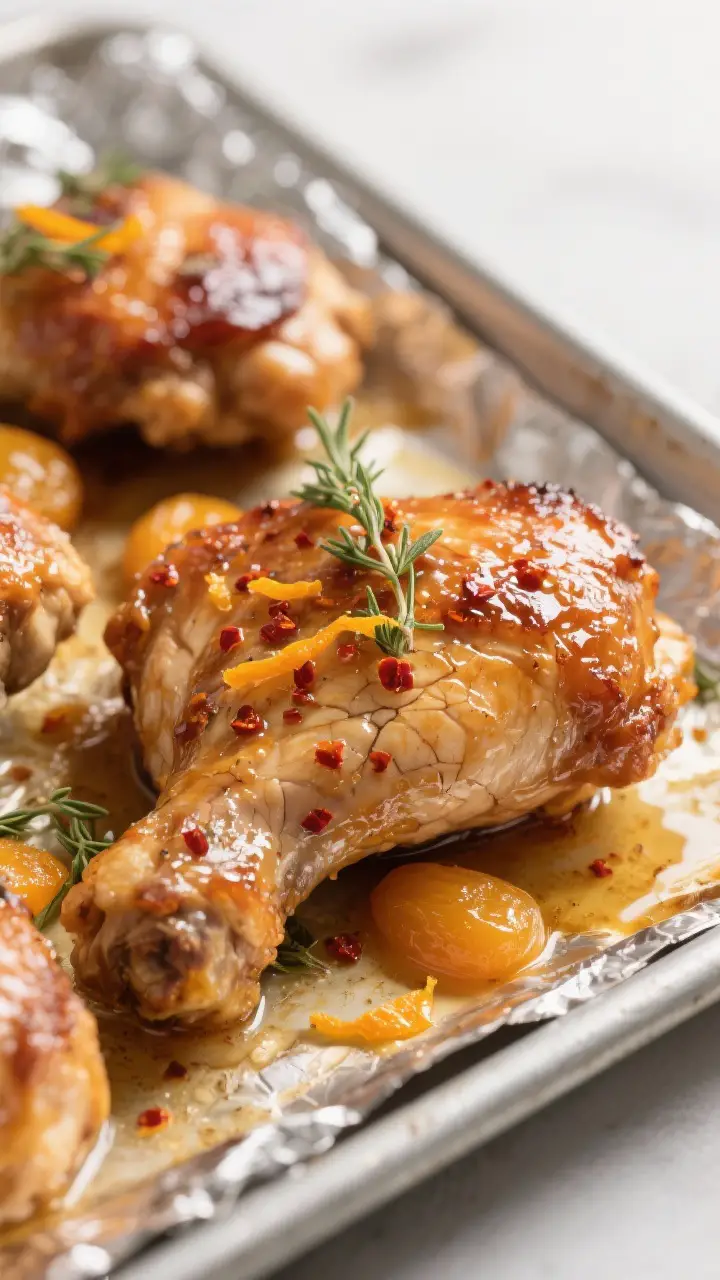
The secret is in the balance of flavors. Apricot preserves bring natural sweetness and a fruity backbone, while Dijon mustard cuts through with gentle heat and tang.
Soy sauce and garlic add savory depth, and a splash of vinegar brightens everything at the end. Using chicken thighs keeps the meat juicy and forgiving, even if it cooks a few minutes longer. A quick broil at the end gives that irresistible sticky finish.
Shopping List
- Bone-in, skin-on chicken thighs (6 to 8 pieces, about 2 to 2.5 pounds)
- Apricot preserves (about 3/4 cup)
- Dijon mustard (2 tablespoons)
- Soy sauce (1 tablespoon; use low-sodium if preferred)
- Apple cider vinegar (1 tablespoon)
- Garlic (3 cloves, minced)
- Fresh ginger (1 teaspoon grated; optional but recommended)
- Red pepper flakes (1/2 teaspoon; adjust to taste)
- Olive oil (1 tablespoon)
- Kosher salt and black pepper
- Fresh thyme or parsley (for garnish; optional)
- Orange zest (1 teaspoon; optional for extra citrus brightness)
How to Make It
- Preheat and prepare the pan: Heat your oven to 400°F (200°C).
Line a rimmed baking sheet or a large oven-safe skillet with foil for easy cleanup. Lightly oil the foil or pan.
- Pat the chicken dry: Use paper towels to dry the chicken thighs well. Dry skin equals crispier results. Season both sides with salt and pepper.
- Mix the glaze: In a bowl, combine apricot preserves, Dijon mustard, soy sauce, apple cider vinegar, minced garlic, grated ginger, red pepper flakes, and olive oil.
Stir until smooth. If the preserves are very thick, warm them for 10–15 seconds in the microwave to loosen.
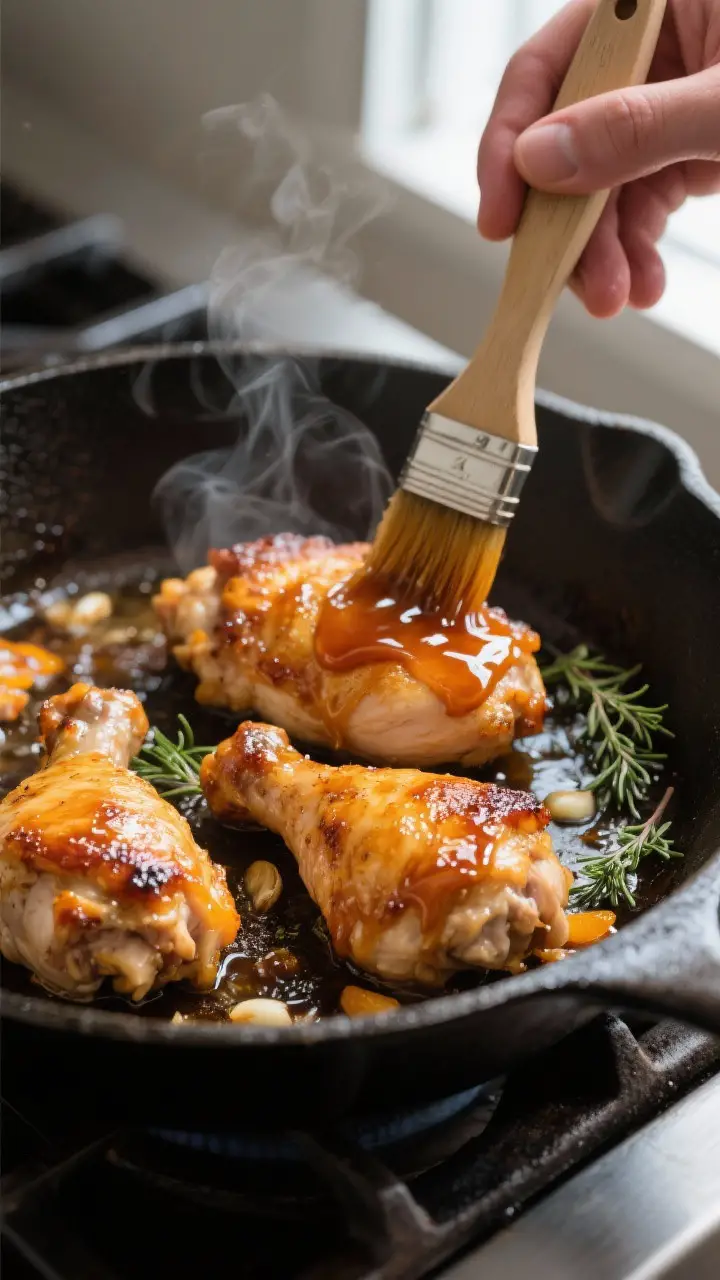
- Coat the chicken: Arrange the thighs skin-side up on the pan. Brush about half the glaze over the chicken, making sure to get under the edges of the skin without dislodging it.
- Roast: Place the pan on the middle rack and roast for 20 minutes.
The chicken will start to render fat and the glaze will set.
- Baste and continue: Remove the pan, brush the remaining glaze over the thighs, and return to the oven for another 15–20 minutes, until the skin looks glossy and the internal temperature reaches 175°F in the thickest part.
- Optional broil: For extra caramelization, broil on high for 1–3 minutes. Watch closely to avoid burning—sugary glazes can go from perfect to scorched fast.
- Rest and finish: Let the chicken rest for 5 minutes. Sprinkle with fresh thyme or parsley and a little orange zest if you like.
Spoon any pan juices over the top.
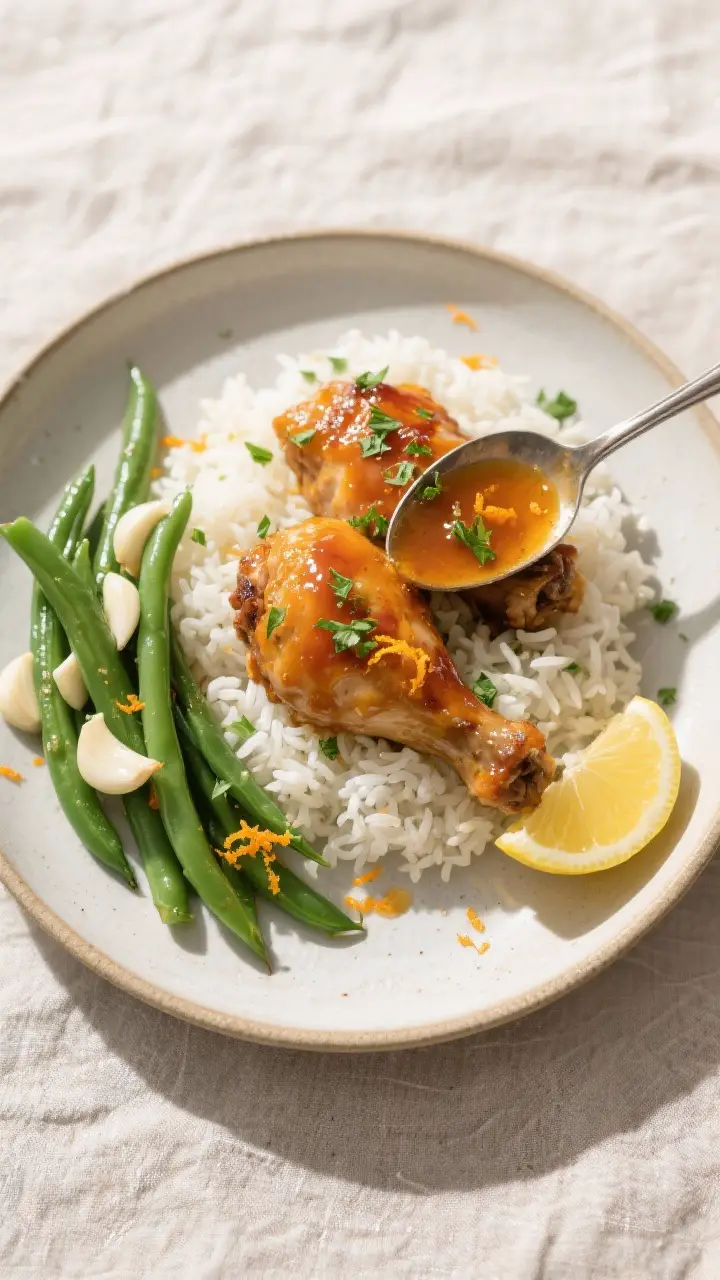
- Serve: Pair with jasmine rice, buttered couscous, or garlicky green beans. A crunchy slaw also works well against the sweet glaze.
How to Store
Cool leftovers to room temperature, then transfer to an airtight container. Refrigerate for up to 4 days.
Reheat gently in a 300°F oven until warm, about 10–15 minutes, or microwave in short bursts. The glaze may thicken in the fridge; a splash of water or orange juice helps loosen it when reheating. For longer storage, freeze for up to 2 months, wrapped well to prevent freezer burn.
Benefits of This Recipe
- Budget-friendly: Chicken thighs are affordable and flavorful.
- High payoff, low effort: The glaze comes together in minutes and delivers a complex, restaurant-style taste.
- Flexible: Works with bone-in or boneless thighs, and the glaze adapts well to pantry swaps.
- Make-ahead friendly: You can mix the glaze and marinate the chicken for a few hours for even deeper flavor.
- Kid-approved: The sweetness of apricot helps picky eaters warm up to it, especially with mild heat.
What Not to Do
- Don’t skip drying the chicken: Moisture on the surface prevents crisp skin and dilutes the glaze.
- Don’t bake at too low a temperature: You want the glaze to set and the skin to render; 400°F is a sweet spot.
- Don’t add all the glaze at once: Layering prevents burning and creates a sticky sheen.
- Don’t walk away during broiling: The sugars can burn quickly.
- Don’t under-season: A pinch of salt and pepper on the chicken itself makes a big difference.
Recipe Variations
- Boneless, skinless thighs: Reduce cooking time to about 18–22 minutes total.
Broil briefly to caramelize.
- Stone fruit swap: Use peach or mango preserves if apricot isn’t available. Keep the rest of the ratios the same.
- Herb-forward: Stir chopped rosemary or thyme into the glaze and add lemon zest instead of orange.
- Smoky heat: Add 1 teaspoon smoked paprika or a dash of chipotle powder to the glaze.
- Gluten-free: Use tamari or coconut aminos instead of soy sauce. Check that your Dijon is gluten-free.
- Grill option: Sear thighs skin-side down over medium heat until crisp, then flip and brush with glaze, grilling until cooked through.
Move to indirect heat if flare-ups happen.
- Sheet-pan dinner: Add chunks of red onion and sliced carrots to the pan, tossed with olive oil, salt, and pepper. They’ll roast in the chicken drippings.
FAQ
Can I use chicken breasts instead of thighs?
Yes, but adjust the cooking time. Boneless, skinless breasts need about 18–22 minutes at 400°F, depending on thickness.
Pull them at 160°F and rest to carry over to 165°F. Keep a close eye on the glaze to avoid burning, and consider adding a bit more oil to keep them moist.
What if I don’t have apricot preserves?
Peach, mango, or orange marmalade are great substitutes. You can also simmer dried apricots with a splash of water and a little honey until jammy, then blend.
The key is a thick, fruity base that can cling to the chicken.
How can I make the glaze less sweet?
Add more Dijon mustard, a bit of soy sauce, and an extra teaspoon of vinegar. A pinch of salt also helps balance sweetness. For heat, increase red pepper flakes or add a dash of hot sauce.
Do I need to marinate the chicken?
No.
The recipe works without marinating because the glaze is concentrated and bakes on. If you have time, marinate the chicken with half the glaze for 1–4 hours, then pat lightly dry and proceed. Save the remaining glaze for basting during cooking.
Can I make this ahead for a dinner party?
Yes.
Mix the glaze up to 3 days ahead. You can also roast the chicken until nearly done, cool, and refrigerate. Reheat at 350°F until hot, then brush with a fresh layer of glaze and broil briefly to restore the shine.
What sides go best with apricot glazed chicken?
Fluffy rice, couscous, or bulgur soak up the sauce nicely.
On the veggie side, try roasted broccoli, green beans, or a citrusy slaw. A simple arugula salad with lemon and olive oil adds a bright contrast.
How do I know the chicken is done?
Use an instant-read thermometer. Thighs are best at around 175°F for tenderness and juiciness.
The juices should run clear, and the skin should look glossy and browned at the edges.
Final Thoughts
Apricot Glazed Chicken Thighs deliver big flavor with little fuss. With a handful of pantry staples and a reliable bake-and-broil method, you get tender meat and a sticky, caramelized finish. It’s a weeknight standby that still feels special.
Keep the ingredients on hand, and you’ll always have a satisfying dinner ready to go.