
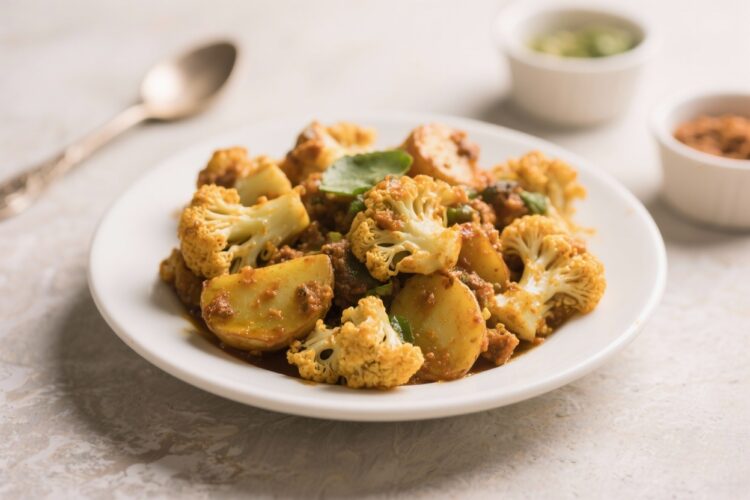
Aloo Gobi is one of those dishes that feels like a warm hug. It’s simple, homey, and incredibly satisfying without trying too hard. Tender potatoes and cauliflower soak up a mix of spices, creating a dry-style curry that’s full of flavor and great with roti, rice, or on its own.
This is a pantry-friendly recipe, and once you make it a couple of times, it becomes second nature. If you’re new to Indian cooking, this is a perfect starting point—straightforward, flexible, and absolutely delicious.
What Makes This Recipe So Good
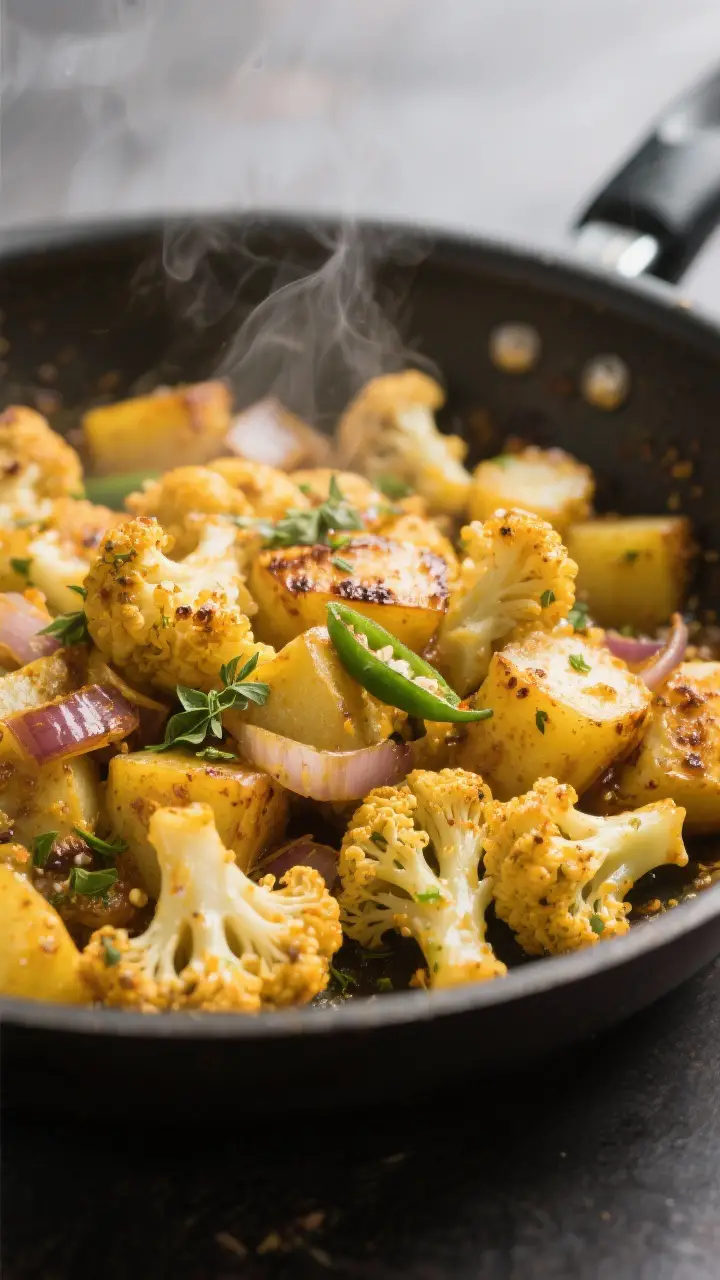
- Balanced spices, simple technique: You don’t need a ton of spices to get bold flavor. A few basics—turmeric, cumin, coriander—do the heavy lifting.
- Dry-style curry with great texture: The potatoes turn creamy inside while cauliflower keeps some bite.
No heavy sauce, just a flavorful coating.
- Everyday ingredients: Potatoes, cauliflower, onions, tomatoes, and a few spices. That’s pretty much it.
- Meal-prep friendly: Reheats well and works for lunch bowls, wraps, or alongside eggs the next day.
- Adaptable heat level: Keep it mild or dial it up with green chilies or extra red chili powder.
Shopping List
- Vegetables: 1 medium cauliflower (cut into small florets), 3 medium potatoes (Yukon Gold or red potatoes), 1 medium onion (finely chopped), 2 medium tomatoes (chopped) or 1/2 cup canned crushed tomatoes
- Aromatics: 1–2 green chilies (slit, optional), 1-inch piece ginger (grated), 3–4 garlic cloves (minced)
- Whole spices: 1 teaspoon cumin seeds, 1 bay leaf (optional)
- Ground spices: 1/2 teaspoon turmeric, 1 teaspoon ground coriander, 1 teaspoon ground cumin, 1/2–1 teaspoon red chili powder (to taste), 1/2 teaspoon garam masala, 1 teaspoon kasuri methi (dried fenugreek leaves, optional)
- Finishing: 1 tablespoon lemon juice, fresh cilantro for garnish
- Oil and salt: 2–3 tablespoons neutral oil (or ghee), salt to taste
Step-by-Step Instructions

- Prep the vegetables: Cut the cauliflower into small, even florets so they cook at the same rate. Peel and cube the potatoes into 1/2-inch pieces.
Rinse and pat dry to remove surface moisture.
- Optional quick pre-cook: To prevent mushy cauliflower, you can steam or microwave the florets for 2–3 minutes until slightly tender. Drain well. This step is helpful but not essential.
- Heat the oil: In a wide skillet or sauté pan, warm 2–3 tablespoons of oil over medium heat.
Add cumin seeds and the bay leaf. Let them sizzle for 30 seconds until fragrant.
- Sauté aromatics: Add chopped onion and a pinch of salt. Cook 5–6 minutes until soft and lightly golden.
Stir in garlic, ginger, and green chilies. Cook 1 minute until fragrant.
- Bloom the spices: Add turmeric, ground coriander, ground cumin, and chili powder. Stir for 30 seconds to toast the spices gently.
- Add tomatoes: Stir in the chopped tomatoes.
Cook 3–4 minutes until they break down and the oil starts to separate slightly. If using canned tomatoes, cook an extra minute to mellow the acidity.
- Potatoes first: Add the potatoes with 1/2 teaspoon salt. Stir to coat.
Cover and cook over medium-low heat for 6–8 minutes, stirring once or twice. If the pan gets dry, sprinkle in 1–2 tablespoons of water.
- Then the cauliflower: Add the cauliflower and another pinch of salt. Toss gently to coat in the masala.
Cover and cook 8–10 minutes, stirring every few minutes. Keep the heat medium-low so the spices don’t burn.
- Dry it out for flavor: Remove the lid and let any moisture cook off. Stir occasionally so the potatoes and cauliflower get a light, flavorful sear without breaking apart.
- Finish: Sprinkle garam masala and crushed kasuri methi.
Add lemon juice and adjust salt. Turn off the heat and rest for 2 minutes.
- Garnish and serve: Top with chopped cilantro. Serve with warm roti, naan, or steamed rice.
A dollop of yogurt or a squeeze of extra lemon is nice.
Keeping It Fresh
- Storage: Let it cool, then store in an airtight container for up to 4 days in the fridge.
- Reheating: Reheat in a skillet over medium heat with a teaspoon of oil or a splash of water. Avoid the microwave if you can—stovetop keeps the texture better.
- Freezing: It freezes fairly well for up to 1 month, though cauliflower softens a bit when thawed. Reheat straight from frozen in a covered pan on low.
- Refresh: A squeeze of lemon and a pinch of garam masala just before serving brightens leftovers.

Why This is Good for You
- Vegetable-forward: Cauliflower brings fiber and vitamin C, while potatoes add potassium and steady energy from complex carbs.
- Healthy fats, minimal oil: You only need a few tablespoons of oil to carry the spices and help absorption of fat-soluble nutrients.
- Anti-inflammatory spices: Turmeric, ginger, and garlic add flavor and have supportive properties when part of a balanced diet.
- Satisfying without heaviness: The dry-style preparation keeps it light, so it works for lunch or dinner without weighing you down.
Common Mistakes to Avoid
- Cutting uneven pieces: Large potato chunks and tiny florets won’t cook at the same rate.
Keep sizes consistent.
- High heat the whole time: You’ll scorch the spices and dry out the pan. Use medium heat and cover to trap steam.
- Skipping salt in stages: Light salting as you cook builds flavor. Don’t wait until the end.
- Too much water: Aloo Gobi is a dry curry.
Add just enough moisture to prevent sticking, then cook it off uncovered.
- Over-stirring: Stir gently to avoid breaking the cauliflower and turning the potatoes into mash.
Alternatives
- No tomatoes: Use 2 tablespoons plain yogurt or 1 tablespoon tomato paste plus a splash of water. Add yogurt off heat to prevent curdling.
- No fresh chilies: Add extra chili powder or a pinch of cayenne. For mild heat, use paprika.
- Extra veggies: Peas, bell peppers, or chopped spinach can join in during the last few minutes of cooking.
- Oil swap: Use ghee for richer flavor or coconut oil for a subtle twist.
- Spice swap: If you don’t have garam masala, use a pinch of ground cardamom and black pepper to finish.
- Crispier version: Par-cook the potatoes, then pan-fry both potatoes and cauliflower in a bit more oil for extra browning before adding the masala.
FAQ
Is Aloo Gobi supposed to be dry or saucy?
It’s traditionally a dry-style curry, meaning there’s no gravy.
The spices cling to the vegetables, making it perfect for scooping with flatbread.
Can I make it without onions and garlic?
Yes. Skip them and use extra ginger and a pinch more garam masala. Add a bit more tomato or a splash of water to keep the masala from sticking.
How do I keep the cauliflower from getting mushy?
Cut even-sized florets, don’t overload the pan, and cook on medium-low.
Uncover toward the end to evaporate moisture and firm up the texture.
What’s the best potato to use?
Waxy or all-purpose potatoes like Yukon Gold or red potatoes hold shape well. Russets can work but may break apart more easily.
Can I make this in an air fryer?
Yes. Toss potatoes and cauliflower with oil and spices (skip tomatoes), air fry at 380°F/193°C until tender and browned, then toss with a quick stovetop masala of onion, garlic, ginger, and tomatoes.
How spicy is this?
It’s moderate by default.
Adjust with more or less chili powder and green chilies. You can also finish with yogurt to cool it down.
What should I serve it with?
Roti, naan, or steamed basmati rice are classics. Add a cooling raita, pickles, or a simple kachumber salad on the side.
In Conclusion
Aloo Gobi is simple food done right.
With a few spices and everyday vegetables, you get a comforting dish that fits weeknights, meal prep, and family dinners. Keep the heat gentle, season as you go, and let the vegetables shine. Once you’ve made it once or twice, you’ll have a house favorite that never gets old.
Printable Recipe Card
Want just the essential recipe details without scrolling through the article? Get our printable recipe card with just the ingredients and instructions.