
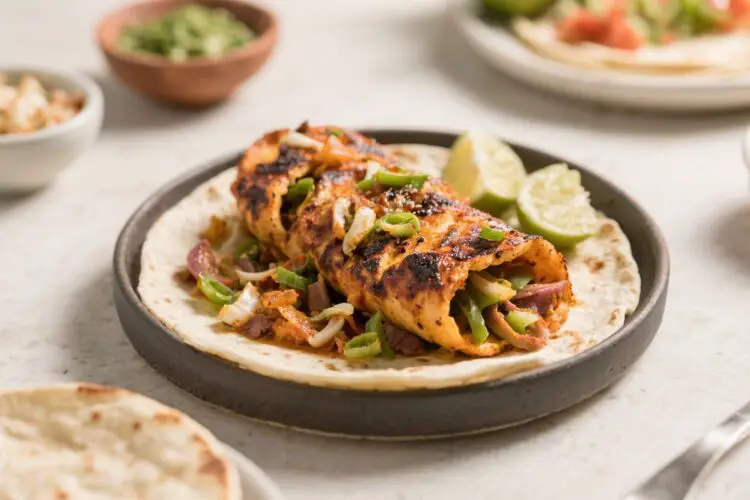
Al pastor is street food magic: juicy, chili-and-pineapple-marinated pork with crispy edges and a bright, citrusy finish. You don’t need a vertical spit or special gear to make it at home. With a few pantry ingredients and a hot oven, you can get tender, caramelized pork perfect for tacos.
This version is weeknight-friendly, doable in a small kitchen, and still delivers the signature al pastor vibe. Grab some tortillas and your favorite toppings—this one’s a crowd-pleaser.
Why This Recipe Works
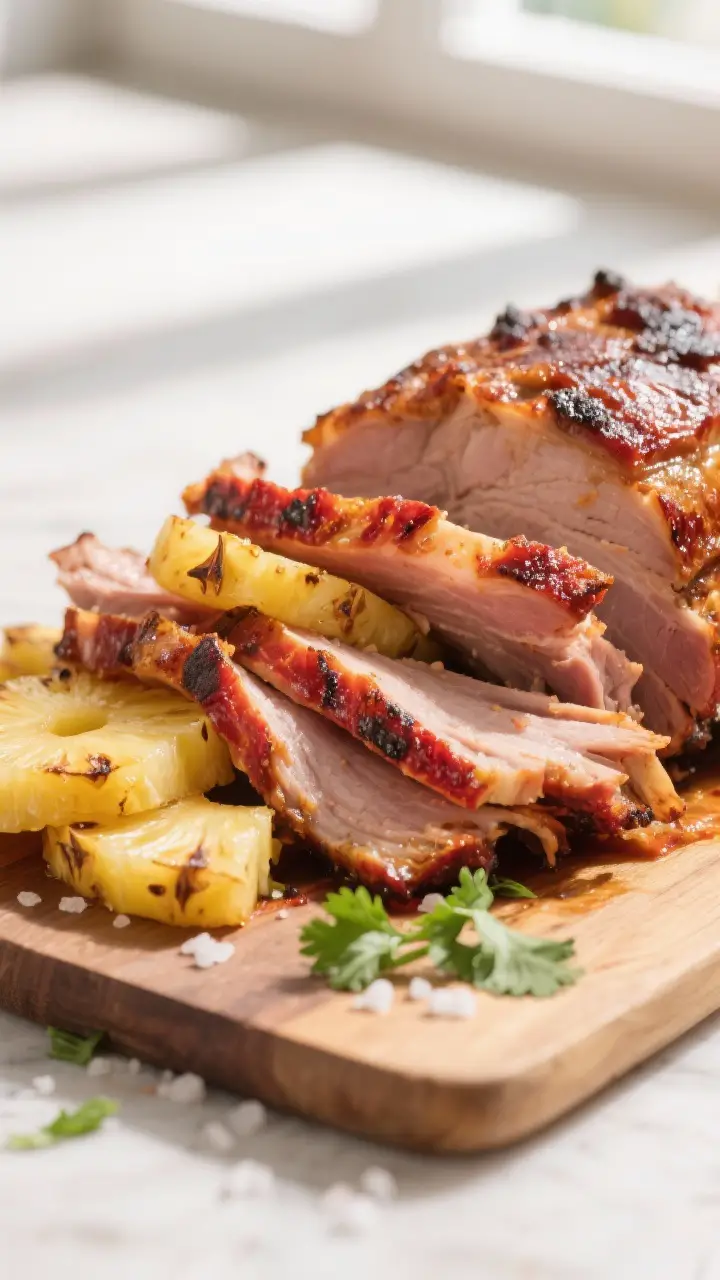
- Oven heat mimics the trompo. A high-temp roast followed by a quick broil gives you those lightly charred edges that define great al pastor.
- Pineapple plus acid tenderizes the pork. A blend of pineapple juice and vinegar helps break down the meat while keeping it juicy.
- Classic chili base, simplified. Using guajillo chiles (and a few pantry spices) nails the signature color and flavor without being fussy.
- Stacked slices roast evenly. Thinly sliced pork layered with pineapple creates self-basting, flavorful meat you can shave for tacos.
Shopping List
- Pork: 2 to 2.5 pounds boneless pork shoulder or pork butt, thinly sliced
- Dried chiles: 6–8 dried guajillo chiles, stems and seeds removed
- Aromatics: 3 garlic cloves, 1 small white onion
- Acid and sweetness: 1/2 cup pineapple juice, 2 tablespoons apple cider vinegar
- Spices: 1 teaspoon ground cumin, 1 teaspoon dried oregano, 1/2 teaspoon ground coriander, 1/2 teaspoon ground clove or allspice, 1/2 teaspoon smoked paprika (optional)
- Annatto (achiote) paste or powder: 1–2 tablespoons (for color and earthy flavor)
- Salt and pepper: Kosher salt and freshly ground black pepper
- Oil: 2 tablespoons neutral oil (canola or avocado)
- Fresh pineapple: 1 small pineapple or 1/2 large, peeled and cored, cut into 1/2-inch slices
- Citrus: 1 lime, cut into wedges
- For serving: Warm corn tortillas, chopped white onion, chopped cilantro, your favorite salsa
How to Make It
- Prep the chiles. Tear the guajillos into flat pieces and discard stems and seeds. Toast them in a dry skillet over medium heat for 30–60 seconds per side until fragrant.
Don’t burn them.
- Soften the chiles. Place toasted chiles in a bowl and cover with hot water for 10–15 minutes until pliable. Drain well.
- Blend the marinade. In a blender, add softened chiles, pineapple juice, vinegar, garlic, 1/2 cup chopped onion, cumin, oregano, coriander, clove (or allspice), achiote, smoked paprika (if using), oil, 1.5 teaspoons salt, and 1/2 teaspoon pepper. Blend until smooth.
Taste and adjust salt or acid.
- Slice the pork thin. For easy slicing, chill the pork in the freezer for 20 minutes. Slice into 1/4-inch pieces. Aim for even thickness so it cooks uniformly.
- Marinate. Toss pork with the marinade in a large bowl, coating every piece.
Cover and refrigerate at least 2 hours, preferably 8–12 hours. Add a splash more pineapple juice if it looks dry.
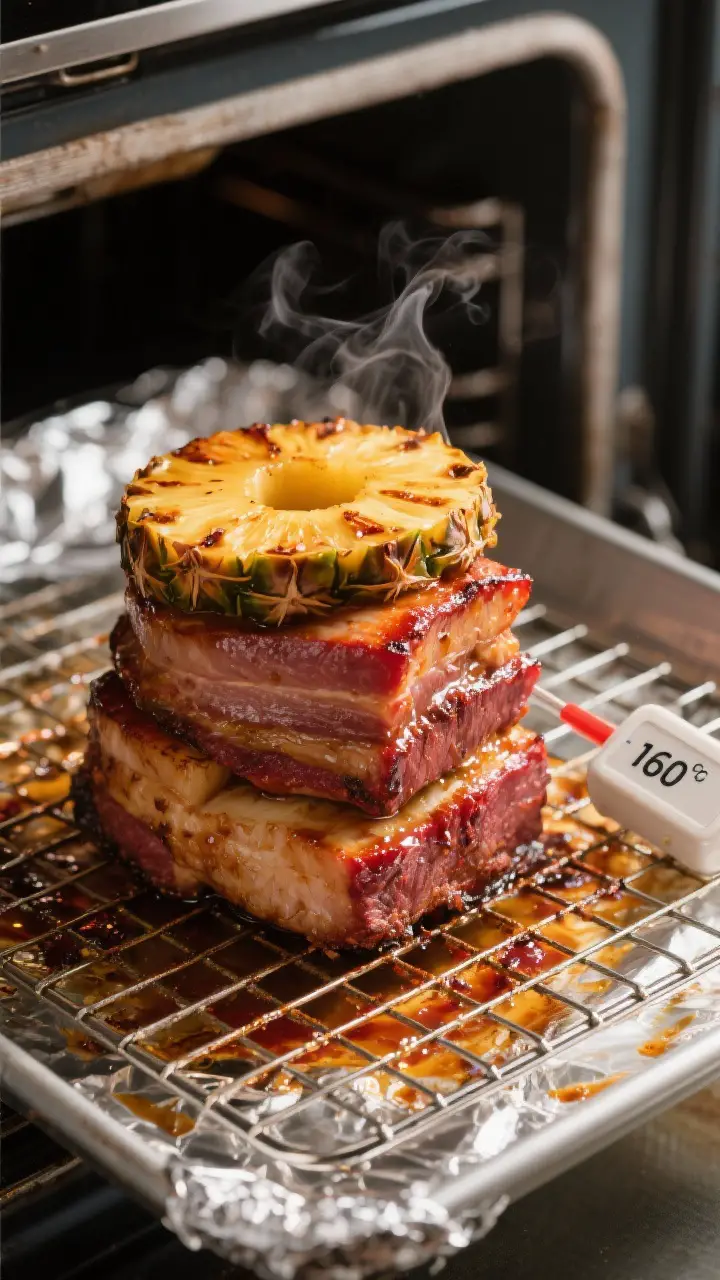
- Build your stack. Heat the oven to 450°F (230°C). Line a sheet pan with foil and top with a wire rack if you have one.
On the rack or foil, layer slices of pork, then pineapple, repeating to build a compact stack about 2–3 inches high. Top with a slice of pineapple. Keep it tight for even cooking.
- Roast. Bake for 25–35 minutes until the pork is cooked through and some edges caramelize.
Internal temp should reach at least 145°F (63°C), but going to around 160°F (71°C) is fine for shoulder—it stays tender.
- Broil for char. Switch to broil for 2–5 minutes, watching closely. You want browned, slightly charred edges without burning.
- Rest and slice. Let the stack rest 5–10 minutes. Use a sharp knife to shave off thin slices, catching the juicy bits and pineapple.
- Warm tortillas. Heat corn tortillas in a dry skillet until pliable, or wrap in foil and warm in the oven for a few minutes.
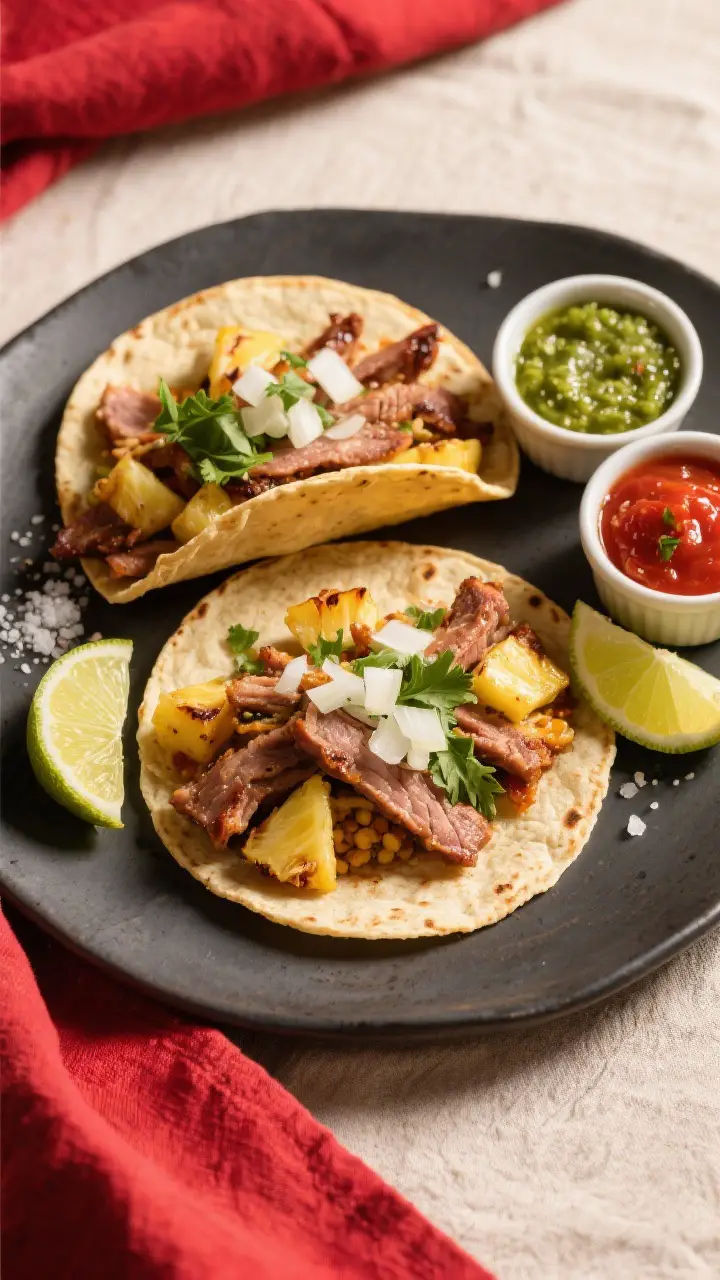
- Assemble tacos. Pile on the pork and pineapple.
Finish with chopped onion, cilantro, a squeeze of lime, and salsa. Taste and adjust salt right on the taco if needed.
Storage Instructions
- Fridge: Store cooked pork in an airtight container for up to 4 days. Keep tortillas and toppings separate.
- Freezer: Portion pork into freezer bags with a little cooking juice.
Freeze up to 3 months. Thaw overnight in the fridge.
- Reheat: Reheat in a hot skillet with a teaspoon of oil to re-crisp the edges. Avoid microwaving for too long or it can turn rubbery.
Health Benefits
- Protein-rich. Pork shoulder provides high-quality protein to keep you full and support muscle repair.
- Vitamin C from pineapple and lime. The citrus and fruit add a small boost of antioxidants and brightness.
- Customizable fat level. Trimming excess fat or using leaner cuts (like pork loin) can reduce calories, though shoulder gives the best texture.
- Balanced toppings. Adding onion, cilantro, and salsa keeps things fresh without heavy extras.
What Not to Do
- Don’t skip the marinade time. Less than 2 hours won’t fully penetrate the pork.
Overnight is ideal.
- Don’t slice the pork too thick. Thick pieces won’t cook evenly or char nicely. Aim for 1/4 inch.
- Don’t overcrowd the pan. If the stack sprawls out, it steams instead of browns. Keep it compact.
- Don’t forget the broil. That last hit of high heat creates the signature al pastor edges.
- Don’t drown in sweetness. Use pineapple for balance, not candy-like flavor.
Taste your marinade and keep it tangy-sweet, not sugary.
Variations You Can Try
- Sheet-pan method: Spread marinated pork in a single layer on a sheet pan. Roast at 475°F (245°C) for 15–20 minutes, broil to finish. Faster and still tasty.
- Pork loin swap: Use pork loin for a leaner option.
Marinate longer and watch the oven closely to avoid drying out. Slice extra thin.
- Chicken al pastor: Substitute boneless, skinless chicken thighs. Reduce roast time to about 20–25 minutes.
- Spicy boost: Add 1–2 dried chipotles in adobo or a teaspoon of chili flakes to the marinade.
- No achiote: If you can’t find it, increase paprika and add a pinch more oregano.
Color will be lighter but flavor stays close.
- Grill finish: After roasting, finish slices on a hot grill for smoky char marks.
FAQ
Can I use a blender instead of a food processor for the marinade?
Yes. A blender usually makes a smoother marinade, especially with dried chiles. If it’s too thick to blend, add a tablespoon or two of pineapple juice or water.
Do I need to strain the marinade?
Not required, but you can strain for a silkier texture.
If your blender leaves small chile skins, a quick pass through a fine mesh sieve helps.
What tortillas are best?
Corn tortillas are traditional and hold up well. Warm them until pliable so they don’t crack. If they’re thin, stack two per taco.
How do I prevent the pork from drying out?
Use pork shoulder, don’t overcook, and let it rest before slicing.
Reheat leftovers in a skillet with a small splash of juice or stock.
Is there a substitute for guajillo chiles?
Try ancho chiles or a mix of ancho and New Mexico chiles. The flavor changes slightly but still works well.
Can I prepare this ahead of time?
Absolutely. Marinate the pork up to 24 hours ahead.
You can also roast, slice, and reheat right before serving.
What toppings go best with al pastor?
Classic is chopped onion, cilantro, and a wedge of lime. Add salsa verde, salsa roja, or a mild pineapple salsa if you like a little sweetness.
Do I need fresh pineapple or can I use canned?
Fresh is best for texture and caramelization. In a pinch, use canned slices in juice, not syrup, and pat them dry before roasting.
In Conclusion
This oven-roasted al pastor brings the street food experience home without special equipment.
The marinade is bold, the pork stays juicy, and the broiled edges deliver that signature char. Keep the process simple, taste as you go, and serve with warm tortillas and fresh toppings. Once you make it, you’ll put this one on repeat for taco night.
Printable Recipe Card
Want just the essential recipe details without scrolling through the article? Get our printable recipe card with just the ingredients and instructions.