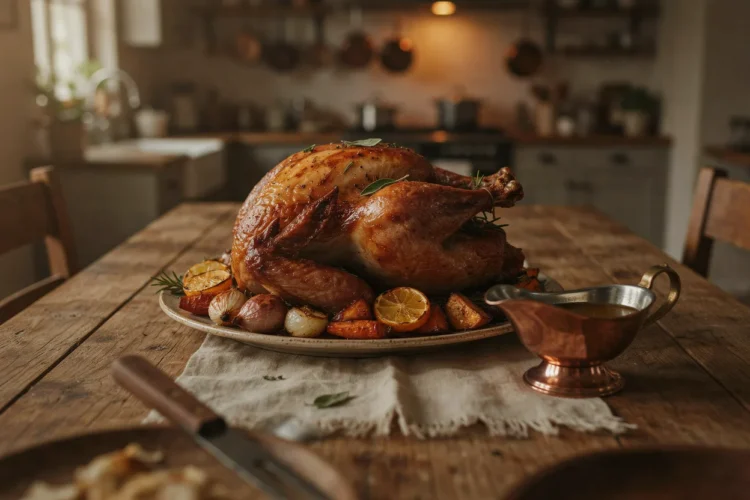
- Serves: A 12 to 14 lb bird feeds 10 to 14 with leftovers
- Active time: 40 minutes, plus 1 to 3 days dry-brining and 2.5 to 3 hours roasting
- Make ahead: Dry-brine 3 days out; stock and gravy base days ahead; the bird can even be roasted the day before
- The one thing that matters: Pull the turkey when the breast reads 157°F. Not 165°F. 157°F.
What you’ll need
- Roasting pan with rack. Large enough for a 12-20 lb turkey
- Meat thermometer. Instant-read for checking 165F at the thigh
- Basting brush or bulb baster. For applying butter and pan juices
- Aluminum foil. For tenting the breast during roasting
- Kitchen twine. For trussing the turkey
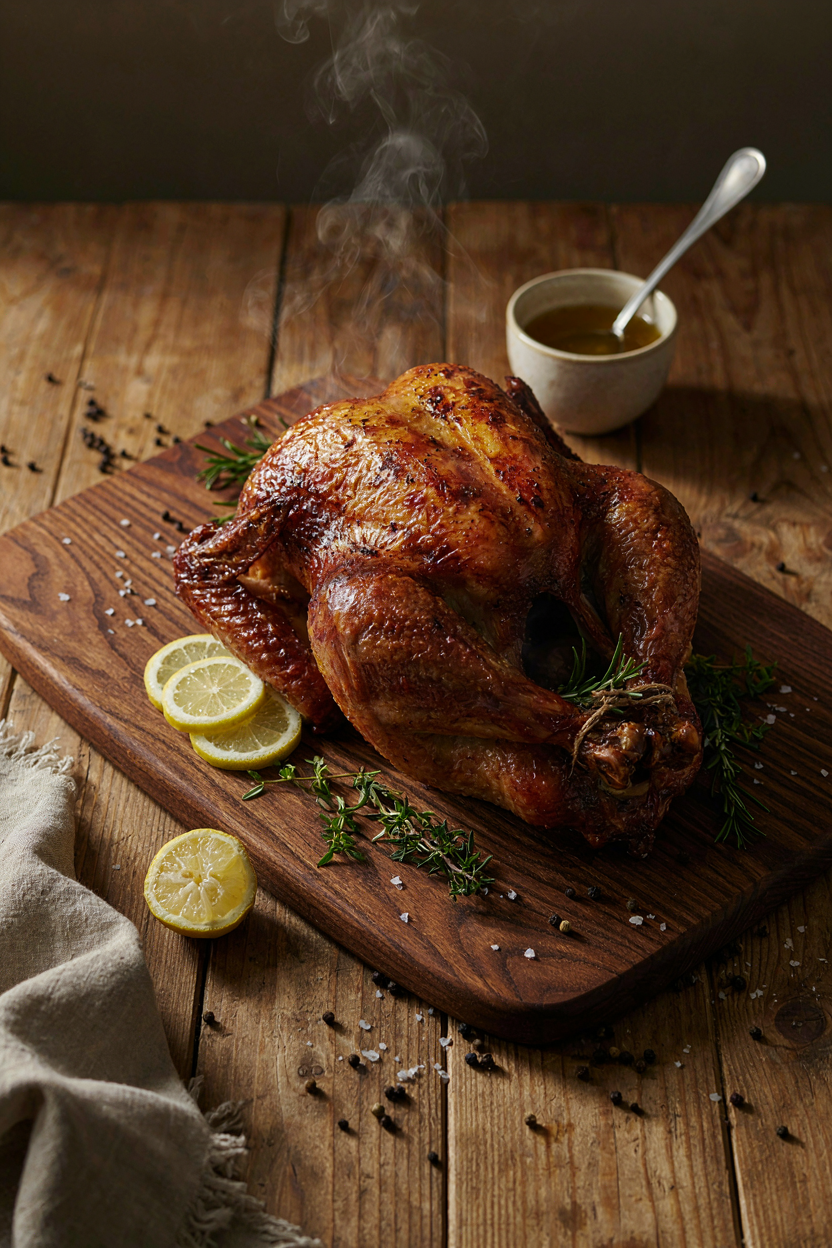
[Photo: a rested, carved turkey on a board, breast slices visibly juicy, skin deep brown and crisp]
Why this works
The dry brine is the foundation. Salt rubbed over and under the skin draws out a little moisture, which dissolves the salt, which is then reabsorbed — carrying seasoning deep into the meat. Over one to three days, the salt also changes the muscle proteins so they hold onto water better during cooking. The breast comes out seasoned all the way through and more forgiving of a few extra degrees. And because the bird sits uncovered in the fridge, the skin dries out, which is exactly what you want for crisp skin.
Then you pull it early. A 14 lb turkey coming out of the oven will rise another 5 to 10°F as it rests, because the outside is far hotter than the center and that heat keeps moving inward. Pull at a 157°F breast and it carries up to a safe, juicy 162 to 165°F. The thighs, which run hotter at the edge of the bird, will be at 170°F or above by then. The long rest lets the muscle fibers relax and reabsorb the juices, so they end up in the meat and not on the board.
Choosing and thawing the bird
- Size: plan 1 to 1¼ lb of bird per person, which covers bones and leftovers. A 14 lb turkey is a sensible maximum — bigger birds cook more unevenly. For more than 16 people, roast two smaller birds.
- Thawing: in the fridge, allow 24 hours per 4 to 5 lb. A 14 lb frozen turkey needs about 3 full days. Do not thaw at room temperature.
- Fresh vs frozen: fresh is easier logistically and slightly better, but a well-thawed frozen bird is fine.
The dry brine
- 1 teaspoon kosher salt (Diamond Crystal) per pound of turkey, about 4 to 5 tablespoons for a 14 lb bird. Use about ¾ as much if using Morton’s.
- Optional: 2 tablespoons sugar, 1 tablespoon black pepper, 1 tablespoon dried herbs or crushed dried sage and thyme.
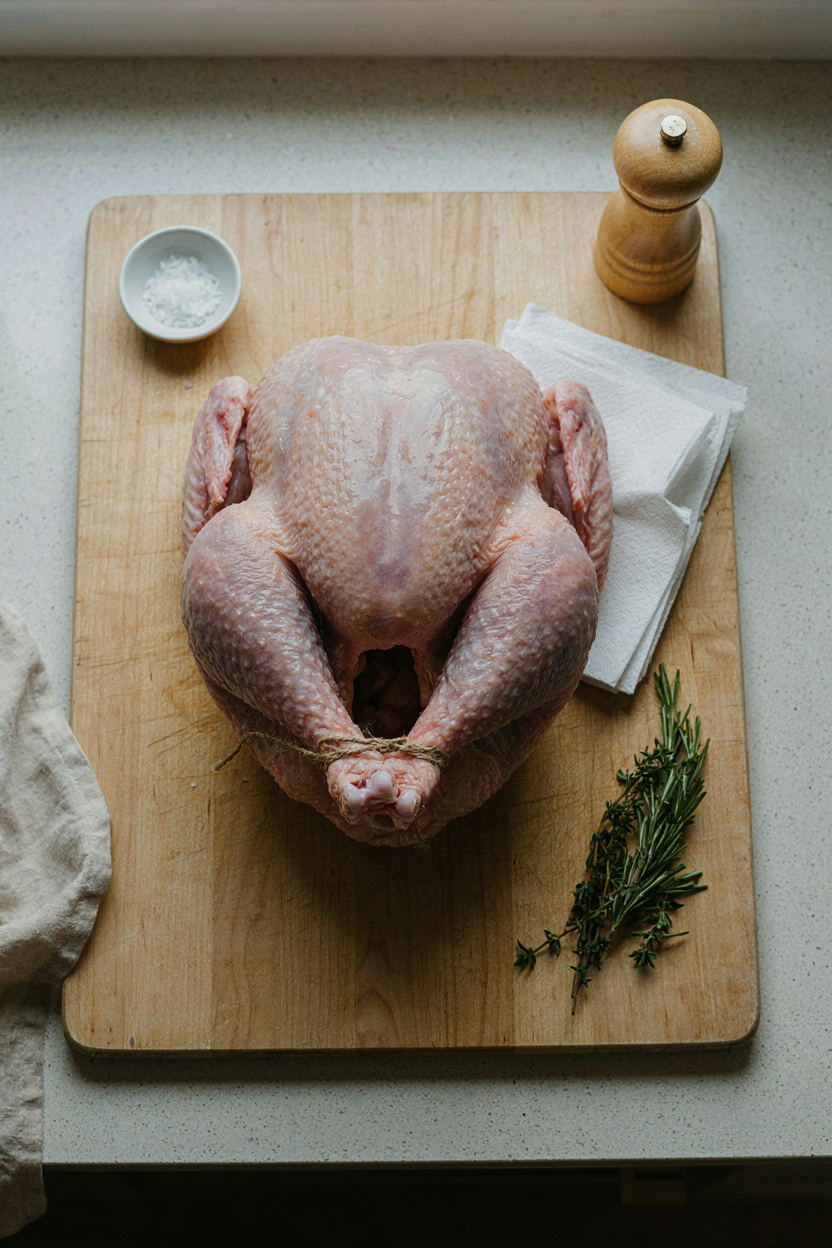
- Pat the turkey completely dry. Remove the neck and giblets and save them for stock.
- Mix the salt with any additions. Rub it all over the bird, under the skin of the breast and thighs where you can reach, and a little inside the cavity.
- Set the turkey on a rack over a tray and refrigerate, uncovered, 1 to 3 days. Skip the rinse before roasting; the dry brine is doing its work.

Roasting: two ways
Spatchcocked (the better method for most people)
Cut out the backbone with kitchen shears and press the bird flat. It roasts in 80 to 100 minutes, the thighs at the edges get more heat while the breast in the center is protected, and almost all the skin faces up and crisps. Roast at 425°F (220°C) on a rack over a tray, checking the breast at 60 minutes. This is what to do if you care more about the meat than the tableside presentation.
Whole roasted (the traditional centerpiece)
- Bring the turkey to room temperature for 1 hour. Heat the oven to 450°F (230°C).
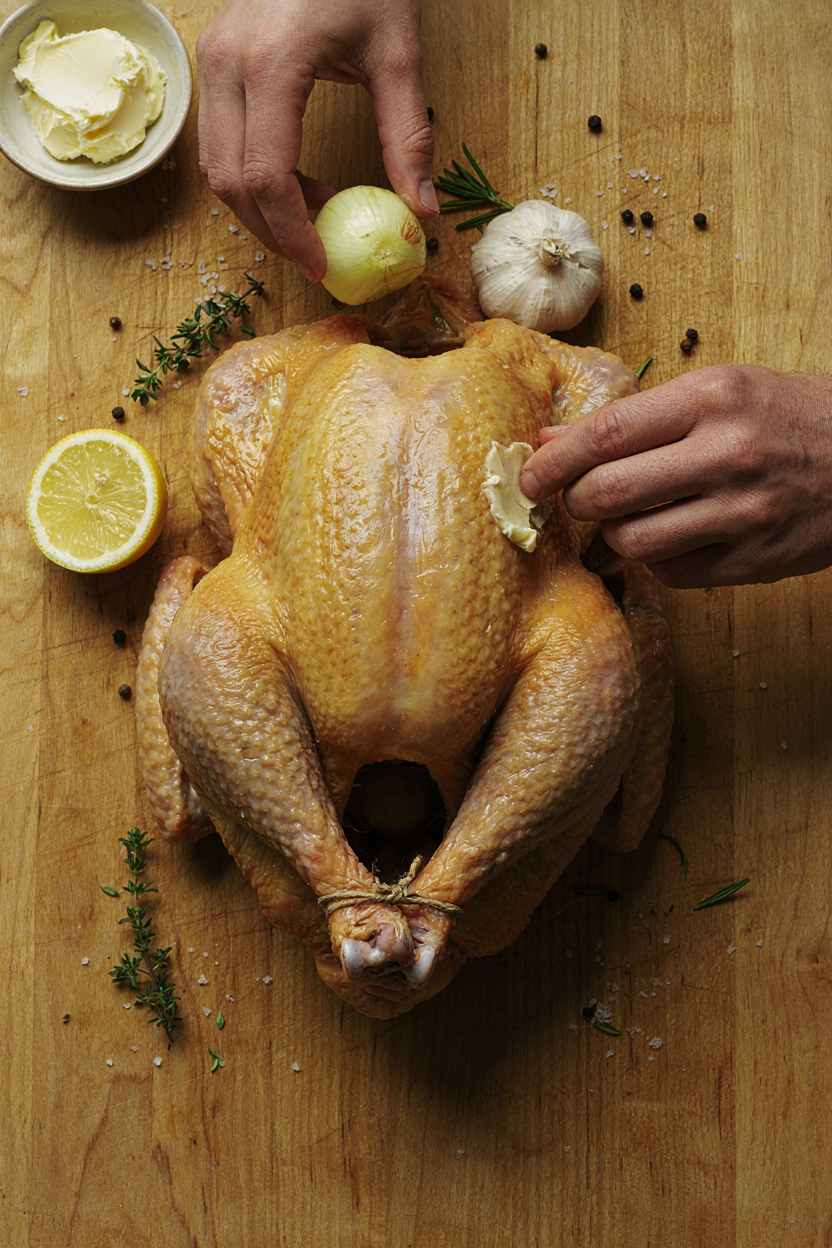
- Put a quartered onion, a halved lemon, a head of garlic and a bunch of herbs in the cavity. Rub the skin with softened butter or oil. Tuck the wing tips under. Trussing is optional and slightly slows thigh cooking, leaving the legs loose is fine.
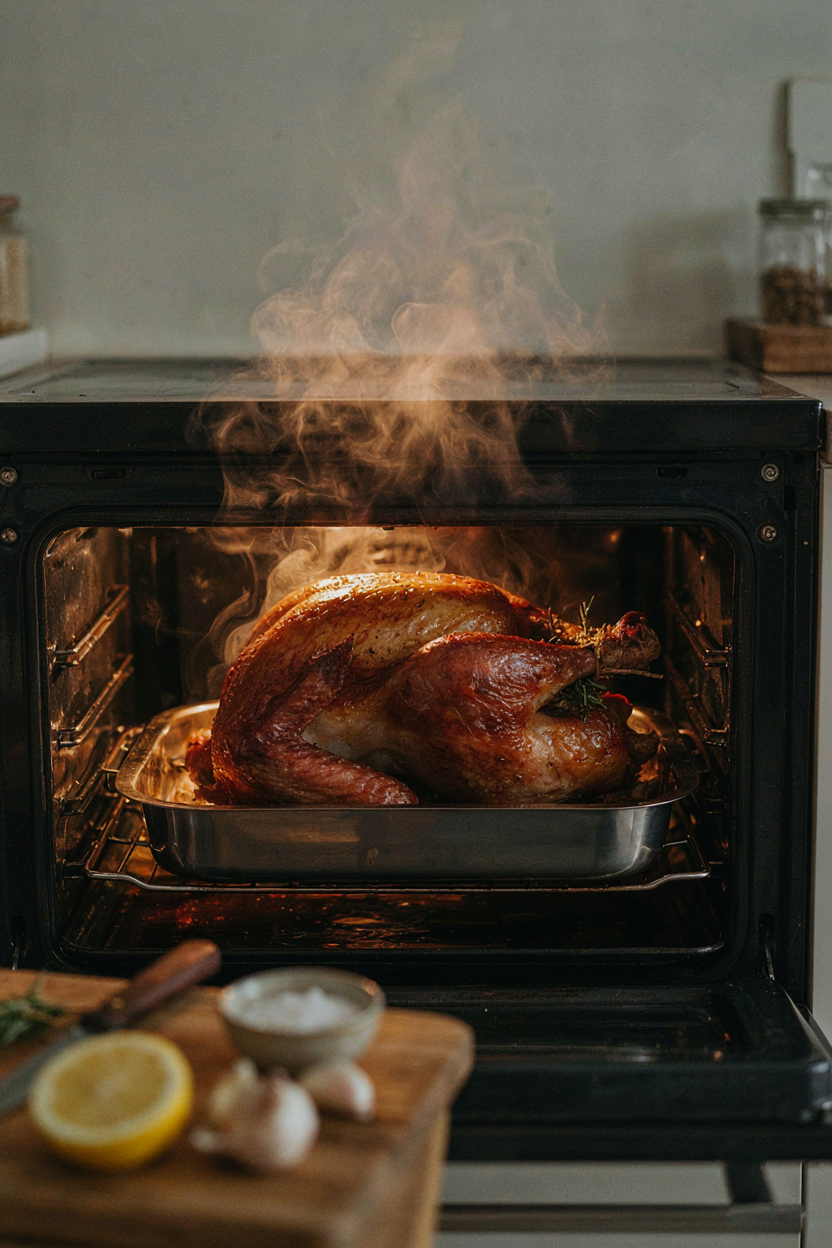
- Roast at 450°F for 30 minutes to brown the skin, then drop the oven to 325°F (160°C).
- Roast until the thickest part of the breast, not touching bone, reads 157°F, roughly 2 to 2½ hours more for a 14 lb bird, but let the thermometer guide you rather than the clock. If the skin is getting too dark, tent the breast loosely with foil.
- Rest the turkey, tented loosely with foil, for 30 to 45 minutes before carving. It will stay plenty hot for well over an hour, so there is no rush.
The details that decide it
- Buy a probe thermometer. This is not a recipe you can do by time. An instant-read is the minimum; a leave-in probe with an alarm is better.
- Do not baste. Opening the oven drops the temperature and adds cooking time, and the liquid runs off the skin without reaching the meat. It also softens the skin you worked to crisp.
- Do not stuff the bird. Getting stuffing to a safe 165°F in the cavity guarantees an overcooked breast. Bake the stuffing separately.
- Rest longer than feels right. Thirty minutes minimum, 45 is better. Carving too early pours the juices onto the board.
Gravy from the drippings
- Make turkey stock ahead. Roast the neck, giblets and a couple of extra wings at 400°F until browned, then simmer with an onion, carrot, celery and a bay leaf for 2 hours. Strain. This can be done 2 days ahead.
- Separate the fat. Pour the roasting-pan drippings into a fat separator, or spoon the fat off the top once it settles.
- Roux. In a saucepan, whisk ¼ cup of the turkey fat with ¼ cup flour and cook 2 minutes.
- Build it. Whisk in 3 cups of the stock and the defatted drippings. Simmer 5 to 10 minutes until it coats a spoon. Season with salt, pepper, and a splash of the dry brine’s herb character if it needs lift.
For a stress-free day, make the whole gravy the day before using only stock, then whisk the hot pan drippings in at the end for the roasted flavor. Full detail in our homemade Thanksgiving gravy guide.
Scaling for a crowd
Plan 1 to 1¼ lb of turkey per person. A 14 lb bird serves 10 to 14 with leftovers; below is a rough guide:
- 8 people: one 10 to 12 lb turkey
- 12 people: one 14 lb turkey
- 18 people: two 12 lb turkeys, not one 24 lb bird
- 25+ people: two 14 lb turkeys, or a turkey plus a separate roasted breast
Two smaller birds always beat one giant one: they roast faster, more evenly, and give you four drumsticks instead of two. For a very large group, you can roast the turkey the day before, carve it, layer the slices in a dish with some stock, and reheat covered at 325°F, it frees the oven completely on the day and, done carefully, the meat stays moist. The 30 to 45 minute rest on a fresh bird also gives you an oven window to bake all the side dishes. The per-person math for the whole meal is in our dinner planning guide.
Make ahead, storing and leftovers
- Dry brine: up to 3 days ahead, this is a scheduled task, not an option.
- Stock: 2 days ahead, or frozen weeks ahead.
- Gravy base: the day before; finish with drippings.
- Carved turkey: 3 to 4 days refrigerated. Keep white and dark meat with a little stock or gravy to stop them drying.
- Freezer: cooked turkey freezes 2 months; it is best in soup or pot pie after that rather than as slices.
From my kitchen
Almost every dry turkey I have been served was cooked to 165°F in the breast because that is the number on every chart. That number is the safe minimum for poultry, and with carryover you reach it by pulling the bird at 157°F. Buy the thermometer, put it in the thickest part of the breast, and take the turkey out when it beeps, even though the thighs might still look a shade underdone and every instinct says leave it in longer. Do not leave it in longer.
The other habit worth dropping is basting. It does nothing useful and it costs you oven heat and crisp skin every time you open the door. Rub the bird with fat once, at the start, and then leave it alone.
Frequently asked questions
How many pounds of turkey per person?
1 to 1¼ lb per person for a bone-in whole bird, which allows for the carcass and a reasonable amount of leftovers. For very generous leftovers, go to 1½ lb.
Dry brine or wet brine?
Dry brine, for most people. It seasons just as deeply, it produces crisper skin, and it does not require a bucket of salt water taking up the fridge. Rub with salt, leave uncovered 1 to 3 days.
Should I spatchcock the turkey?
If you care most about evenly cooked, juicy meat and crisp skin, yes, it roasts in under two hours and the breast and thighs finish closer together. Roast it whole if the tableside presentation matters more to you.
Why is my turkey always dry?
It is being cooked past 165°F in the breast. Pull it at 157°F and let carryover heat bring it to a safe 162 to 165°F during the rest.
How long should a turkey rest?
30 to 45 minutes, loosely tented with foil. A large bird holds its heat for well over an hour, so there is no rush to carve.
Do I need to baste the turkey?
No. Basting drops the oven temperature every time you open the door and the liquid does not penetrate the meat. Oil the skin once at the start and leave it.
Can I roast the turkey a day ahead?
Yes, and for a big crowd it is the calmest option. Roast, cool, carve, layer with stock in a dish, and reheat covered at 325°F on the day. It frees the oven entirely.
The bottom line
Dry-brine it for one to three days, roast it hot then moderate (or spatchcock it), pull the breast at 157°F, and rest it 30 to 45 minutes. Make the stock and gravy base ahead. The whole recipe comes down to a thermometer and the discipline to trust it.
Save this, the pull temperature and the per-person chart are the two things you will look up on the day.